

How to Read a Shipping Container…
How to Read a Shipping Container Number: A Simple Guide A shipping container number is…

END TO END Solution
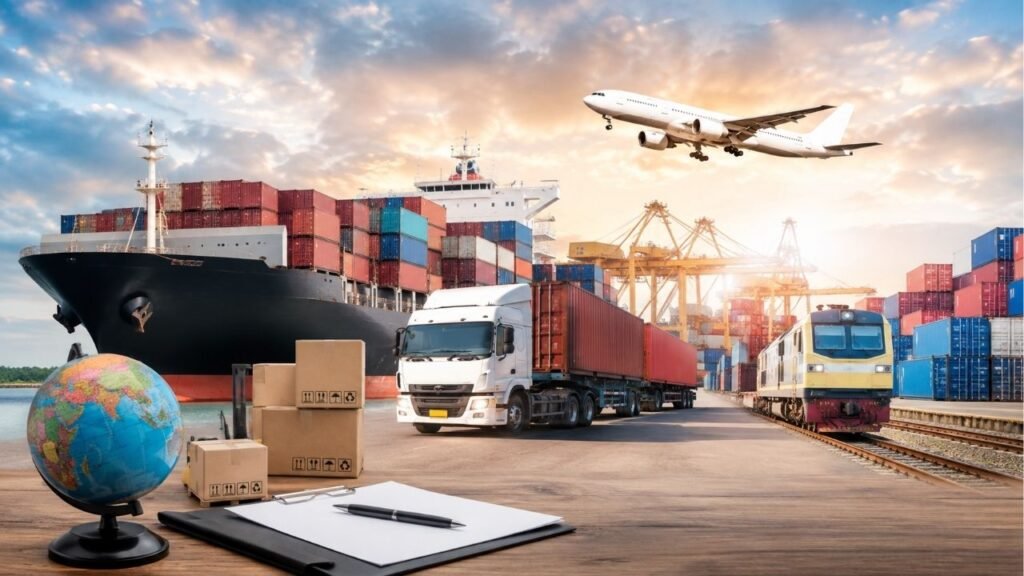
International shipping involves more than simply moving goods from one country to another. Importers and exporters must understand who is responsible for transportation, insurance, customs, delivery, and potential risks at each stage of the shipment.
This is where Incoterms become important. Incoterms are internationally recognized trade rules that help buyers and sellers clearly define their responsibilities, costs, and risks during the shipping process.
Choosing the right Incoterm can help businesses avoid unexpected charges, reduce confusion, and plan international shipments more effectively. Understanding the role of a freight forwarder can also help businesses better manage transportation and international shipping requirements.
In this guide, we explain the 11 Incoterms rules, what each one means, who is responsible for key shipping activities, and how choosing the right term can help you save time and money on international shipments.
Table of Contents

Incoterms, short for International Commercial Terms, are standardized trade terms used in international sales contracts. They help buyers and sellers understand who is responsible for transportation, costs, risk, insurance, and certain customs-related responsibilities during the movement of goods.
Incoterms are published by the International Chamber of Commerce (ICC) and are widely used in global trade.
For importers and exporters, choosing the right Incoterm can make a significant difference to the total cost and complexity of a shipment.
Incoterms do not determine the entire sales contract. Instead, they clarify important responsibilities between the seller and buyer.
International shipments involve many different costs and responsibilities. Without clear trade terms, disagreements can occur over who should pay for transportation, insurance, customs procedures, unloading, or other activities.
Incoterms help define responsibilities related to:
Using an appropriate Incoterm can help businesses avoid unexpected costs and reduce confusion during international shipping.
The current Incoterms rules contain 11 trade terms. Seven can be used for any mode of transport, while four are specifically intended for sea and inland waterway transport.
Under EXW, the seller generally makes the goods available at an agreed location, such as a factory or warehouse.
The buyer typically takes on most transportation responsibilities and costs from that point.
EXW can appear attractive because the seller has fewer delivery responsibilities, but buyers should understand the additional logistics and customs responsibilities they may need to manage.
FCA means the seller delivers the goods to a carrier or another party nominated by the buyer at an agreed location.
FCA can be useful for shipments involving different transportation modes and is often considered a practical alternative to EXW for many international transactions.
Under CPT, the seller arranges and pays for transportation to the agreed destination.
However, the risk does not necessarily remain with the seller until the goods reach the final destination. Risk generally transfers when the goods are handed over to the carrier.
This distinction between cost and risk is important when negotiating international shipping terms.
CIP is similar to CPT, but the seller also arranges insurance coverage according to the requirements of the Incoterm.
The seller pays for carriage to the agreed destination, while risk generally transfers when the goods are handed over to the carrier.
CIP can be useful when the buyer wants the seller to arrange transportation and insurance while using a term suitable for different modes of transport.
DAP means the seller arranges transportation and delivers the goods to an agreed destination, ready for unloading.
The buyer generally handles import clearance and applicable import duties and taxes.
DAP can be useful for buyers who want the seller to manage most of the transportation while retaining control over import procedures.
DPU requires the seller to deliver and unload the goods at the agreed destination.
This makes DPU different from DAP because unloading at the destination is the seller’s responsibility under DPU.
DPU can be considered when the seller is better positioned to arrange unloading at the destination and both parties agree clearly on the delivery location.
DDP places significant responsibility on the seller.
The seller generally arranges transportation and handles export and import formalities, with the buyer receiving the goods at the agreed destination.
For buyers, DDP can provide a simpler purchasing experience because many logistics responsibilities are handled by the seller.
However, sellers should carefully assess whether they can legally and practically handle import procedures in the destination country before agreeing to DDP.
FAS is intended for sea and inland waterway transport.
Under FAS, the seller delivers the goods alongside the vessel at the agreed port of shipment. From that point, the buyer takes on the relevant costs and risks associated with the shipment.
FOB is another Incoterm specifically intended for sea and inland waterway transportation.
The seller delivers the goods on board the vessel nominated by the buyer at the agreed port of shipment.
FOB is widely recognized in international shipping, but businesses should understand exactly where costs and risks transfer before using it in a contract.
Under CFR, the seller pays the cost and freight necessary to bring the goods to the agreed destination port.
However, risk transfers earlier, generally when the goods are loaded on board the vessel at the port of shipment.
This is another example of why businesses should distinguish between who pays for transportation and who carries the risk.
CIF is similar to CFR, but the seller also arranges insurance according to the applicable Incoterms requirements.
The seller pays for the cost, insurance, and freight to the agreed destination port, while risk generally transfers when the goods are loaded on board the vessel.
CIF is frequently used in international sea freight transactions.
| Incoterm | Transport | Main Seller Responsibility | Main Buyer Responsibility |
|---|---|---|---|
| EXW | Any mode | Make goods available | Most transportation and import responsibilities |
| FCA | Any mode | Deliver to agreed carrier/location | Main carriage and import responsibilities |
| CPT | Any mode | Pay carriage to destination | Risk after carrier handover and import responsibilities |
| CIP | Any mode | Pay carriage and arrange insurance | Import responsibilities |
| DAP | Any mode | Deliver to agreed destination | Import clearance, duties, taxes, and unloading |
| DPU | Any mode | Deliver and unload at destination | Import clearance, duties, and taxes |
| DDP | Any mode | Most delivery and import responsibilities | Receive goods |
| FAS | Sea/inland waterway | Deliver alongside vessel | Loading, main carriage, and import responsibilities |
| FOB | Sea/inland waterway | Load goods on vessel | Main carriage and import responsibilities |
| CFR | Sea/inland waterway | Pay cost and freight | Risk after loading and import responsibilities |
| CIF | Sea/inland waterway | Pay cost, freight, and arrange insurance | Risk after loading and import responsibilities |
Note: Responsibilities can depend on the exact delivery location and contract wording. Always review the applicable Incoterms rule and agree on the precise named place or port in the sales contract.
Choosing the right Incoterm does not automatically make a shipment cheaper. However, it can help businesses understand and manage their logistics responsibilities more effectively.
Clearly defining who pays for transportation, handling, insurance, and other responsibilities can reduce unexpected costs.
Knowing which party is responsible for different shipping stages makes it easier to estimate the total logistics cost before placing an order.
Clearly agreed Incoterms can reduce confusion between buyers, sellers, freight forwarders, carriers, and customs partners.
When responsibilities are clear, businesses can plan transportation, customs clearance, documentation, and delivery more efficiently.
Incoterms should be considered alongside your selected transportation method. Businesses can compare air freight vs sea freight based on speed, cost, cargo characteristics, and delivery requirements.
There is no single Incoterm that works for every shipment. The right choice depends on the buyer, seller, cargo, destination, transportation method, and level of control each party wants.
First determine whether your shipment will use air, road, rail, sea, or multiple transportation modes. Some Incoterms are suitable for any mode, while FAS, FOB, CFR, and CIF are intended for sea and inland waterway transport.
If the buyer has an experienced logistics team, they may prefer greater control over transportation. Other buyers may prefer the seller to manage more of the delivery process.
Import regulations, customs procedures, taxes, and local delivery requirements can influence which Incoterm is practical.
Do not compare Incoterms based only on the quoted product price. Consider freight, insurance, duties, taxes, handling, customs clearance, and final delivery costs.
Always understand exactly when risk transfers from the seller to the buyer. The party paying for transportation is not necessarily the party carrying the risk throughout the entire journey.
Businesses can face unnecessary costs or disputes when Incoterms are selected without understanding their responsibilities.
Businesses should also make sure the Incoterm is clearly stated in the sales contract along with the relevant version and named place or port.
Incoterms are an important part of international trade because they help buyers and sellers define responsibilities, costs, and risks during the shipment process.
The 11 Incoterms rules cover different approaches to transportation, delivery, insurance, customs responsibilities, and risk transfer.
Choosing the right rule can help businesses improve cost planning, reduce confusion, and avoid unexpected logistics responsibilities.
However, Incoterms should not be selected based on price alone. Consider the transportation method, shipment type, destination, customs requirements, insurance, risk transfer, and your ability to manage international logistics.
For businesses managing international shipments, working with an experienced freight forwarding partner can make it easier to coordinate transportation and documentation requirements.
Incoterms are standardized international trade terms that define specific responsibilities between buyers and sellers, including aspects of transportation, delivery, costs, and risk.
There are 11 Incoterms rules in the current Incoterms framework: EXW, FCA, CPT, CIP, DAP, DPU, DDP, FAS, FOB, CFR, and CIF.
There is no single best Incoterm for every buyer. The right option depends on the buyer’s logistics capabilities, destination, cargo, transportation method, and desired level of control.
The best Incoterm depends on the seller’s ability to manage transportation, customs, insurance, and delivery. Sellers should understand all responsibilities before agreeing to a term.
Both FOB and CIF are intended for sea and inland waterway transport. Under FOB, the seller delivers the goods on board the vessel. Under CIF, the seller also pays the cost and freight to the destination port and arranges insurance according to the applicable rule.
Some Incoterms allocate responsibility for import clearance, duties, and taxes differently. DDP places significant import responsibilities on the seller, while many other terms place import clearance and related costs on the buyer.
Incoterms do not automatically reduce freight rates. However, selecting an appropriate term can help businesses understand their responsibilities, compare total costs, and avoid unexpected logistics expenses.
Yes. Several Incoterms can be used for air freight and other transportation modes. FAS, FOB, CFR, and CIF are specifically intended for sea and inland waterway transport.
Risk transfer determines when responsibility for the risk of loss or damage moves from the seller to the buyer. This is important because the party paying for transportation is not always the party carrying the risk during the entire journey.
Speak with our team to find the best shipping solutions for your business.
+230 52583493
How to Read a Shipping Container Number: A Simple Guide A shipping container number is…
Freight Prepaid vs Freight Collect: What Exporters Need to Know Freight Prepaid and Freight Collect…
7 Types of Bill of Lading Every Exporter Should Know A Bill of Lading, commonly…
Let’s work together to simplify your logistics and ensure fast, secure, and timely delivery of your shipments.

Your Trusted Partner in End-to-End Supply Chain Management, Offering Expertise, Reliability, and On-Time Delivery Across the Globe.