


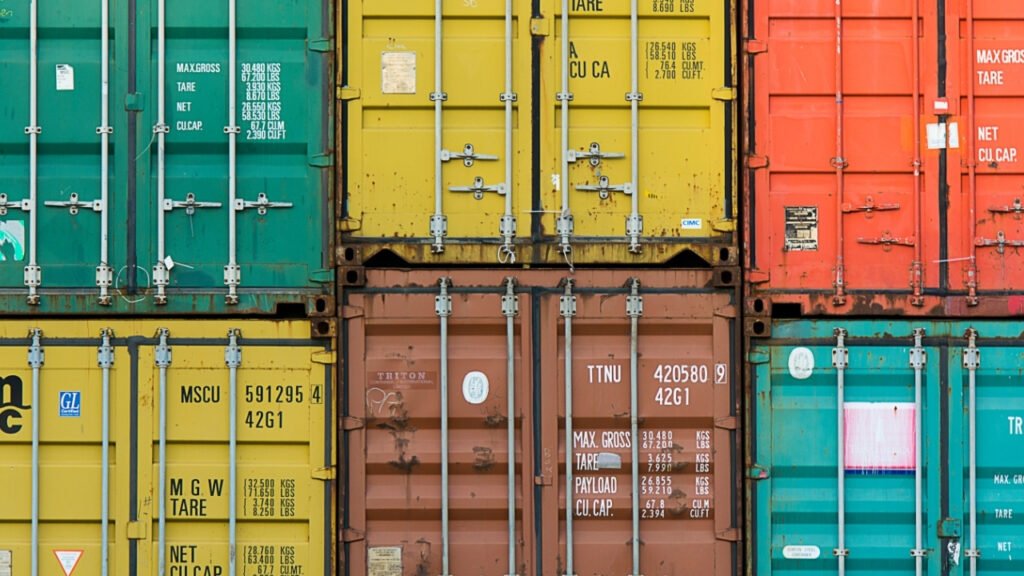
How to Read a Shipping Container…
How to Read a Shipping Container Number: A Simple Guide A shipping container number is…

END TO END Solution
When shipping goods internationally, understanding the difference between gross weight, net weight, and tare weight is important for accurate documentation, freight calculations, customs clearance, container planning, and cargo handling.
These three weight measurements are commonly used in logistics and international trade, but they represent different parts of a shipment’s total weight. Confusing them can lead to incorrect shipping documents, freight calculation errors, customs questions, or problems with container weight declarations.
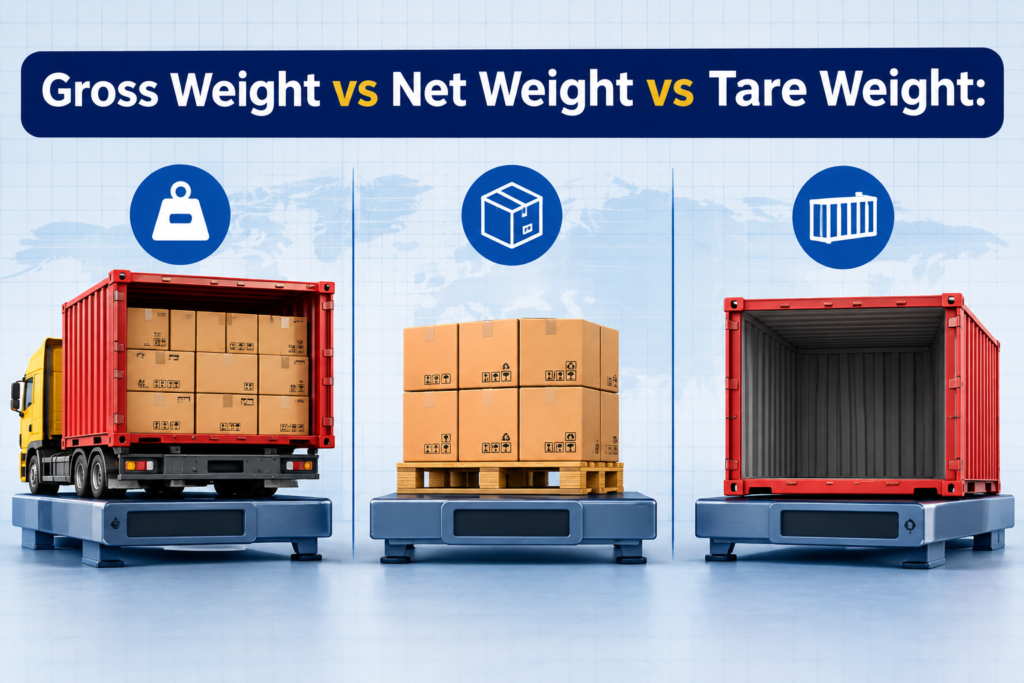
In simple terms, net weight is the weight of the goods themselves, tare weight is the weight of the empty packaging or container, and gross weight is generally the weight of the goods together with the applicable packaging.
For container shipping, it is also important to understand how these weights relate to Verified Gross Mass (VGM), which is used for the safe loading and stowage of packed containers on ships.
In this guide, we explain what gross weight, net weight, and tare weight mean, how to calculate them, the key differences between them, practical examples, common mistakes, and why accurate weight information matters for exporters and importers.
Table of Contents
Weight is one of the most important pieces of information in international shipping. Exporters and importers need accurate weight information when preparing commercial invoices, packing lists, shipping instructions, bills of lading, customs documents, freight bookings, and container weight declarations.
However, a shipment can have several different weight figures. The actual goods have one weight, while cartons, pallets, drums, crates, wrapping materials, and containers add additional weight.
This is why logistics professionals use terms such as net weight, tare weight, and gross weight.
For example, imagine an exporter shipping 1,000 kg of a product in cartons. The 1,000 kg of product is the net weight. If the cartons weigh another 50 kg, the packaged cargo weighs 1,050 kg. If this cargo is loaded into a container that weighs 2,200 kg when empty, the total weight of the loaded container would be 3,250 kg.
Each of these figures has a different purpose, and using the correct one is important for international transportation.
For businesses using sea freight services, understanding weight terminology helps ensure that cargo information is correctly communicated to carriers, freight forwarders, terminals, customs authorities, and other logistics partners.
Net weight is the weight of the actual goods or product without the weight of packaging, containers, pallets, or other transport materials.
In other words, net weight tells you how much the product itself weighs.
For example, if a shipment contains 500 kg of chemicals inside drums, the 500 kg of chemicals represents the net weight. The weight of the drums is not part of the product’s net weight.

Net weight is often important for commercial invoices, packing lists, customs documentation, product declarations, and trade records.
Net weight helps buyers, sellers, customs authorities, and logistics providers understand the actual quantity of goods being shipped.
For example, if a company exports 10,000 kg of a particular product, the net weight communicates the weight of the product itself rather than the additional weight of cartons, pallets, drums, or other packaging.
Keeping the net weight accurate also helps maintain consistency between commercial documents and other shipment records.
Tare weight is the weight of an empty container, package, or transport unit before the goods are added.
The exact meaning of tare weight depends on the shipping context.
For packaged goods, tare weight can refer to the weight of the packaging material. In container shipping, tare weight commonly refers to the empty weight of the shipping container.

For example, if an empty container weighs 2,200 kg, its tare weight is 2,200 kg.
When cargo is loaded into the container, the container’s tare weight is combined with the cargo weight to determine the total loaded weight.
Tare weight is important when calculating the total weight of a loaded container or transport unit.
It is also particularly relevant when preparing container weight information for maritime transportation because the container itself contributes to the total mass being transported.
Exporters should use the applicable tare weight for the actual container whenever the container weight is required. Container weights can vary depending on the container type, size, design, and individual unit.
Gross weight generally refers to the total weight of the goods together with the applicable packaging.
For example, if the products weigh 1,000 kg and the cartons weigh 50 kg, the cargo gross weight is 1,050 kg.

Gross Weight = Net Weight + Packaging Weight
This formula is commonly used when discussing packaged cargo.
However, in container shipping, it is important to distinguish cargo gross weight from the total weight of the loaded container.
When the container itself needs to be included, the calculation can be expressed as:
Total Loaded Container Weight = Cargo Weight + Container Tare Weight
If the cargo weight already includes the packaging, then:
Total Loaded Container Weight = Cargo Gross Weight + Container Tare Weight
This distinction is important because the term “gross weight” can be used differently depending on the document, system, or shipping context.
The easiest way to understand the difference is to look at what each weight includes.
| Weight Type | Meaning | What It Includes | Example |
|---|---|---|---|
| Net Weight | Weight of the actual goods | Product or cargo only | 1,000 kg of product |
| Tare Weight | Weight of the empty packaging or container | Empty container, packaging, or transport equipment | 2,200 kg empty container |
| Gross Weight | Weight of goods together with applicable packaging | Goods plus packaging | 1,050 kg including cartons |
The easiest way to remember the three terms is:
For a loaded container, the container’s tare weight may then be added to the cargo weight to determine the complete loaded container mass.
Calculating shipment weights is straightforward when you know which components are included.
If you know the gross weight and packaging weight, you can calculate the net weight using:
Net Weight = Gross Weight − Packaging Weight
For example, if the packaged goods weigh 1,050 kg and the packaging weighs 50 kg:
Net Weight = 1,050 kg − 50 kg = 1,000 kg
To calculate the gross weight of packaged cargo:
Gross Weight = Net Weight + Packaging Weight
For example:
1,000 kg + 50 kg = 1,050 kg
For a container shipment, the total loaded weight can be calculated using the cargo weight and container tare weight.
Total Loaded Weight = Cargo Weight + Container Tare Weight
For example, if the cargo gross weight is 1,050 kg and the container tare weight is 2,200 kg:
1,050 kg + 2,200 kg = 3,250 kg
The correct calculation depends on the definition of the weight being requested. Always check whether a document requires cargo weight, gross cargo weight, container tare weight, or verified gross mass.
Consider an exporter shipping finished products internationally in a standard container.
The shipment contains:
The actual products weigh 1,000 kg.
Net Weight = 1,000 kg
The packaging adds 50 kg.
Gross Weight = 1,000 kg + 50 kg = 1,050 kg
The empty container weighs 2,200 kg.
Total Loaded Container Weight = 1,050 kg + 2,200 kg = 3,250 kg
Therefore, the shipment has a net product weight of 1,000 kg, a cargo gross weight of 1,050 kg, and a total loaded container weight of 3,250 kg.
This example demonstrates why exporters need to understand exactly which weight is being requested on a particular shipping document.
Gross weight and net weight serve different purposes in international shipping.
Net weight identifies the weight of the actual goods, while gross weight generally includes the goods and their applicable packaging.
Both figures may appear on commercial invoices, packing lists, and other shipping documents because different parties may need different weight information.
For exporters working with a freight forwarding company, accurate weight information also helps the logistics provider arrange bookings, documentation, cargo handling, and transportation.
A packing list may show the net weight and gross weight for each package or for the complete shipment.
For example:
| Item | Net Weight | Packaging Weight | Gross Weight |
|---|---|---|---|
| Product A | 500 kg | 20 kg | 520 kg |
| Product B | 300 kg | 15 kg | 315 kg |
| Product C | 200 kg | 15 kg | 215 kg |
| Total | 1,000 kg | 50 kg | 1,050 kg |
This type of breakdown makes it easier for buyers, customs authorities, freight forwarders, and carriers to understand the shipment weight.
Accurate weight information is important throughout the international supply chain. Incorrect weight figures can result in documentation inconsistencies, additional checks, transportation problems, and delays.
Weight can affect transportation costs depending on the cargo, transportation mode, carrier, and applicable rate structure.
Providing accurate weight information helps logistics providers calculate applicable freight charges and plan transportation requirements.
Weight information helps shipping teams plan container loading and cargo distribution.
Proper weight distribution can also help reduce operational and safety risks during transportation.
Import and export documentation may require accurate information about the quantity and weight of goods.
If the weight stated on different documents does not match, customs authorities or other parties may request clarification or additional documentation.
Terminals, warehouses, transport operators, and other logistics providers may need accurate cargo weight information to safely handle and move the shipment.
Commercial invoices, packing lists, bills of lading, booking documents, and container weight declarations should contain consistent information.
Keeping weight figures accurate from the beginning can reduce the risk of discrepancies later in the shipment process.
For containerized sea freight, exporters should also understand Verified Gross Mass (VGM).
VGM is the verified gross mass of a packed container for maritime transport purposes. It is used to support safe planning and stowage of containers on board ships.
The verified mass generally accounts for the cargo, packaging, securing materials where applicable, and the container’s tare mass according to the applicable requirements.
VGM should not simply be confused with the net weight of the goods. Net weight only represents the actual goods, while VGM relates to the verified mass of the packed container.
Suppose a container contains:
The loaded container mass would be:
1,000 kg + 50 kg + 2,200 kg = 3,250 kg
The applicable VGM process and documentation should follow the requirements of the relevant maritime regulations, carrier, and shipping arrangement.
Exporters can also learn more about Verified Gross Mass (VGM) to better understand container weight requirements in international shipping.
Weight-related errors are common in international shipping, particularly when businesses use gross, net, tare, and container weights interchangeably.
One of the most common mistakes is treating net weight and gross weight as the same figure.
Net weight refers to the actual goods, while gross weight generally includes the applicable packaging.
Packaging can add significant weight to a shipment.
Cartons, pallets, drums, crates, protective materials, and wrapping should be considered when calculating the applicable shipment weight.
Container tare weight can vary depending on the container type, size, design, and individual container.
Exporters should use the applicable container’s marked or documented tare weight rather than relying on a generic estimate when an accurate container tare value is required.
The gross weight of packaged cargo is not necessarily the same as the total weight of the loaded container.
For example, cargo with a gross weight of 1,050 kg would weigh more once the 2,200 kg container tare weight is included.
Differences between the commercial invoice, packing list, booking information, bill of lading, and VGM information can create unnecessary questions or delays.
Exporters should review all documents before submission to ensure that the required weight figures are accurate and consistent.
Before submitting shipping documents or providing cargo information to a carrier or freight forwarder, exporters should check the following:
Understanding the difference between gross weight, net weight, and tare weight is essential for exporters, importers, freight forwarders, and logistics professionals.
Net weight represents the weight of the actual goods. Tare weight represents the weight of the empty packaging, container, or applicable transport equipment. Gross weight generally represents the goods together with their applicable packaging.
For container shipping, the total loaded container weight includes the cargo weight and the container’s tare weight. This distinction becomes particularly important when preparing container weight information and VGM documentation.
Accurate weight calculations help businesses maintain consistent shipping documents, improve cargo planning, support safe transportation, and reduce the risk of unnecessary delays during international shipping.
Whether you work directly with an ocean carrier or use a freight forwarding provider, having clear and accurate weight information makes the shipping process easier to manage.
Net weight is the weight of the actual goods, while gross weight generally includes the goods and their applicable packaging. The exact definition can depend on the document and shipping context.
Tare weight is the weight of an empty container, package, or other transport equipment before the goods are added.
For packaged cargo, the basic formula is Gross Weight = Net Weight + Packaging Weight.
It depends on the context and the definition being used. Cargo gross weight commonly refers to the goods plus packaging, while the total loaded container weight includes the container’s tare weight.
Net weight is the weight of the exported goods themselves, excluding packaging and transport equipment.
Gross weight on a packing list generally represents the weight of the goods together with their applicable packaging. Exporters should follow the specific documentation requirements applicable to their shipment.
Verified Gross Mass (VGM) is the verified mass of a packed container for maritime transport purposes. It takes into account the cargo and the applicable container tare mass according to the relevant requirements.
Accurate weight information supports freight planning, container handling, customs documentation, shipping records, safety, and compliance with applicable requirements.
Yes. Container tare weight can vary depending on the container type, size, design, and individual container. The applicable container’s marked or documented tare weight should be used when an accurate tare value is required.
They can represent the same physical mass in some situations, but the terms have different purposes. VGM specifically refers to the verified gross mass of a packed container for maritime transport requirements, so exporters should follow the applicable carrier and regulatory definitions.
Speak with our team to find the best shipping solutions for your business.
+230 52583493
How to Read a Shipping Container Number: A Simple Guide A shipping container number is…
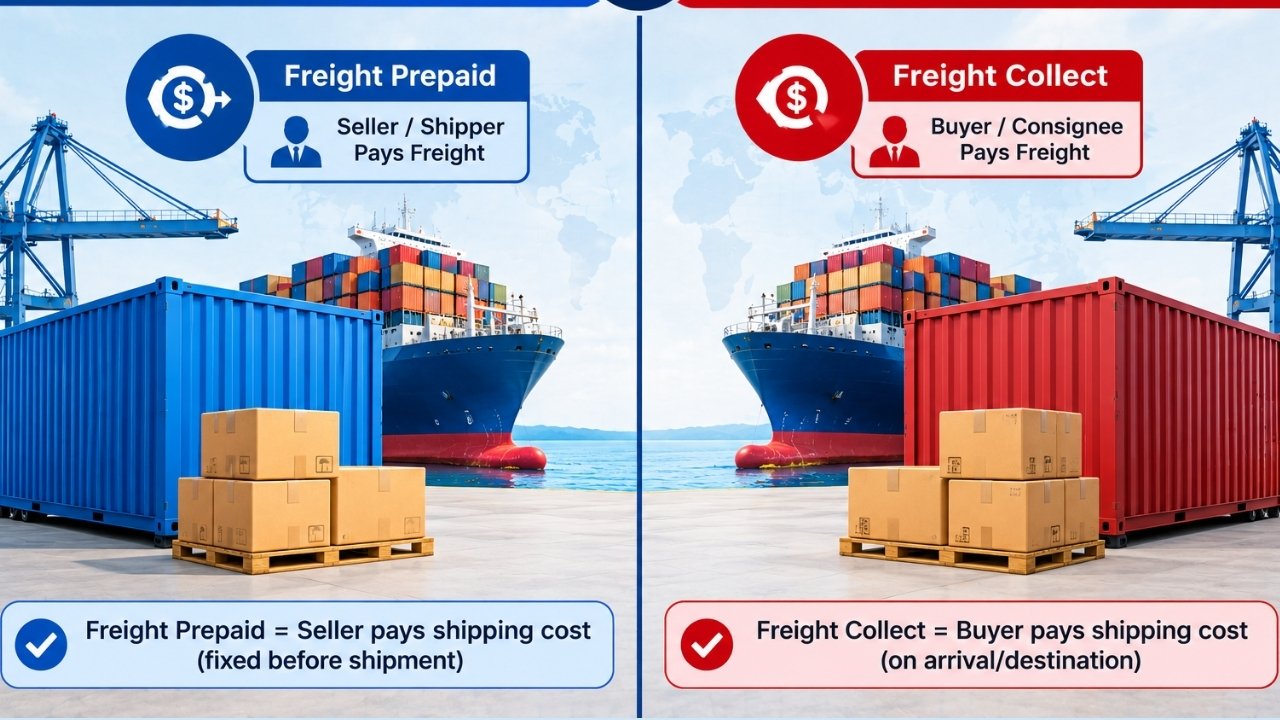
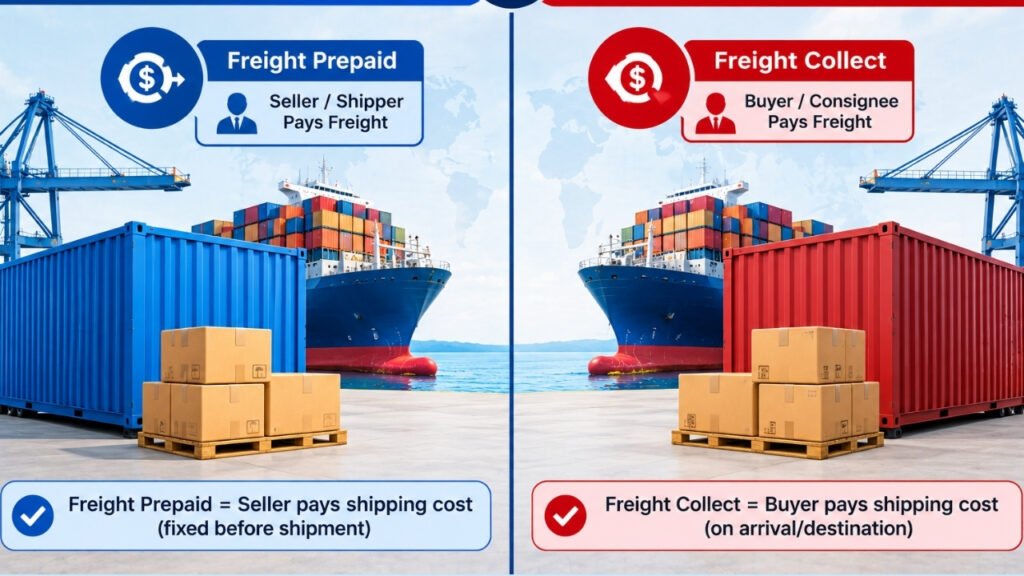
Freight Prepaid vs Freight Collect: What Exporters Need to Know Freight Prepaid and Freight Collect…

7 Types of Bill of Lading Every Exporter Should Know A Bill of Lading, commonly…
Let’s work together to simplify your logistics and ensure fast, secure, and timely delivery of your shipments.

Your Trusted Partner in End-to-End Supply Chain Management, Offering Expertise, Reliability, and On-Time Delivery Across the Globe.