


How to Read a Shipping Container…
How to Read a Shipping Container Number: A Simple Guide A shipping container number is…

END TO END Solution

A CSC plate is an important safety identification plate found on shipping containers used in international transport. It provides key information showing that the container has been inspected and approved under the applicable requirements of the International Convention for Safe Containers, commonly known as the CSC Convention.
For importers, exporters, freight forwarders, shipping lines, and logistics companies, understanding the CSC plate can help with container identification, safety checks, inspections, and international cargo movement.
In this guide, we explain what a CSC plate is, what information it contains, why it is important, how to read it, when a container needs inspection, and what exporters and importers should check before using a container.
Table of Contents
Shipping containers are designed to carry cargo safely through multiple stages of international transportation. A single container may be moved by truck, rail, port handling equipment, and container ships during its journey.
Because containers are repeatedly lifted, stacked, transported, loaded, and unloaded, their structural safety is an important part of international container shipping.
The CSC Convention establishes safety requirements for containers used in international transport. A compliant container carries a CSC safety approval plate, commonly called a CSC plate.
The plate provides information that helps identify the container’s safety approval and important operating characteristics.
For businesses involved in sea freight services, understanding the CSC plate is useful when checking containers before international shipment.
A CSC plate is a safety approval plate attached to a shipping container. CSC stands for the International Convention for Safe Containers.
The convention was developed to establish generally accepted safety requirements for containers used in international transport.
A container that falls under the CSC Convention must meet the applicable safety requirements and carry the required safety approval information. 
CSC = Convention for Safe Containers
The CSC Convention was adopted under the International Maritime Organization framework to improve the safety of container handling and transportation.
The CSC plate is normally fixed to the exterior of the container in a location where it can be inspected.
The exact position can vary depending on the container design and manufacturer.
The plate provides important information about the container’s safety approval, identification, operating limits, and inspection status.
This allows relevant parties to identify important container information without having to rely only on shipping documents.
The CSC plate is important because containers used in international transport need to meet applicable safety requirements.
The CSC framework establishes requirements intended to ensure that containers can withstand the normal forces and conditions associated with international transportation.
Containers are frequently transferred between ships, trucks, rail networks, terminals, and warehouses. A recognized safety approval system helps support their use across international transport operations.
The CSC plate provides information that can be checked during container inspections and operational handling.
The plate contains important details that help identify the container’s safety approval and technical characteristics.
Knowing the container’s permitted operating limits is important when planning loading and transportation.
A CSC plate contains several pieces of information about the container and its safety approval.
The exact layout can vary, but a CSC plate commonly includes information such as:
One of the most important details shown on a container’s safety plate is its maximum operating gross mass.
This indicates the maximum permitted gross mass of the container under the applicable conditions.
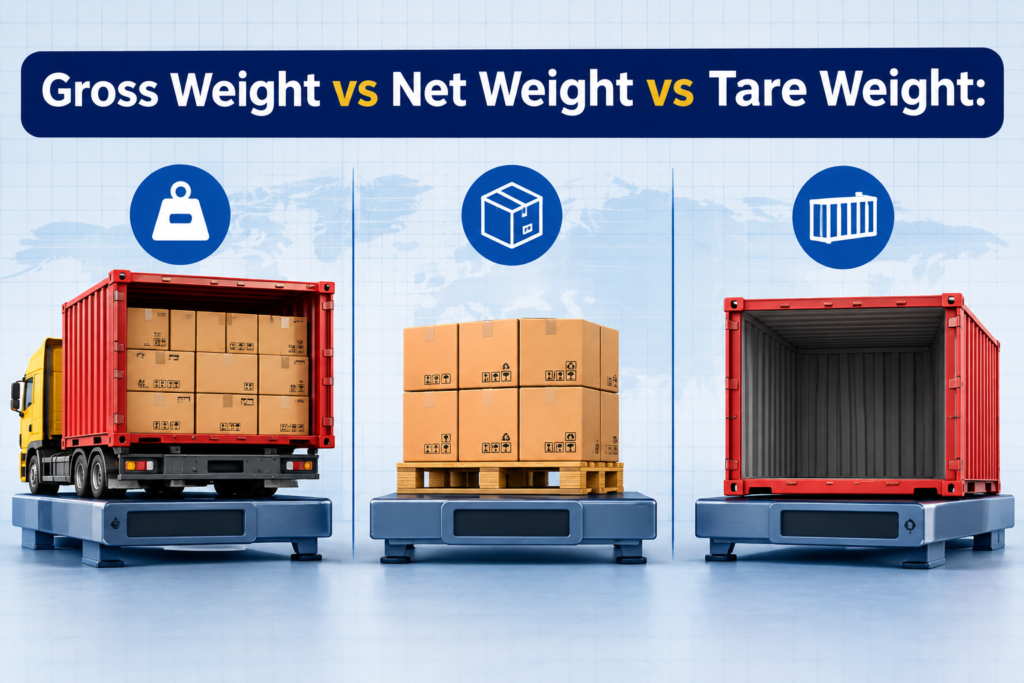
It should not be confused with the container’s tare weight.
| Term | Meaning |
|---|---|
| Tare Weight | Weight of the empty container. |
| Cargo Weight | Weight of the goods loaded inside the container. |
| Gross Mass | Combined weight of the container and its contents. |
| Maximum Gross Mass | Maximum permitted gross mass indicated for the container. |
Reading a CSC plate may seem complicated at first because it contains technical information and abbreviations.
However, exporters and logistics professionals usually need to focus on several key details.
Look for the information showing that the container has received the applicable CSC safety approval.
Review the manufacturer and container identification information shown on the plate.
The manufacturing date or related information can help identify the age and history of the container.
Confirm the maximum permitted gross mass before loading cargo.
Review the inspection or examination information shown on the plate where applicable.
Imagine a container’s CSC plate shows a maximum gross mass of 30,480 kg.
This means the combined gross mass of the container and its cargo should not exceed the applicable maximum indicated for the container.
If the cargo weighs 26,000 kg and the empty container weighs 2,300 kg, the illustrative gross mass would be:
26,000 kg + 2,300 kg = 28,300 kg
In this example, the gross mass remains below the stated 30,480 kg maximum.
Actual loading must always follow the container’s marked limits and applicable regulations.
CSC-approved containers are subject to inspection and examination requirements intended to ensure that containers remain safe for international transport.
The inspection system includes different examination approaches, and the applicable requirements can depend on the container’s approval and inspection scheme.
A container must undergo the required initial examination before being approved for use under the CSC framework.
This examination is intended to confirm that the container meets the applicable safety requirements.
Containers also need to undergo periodic examination according to the applicable inspection system.
The inspection helps identify whether the container continues to meet the required safety standards.
A container may also need to be inspected when it has experienced significant damage or an event that could affect its structural safety.
Examples can include:
The CSC safety approval is not simply a permanent approval that remains unaffected throughout the container’s entire life.
Containers are subject to examination requirements intended to confirm that they remain safe for use.
Under the traditional periodic examination system, containers are generally examined at specified intervals, with the first periodic examination normally required within five years of manufacture and subsequent examinations at intervals not exceeding 30 months.
There are also approved continuous examination programmes under which containers are examined according to an approved inspection programme.
Therefore, exporters should not assume that the manufacturing date alone determines whether a container is currently acceptable for use.
A CSC plate is an important safety identification component of a container. If it is missing, unreadable, altered, or damaged, the container may require assessment before being accepted for international transport.
Without the required safety approval information, it may be difficult for the relevant parties to verify the container’s compliance and technical details.
A damaged container should be assessed based on the severity and location of the damage.
Not every cosmetic mark makes a container unsafe, but structural damage can affect its ability to safely carry and withstand transportation loads.
The CSC framework focuses on the safety of containers used in international transport.
Containers need to be capable of withstanding the forces associated with normal transportation and handling.
Corner fittings are critical components used for lifting, handling, and securing containers.
They should be checked for significant damage or deformation.
Container doors should operate correctly and the locking components should be in appropriate condition.
The container floor should be checked for damage that could affect safe cargo loading or the container’s structural condition.
Walls and roof panels should be inspected for significant structural damage, deformation, or corrosion.
The container should not be loaded beyond its applicable maximum gross mass or other relevant limits.
Even when a container has a valid CSC approval, cargo must still be properly packed, distributed, and secured.
A valid CSC plate does not mean that cargo can be loaded without considering weight distribution and cargo securing requirements.
Before using a container for export cargo, exporters should perform basic checks and confirm that the container is suitable for the planned shipment.
Confirm that the required CSC approval information is present and readable.
Make sure the container identification number matches the booking and shipping documentation.
Confirm that the planned cargo weight plus the container tare weight will remain within the permitted maximum gross mass.
Check the roof, walls, doors, floor, corner fittings, and other visible structural components.
Look for holes, damaged seals, gaps, or other conditions that could expose cargo to water or external elements.
Make sure the container is clean and suitable for the cargo being shipped.
For a loaded container, the exporter should also ensure that the required Verified Gross Mass information is correctly determined and submitted.
Understanding freight forwarding services can also help exporters coordinate container booking, documentation, and shipment planning.
Consider a dry container being prepared for export.
| CSC Plate Information | Illustrative Example |
|---|---|
| Approval information | CSC safety approval reference |
| Manufacturer | Container manufacturer |
| Manufacturing date | Example: 2024 |
| Maximum gross mass | Example: 30,480 kg |
| Stacking information | Applicable permitted stacking load |
| Racking information | Applicable transverse racking test information |
The values shown above are illustrative. The actual information must be read directly from the container’s CSC plate and related documentation.
The information helps operators understand the container’s approved technical characteristics and applicable operating limits.
For example, the maximum gross mass is important when planning how much cargo can safely be loaded into the container.
Use this checklist when checking a container before an international shipment.
| Check | What to Confirm |
|---|---|
| CSC plate | Confirm the required plate is present and readable. |
| Approval | Check the CSC approval information. |
| Container number | Confirm the container identification matches the documents. |
| Manufacturing date | Check the manufacturing information. |
| Inspection | Check the applicable examination information. |
| Maximum gross mass | Confirm the cargo will remain within the applicable limit. |
| Corner fittings | Check for visible structural damage. |
| Doors | Check doors and locking mechanisms. |
| Floor | Check for significant damage. |
| Walls and roof | Check for holes, serious deformation, or structural damage. |
| Interior | Confirm the container is clean and suitable for the cargo. |
A CSC plate is an important part of an internationally used shipping container. It provides safety approval and technical information that helps relevant parties understand the container’s approved characteristics and operating limits.
For exporters and importers, checking the CSC plate should be part of the wider container preparation and inspection process. Businesses should also check the physical condition of the container, maximum gross mass, inspection information, doors, floor, walls, roof, and corner fittings before loading cargo.
A CSC plate alone does not replace proper cargo packing, weight verification, or container inspection. Safe container shipping requires attention to all of these areas.
Businesses involved in international container transportation can also review FCL shipping services to understand more about full-container-load transportation.
A CSC plate is a safety approval plate attached to a shipping container. It contains information showing the container’s CSC approval and important technical and operating details.
CSC stands for the Convention for Safe Containers, an international framework establishing safety requirements for containers used in international transport.
A CSC plate can include approval information, manufacturer details, manufacturing information, maximum gross mass, stacking information, racking information, and other applicable technical details.
Under the traditional periodic examination scheme, the first periodic examination is generally required within five years of manufacture and subsequent examinations at intervals not exceeding 30 months. Containers may alternatively be covered by an approved continuous examination programme.
A container subject to the CSC Convention needs the required safety approval information. If the CSC plate is missing, damaged, or unreadable, the container should be referred to the owner, carrier, or appropriate responsible party for verification before international use.
Speak with our team to find the best shipping solutions for your business.
+230 52583493

How to Read a Shipping Container Number: A Simple Guide A shipping container number is…
Freight Prepaid vs Freight Collect: What Exporters Need to Know Freight Prepaid and Freight Collect…

7 Types of Bill of Lading Every Exporter Should Know A Bill of Lading, commonly…
Let’s work together to simplify your logistics and ensure fast, secure, and timely delivery of your shipments.

Your Trusted Partner in End-to-End Supply Chain Management, Offering Expertise, Reliability, and On-Time Delivery Across the Globe.