

How to Read a Shipping Container…
How to Read a Shipping Container Number: A Simple Guide A shipping container number is…

END TO END Solution
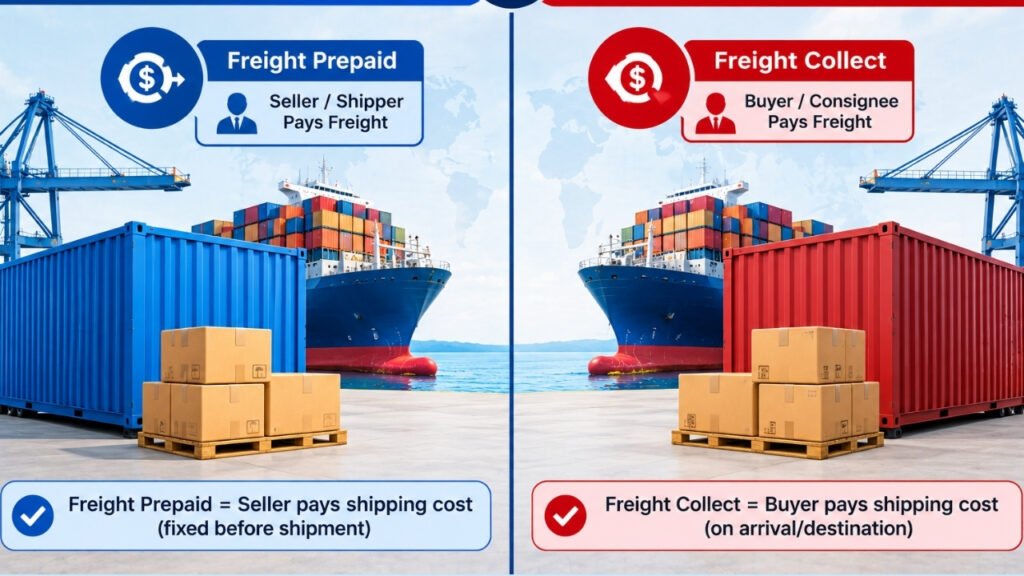
Freight Prepaid and Freight Collect are two common ways of determining who pays the freight charges in international shipping. Understanding the difference is important for exporters, importers, freight forwarders, and logistics teams when arranging shipments.
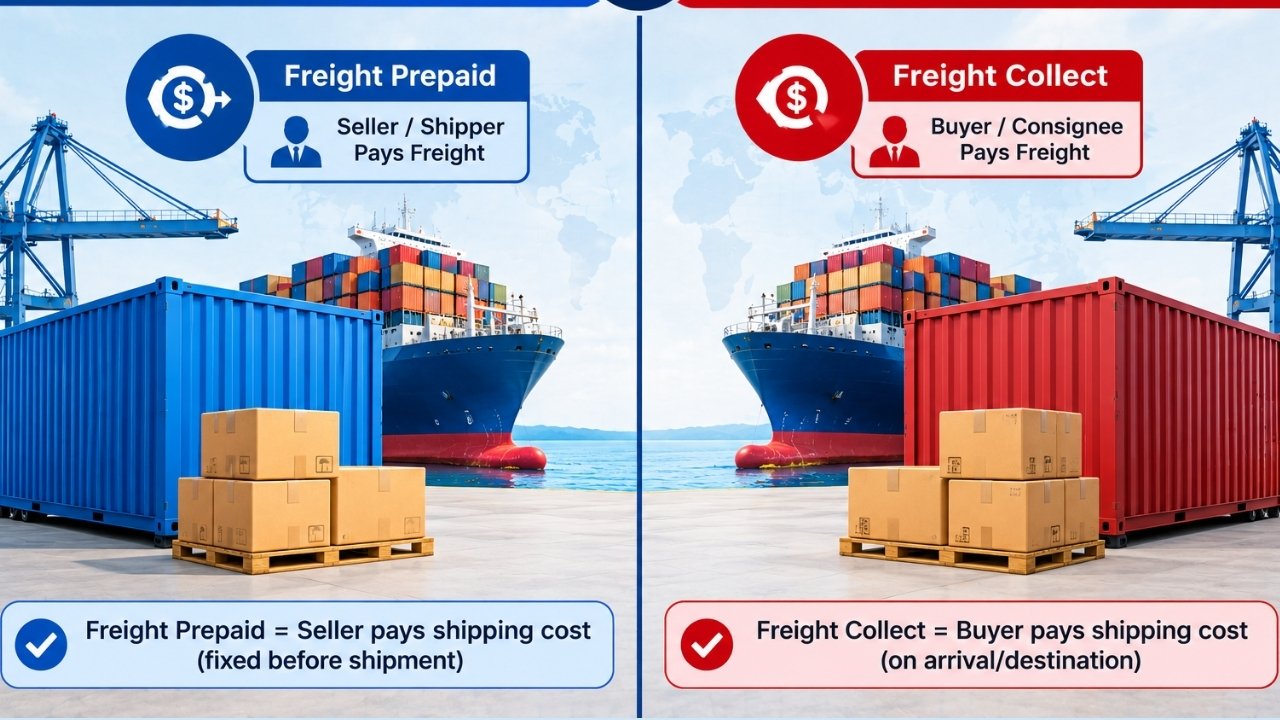
In simple terms, Freight Prepaid means the freight charges are paid by the shipper before or at the time of shipment, while Freight Collect means the freight charges are paid by the consignee at the destination, subject to the agreed shipping terms and carrier arrangements.
However, freight payment terms should not be confused with Incoterms. Incoterms determine responsibilities for costs, delivery, risk, and other obligations between the buyer and seller, while the freight payment instruction tells the carrier how the freight charges are to be collected.
In this guide, we explain what Freight Prepaid and Freight Collect mean, how they work, who pays the charges, their advantages and disadvantages, and what exporters should consider before choosing the appropriate arrangement.
Table of Contents
International shipments involve several different costs, including ocean freight, terminal charges, documentation fees, handling charges, and other applicable transportation costs.
Before a shipment is moved, the parties involved need to understand how the freight charges will be paid.
Two common arrangements are Freight Prepaid and Freight Collect.
For exporters using sea freight services, understanding these terms can help avoid confusion over freight invoices and payment responsibilities.
Freight Prepaid means the applicable freight charge is paid by the shipper before or during the shipment process, according to the carrier’s billing arrangements.

The shipper is generally responsible for settling the freight charge with the carrier or freight forwarder rather than leaving the main freight charge for collection from the consignee at destination.
Freight Prepaid is commonly used when the seller or shipper has agreed to arrange and pay the freight as part of the commercial transaction.
An exporter in Mauritius ships goods to a buyer in another country. The exporter books the shipment and pays the agreed ocean freight to the carrier or freight forwarder.
In this case, the shipment may be arranged on a Freight Prepaid basis.
A typical Freight Prepaid arrangement may involve:
The exact payment process can vary depending on the carrier, freight forwarder, shipment type, and contractual arrangements.

Shipper → Freight Payment → Carrier/Freight Forwarder → Transport → Consignee
Freight Prepaid does not necessarily mean that the shipper pays every cost associated with the shipment. Other charges may still be payable by the consignee or another party depending on the agreed terms.
Freight Collect means the applicable freight charges are collected from the consignee or receiving party, generally at destination or according to the carrier’s agreed billing process.

Under a Freight Collect arrangement, the shipper does not pay the main freight charge in advance in the same way as a prepaid shipment.
The consignee is generally responsible for paying the collect freight charges before or as part of the cargo release process, subject to the carrier’s terms and local procedures.
An exporter ships machinery to an overseas buyer under an arrangement where the buyer is responsible for the applicable freight charge.
The carrier records the freight as Collect, and the consignee pays the applicable freight charges at destination according to the carrier’s procedures.
A typical Freight Collect arrangement may involve:

Shipper → Carrier → Destination → Freight Payment by Consignee → Cargo Release
The exact procedure depends on the carrier, destination, shipping documents, and local regulations.
| Feature | Freight Prepaid | Freight Collect |
|---|---|---|
| Basic meaning | Freight is paid by the shipper. | Freight is collected from the consignee. |
| Typical payment point | Before or during shipment. | At destination or according to carrier arrangements. |
| Common payer | Shipper/exporter. | Consignee/importer. |
| Billing responsibility | Generally handled with the origin-side booking party. | Generally handled with the destination-side receiving party. |
| Cash-flow impact | Shipper pays freight earlier. | Consignee pays freight later, subject to carrier terms. |
| Destination payment | Main freight is generally not collected from the consignee as collect freight. | Applicable collect freight is generally payable by the consignee. |
| Commercial agreement | Depends on the sales contract and freight arrangement. | Depends on the sales contract and freight arrangement. |
The exact charges and payment responsibilities should always be confirmed with the carrier or freight forwarder before shipment.
The term Freight Prepaid or Freight Collect generally refers to the agreed freight charges, but it does not automatically determine every cost associated with an international shipment.
Depending on the shipment, additional charges may include:
Who pays these charges depends on the agreed commercial terms, carrier arrangements, local procedures, and applicable Incoterm.
The shipper can arrange and settle the agreed freight cost before the cargo reaches the destination.
Prepaying the freight can make it easier for exporters to calculate the shipping cost associated with the shipment.
Freight Prepaid may be appropriate when the seller has agreed to arrange and pay the freight under the commercial contract.
The exporter may need to pay the freight before receiving payment from the buyer, depending on the sales agreement.
Paying freight at origin can increase the exporter’s immediate cash-flow requirements.
Freight rates and additional charges can vary depending on the carrier, route, destination, and shipment conditions.
The consignee generally pays the applicable collect freight charges rather than the shipper paying the main freight charge in advance.
Freight Collect may be suitable when the buyer has agreed to arrange or pay for the transportation cost.
The shipper may avoid paying the main freight charge upfront, depending on the agreed arrangement.
The consignee needs to be prepared to settle the applicable charges before cargo release where required.
Failure to settle destination charges can delay cargo release or delivery.
Not every carrier, trade route, or shipment arrangement may allow Freight Collect under the same conditions.
One of the most important points for exporters is that Freight Prepaid and Freight Collect are not Incoterms.
Incoterms are standardized trade terms that define important responsibilities between the seller and buyer, including delivery obligations, costs, and transfer of risk.
Freight payment instructions, on the other hand, tell the carrier how the agreed freight should be billed or collected.
For example, a shipment can involve an Incoterm that requires the seller to arrange transportation while the parties still need to specify the appropriate freight billing arrangement with the carrier.
Therefore, exporters should avoid assuming that an Incoterm automatically means Freight Prepaid or Freight Collect in every shipment.
The appropriate arrangement depends on the sales contract, Incoterm, buyer-seller agreement, carrier requirements, route, and payment responsibilities.
Before confirming the booking, exporters should verify the freight payment terms with their freight forwarder or shipping line.
An exporter ships 20 containers of general cargo to an overseas customer. The seller has agreed to arrange and pay the agreed ocean freight.
The exporter pays the freight to the carrier or freight forwarder, and the shipment is arranged as Freight Prepaid.
An exporter sells goods to an overseas buyer under an arrangement where the buyer is responsible for the applicable freight.
The shipment is arranged as Freight Collect, and the consignee settles the applicable freight charges according to the carrier’s destination procedures.
A buyer and seller may agree on a particular Incoterm that determines who is responsible for transportation costs and risk. However, the carrier’s freight billing instruction still needs to be correctly established.
This is why exporters should confirm both the commercial trade term and the freight payment instruction before shipping.
Before confirming a shipment, exporters should check:
| Check | What to Confirm |
|---|---|
| Sales agreement | Confirm which party is responsible for the agreed freight cost. |
| Incoterm | Confirm the agreed Incoterm and understand its cost and risk responsibilities. |
| Freight instruction | Confirm whether the shipment should be Freight Prepaid or Freight Collect. |
| Carrier | Check the carrier’s requirements for prepaid or collect shipments. |
| Freight charges | Confirm the agreed freight amount and applicable surcharges. |
| Destination charges | Determine which destination charges may be payable by the consignee. |
| Shipping documents | Check that freight payment information is correctly reflected on the applicable documents. |
| Payment timing | Confirm when the freight must be paid and whether payment is required before cargo release. |
The main difference between Freight Prepaid and Freight Collect is who pays the agreed freight charges and when those charges are collected.
Freight Prepaid generally means the shipper pays the applicable freight charges before or during the shipment.
Freight Collect generally means the consignee pays the applicable freight charges at destination or according to the carrier’s agreed billing procedure.
However, Freight Prepaid and Freight Collect should not be confused with Incoterms. The sales contract, agreed Incoterm, carrier requirements, and shipment-specific charges should all be reviewed before confirming the freight arrangement.
Exporters working with international cargo can also review freight forwarding services to understand how freight bookings, documentation, transportation, and logistics coordination can be managed.
Freight Prepaid generally means the shipper pays the agreed freight charges before or during the shipment according to the carrier’s billing arrangements.
Freight Collect generally means the applicable freight charges are collected from the consignee at destination or according to the carrier’s agreed billing process.
The shipper or exporter generally pays the applicable prepaid freight charges.
The consignee or importer generally pays the applicable collect freight charges, subject to the carrier’s terms and shipment arrangements.
No. Freight Prepaid is a freight payment instruction, while Incoterms define agreed responsibilities between the buyer and seller for delivery, costs, and risk.
Not necessarily. Freight Collect generally refers to the agreed freight charge. Other costs, such as customs duties, terminal charges, inland transportation, storage, or documentation fees, may be allocated separately.
The appropriate arrangement depends on the sales agreement, Incoterm, carrier requirements, route, and agreement between the buyer and seller.
Exporters should check the sales contract, Incoterm, freight responsibility, carrier requirements, applicable charges, payment timing, destination charges, and shipping documentation.
Speak with our team to find the best shipping solutions for your business.
+230 52583493
How to Read a Shipping Container Number: A Simple Guide A shipping container number is…
Freight Prepaid vs Freight Collect: What Exporters Need to Know Freight Prepaid and Freight Collect…

7 Types of Bill of Lading Every Exporter Should Know A Bill of Lading, commonly…
Let’s work together to simplify your logistics and ensure fast, secure, and timely delivery of your shipments.

Your Trusted Partner in End-to-End Supply Chain Management, Offering Expertise, Reliability, and On-Time Delivery Across the Globe.