

How to Read a Shipping Container…
How to Read a Shipping Container Number: A Simple Guide A shipping container number is…

END TO END Solution
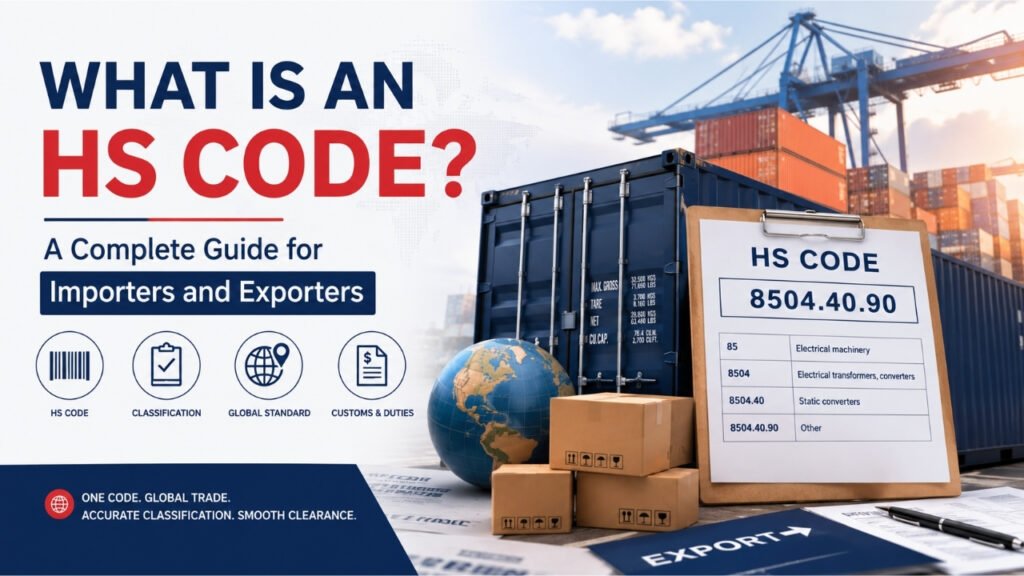
What is an HS code? An HS code is an internationally recognized system used to classify products traded between countries. It helps customs authorities identify goods and can be used for customs duties, import requirements, trade statistics, and other customs procedures.
If you import or export goods internationally, understanding HS code classification is important. Choosing the correct HS code requires more than simply searching for a product name. The classification can depend on the product’s material, function, composition, construction, intended use, and other characteristics.
This guide explains what is an HS code, how the HS code system works, how to find the correct HS code, and common mistakes importers and exporters should avoid.
Table of Contents
If you import or export goods internationally, you will come across an important number called an HS code.
An HS code helps customs authorities identify and classify products as they move between countries. It is used for many different purposes, including determining applicable customs duties, collecting trade statistics, applying import regulations, and checking whether certain products require permits or additional documentation.
For an importer or exporter, choosing the correct HS code is more than simply finding a number that looks similar to the product. The classification can depend on the product’s material, function, composition, construction, intended use, and other characteristics.
For example, a metal kitchen product and a metal industrial component may look similar but can fall under completely different tariff classifications.
So, what is an HS code, how does it work, and how can you find the correct one?
This guide explains the HS code system step by step, with practical examples to help importers and exporters understand product classification and avoid common mistakes.
HS code stands for Harmonized System code.
It is an internationally recognized system used to classify traded products. The system provides a common framework for identifying goods so customs authorities, businesses, and trade organizations can classify products consistently.
The Harmonized System is developed and maintained internationally, while individual countries can add additional digits to create more detailed national tariff classifications.
An HS code helps identify the type of product being imported or exported.
Depending on the country and tariff system, the classification may be used to determine:
Imagine a company exports wooden furniture.
The product cannot simply be declared as:
Wooden product
Customs needs a more specific classification based on the type and characteristics of the product.
The correct classification may depend on whether it is:
The HS classification process helps customs determine the appropriate tariff category.
The HS code essentially tells customs what type of product is contained in the shipment.
That information is then used alongside other shipment details such as:
Accurate classification is therefore an important part of international trade.
The Harmonized System uses a structured classification system.
At the international level, HS codes are generally based on six digits. Countries can then add additional digits to create more detailed classifications for their own tariff and customs requirements.
The first six digits generally identify the internationally harmonized classification.
The structure can be understood as:
Chapter → Heading → Subheading
Additional digits may then be added by individual countries.
Suppose a product has an HS classification represented as:
84 71 30
The digits are interpreted through the classification structure rather than simply being a random product number.
The first two digits identify the chapter. The first four digits identify the heading. The first six digits identify the subheading.
The exact meaning of each code depends on the official tariff classification and the product description.
An HS code is not simply selected based on the product name.
Two products with similar names can have different classifications because their:
may be different.
Understanding the structure makes HS code classification easier.
The first two digits represent the chapter.
The HS system is divided into chapters that group products into broad categories.
For example, different chapters cover categories such as:
The chapter provides the broadest level of classification.
The first four digits identify the heading.
The heading provides a more specific classification within the chapter.
For example, a chapter may cover a broad product category, while a heading identifies a particular type of product within that category.
The first six digits identify the HS subheading.
This provides a more detailed international classification.
Countries may add more digits beyond the six-digit HS code.
These additional digits can be used to provide more detailed national classifications.
Therefore, an importer should not assume that the six-digit HS code is always the complete tariff number required for a customs declaration.
The final classification used for customs clearance depends on the destination country’s tariff system and applicable rules.
HS codes are important because customs authorities need a standardized way to identify goods.
Without a classification system, determining the appropriate treatment for millions of imported and exported products would be much more difficult.
One of the most important uses of an HS code is determining the applicable tariff or customs duty.
Different product categories can have different duty rates.
Imagine an importer brings two different products into a country.
Product A may have one tariff rate, while Product B may have another.
Even if both products have similar values, their customs treatment may differ because their classifications are different.
Some products may require additional documents, licenses, permits, certifications, or inspections.
The HS classification can help customs authorities determine whether such requirements apply.
For example, certain categories of:
may be subject to specific regulations.
The HS code is commonly included in customs documentation.
Accurate product classification helps customs authorities compare the declared:
This helps create a more complete picture of the shipment.
Governments and international organizations use product classifications to analyze import and export activity.
HS codes help organize trade data into standardized product categories.
This makes it easier to analyze:
Incorrect classification can result in questions from customs authorities.
A clear and accurate classification can help reduce avoidable issues during customs processing.
For businesses regularly importing or exporting products, consistent classification is therefore important.
Finding the correct HS code requires more than searching the product name.
You need accurate information about the product first.
Start by collecting detailed product information.
Check:
The more detailed the product information, the easier classification becomes.
Determine which broad category the product belongs to.
For example, a company importing a machine part should first determine whether the item is:
This distinction can affect the classification.
Use the official customs or tariff classification system applicable to the importing country.
Look at:
Do not rely only on a generic internet search.
Sometimes multiple classifications appear possible.
In that situation, compare the product carefully against the descriptions and applicable classification rules.
Ask:
Which classification most accurately describes the actual product?
Remember that HS classification is internationally harmonized at the six-digit level, while countries may use additional digits for their national tariff systems.
Therefore, the code used for an import declaration may be longer than six digits.
A practical HS code classification process can be broken into several stages.
Gather:
Determine what makes the product what it is.
For example, a product may be made from steel, but that does not automatically mean it should be classified simply as a steel product.
Its function and specific characteristics may be more important to its classification.
Start with the broad product category.
Move from the broad category toward the more specific classification.
HS classification is governed by established classification principles and notes.
The product should be classified according to the applicable rules rather than simply selecting the code with the lowest duty rate.
Check the importing country’s current tariff schedule.
Once the classification has been properly established, use the appropriate code consistently for future shipments of the same product, provided the product and applicable tariff rules have not changed.
If the product’s:
changes significantly, the classification should be reviewed.
Consider a company importing a stainless steel kitchen utensil.
The importer should not immediately select an HS code simply because the product is made from stainless steel.
Instead, the importer should examine the product.
The product is a kitchen utensil.
It is made from stainless steel.
Its purpose is to be used in food preparation or serving.
The importer reviews the relevant chapter, headings, and subheadings for kitchen and household articles.
The importer checks the importing country’s tariff schedule to identify the complete national tariff code.
If there is uncertainty, the importer can seek professional customs advice or an official classification decision where available.
The important lesson is that classification should consider the complete nature of the product, not just one characteristic.
Simply searching:
“stainless steel HS code”
may not be enough to determine the correct classification.
HS codes can directly affect the customs treatment of imported goods.
When a shipment enters a country, customs authorities use the product classification along with other information to determine applicable charges and requirements.
Depending on the country and transaction, customs treatment may involve factors such as:
Suppose an importer purchases goods with a customs value of $20,000.
The applicable tariff rate depends on the product classification and the importing country’s rules.
If the goods are incorrectly classified under a different tariff category, the resulting customs calculation may also be incorrect.
This is why HS code accuracy matters.
It is important to remember that the HS code does not by itself determine the complete landed cost.
Other costs can include:
For businesses planning international shipments, working with an experienced freight forwarding service can help coordinate the different stages of the shipment.
HS codes are relevant to both importers and exporters.
Importers need accurate classification because the code may affect:
An incorrect code can create additional questions or delays.
For companies importing goods regularly, maintaining accurate product classification records can make future shipments easier to manage.
Exporters also need to provide accurate product information.
The HS code can help identify the goods in international trade documentation and support customs procedures in the destination market.
However, exporters should be careful not to assume that the code used in their home country will always be identical to the complete tariff code used by the destination country.
The first six digits provide the internationally harmonized basis, while additional national digits can vary.
A commercial invoice normally contains important shipment information such as:
The product description and HS code should make sense together.
Weak description:
Parts
Better description:
Stainless steel replacement components for industrial food-processing equipment
The more accurate the product description, the easier it is for customs and logistics providers to understand what is being shipped.
HS classification errors can create unnecessary customs problems.
Here are some common mistakes importers and exporters should avoid.
A product name may not provide enough information for classification.
Always consider the product’s actual characteristics and function.
Tariff classifications and national tariff schedules can change.
Do not assume that a code used several years ago is still appropriate today.
Review the applicable current tariff information.
The internationally harmonized HS classification is generally six digits, but countries can add additional digits.
Always check the destination country’s tariff requirements.
The correct classification should be based on the applicable classification rules, not simply on which category has the lowest duty rate.
A vague description can make classification more difficult.
Avoid descriptions such as:
when a more precise description is available.
Two businesses may sell products that appear similar but have meaningful differences.
Never assume another company’s classification automatically applies to your product.
If the product changes significantly, review its classification.
A change in:
could potentially affect the classification.
Import requirements vary by country.
Always verify the applicable tariff classification and customs requirements for the actual destination market.
HS code classification is ultimately a customs and tariff matter, but freight forwarders often work closely with importers and exporters during the documentation and shipping process.
A freight forwarder may help review shipment information, identify documentation requirements, coordinate with customs brokers or agents, and ensure that the shipment information is communicated correctly across the logistics process.
For example, before an international shipment moves, the logistics team may review:
For businesses moving cargo by ocean, accurate documentation is especially important because several parties may be involved in the shipment.
You can also learn more about sea freight services if your business regularly moves cargo internationally by ocean.
Consider getting professional customs or classification advice when:
For customs-related shipment support, businesses can also review customs clearance services.
Businesses can also learn more about shipping abbreviations to better understand common terminology used in international shipping documentation.
A freight forwarder can support the logistics process, but the importer remains responsible for providing accurate information and complying with applicable customs requirements.
When classification is uncertain, professional customs advice or an official classification ruling may be appropriate.
Understanding what is an HS code is essential for anyone involved in international importing or exporting.
The HS code provides a standardized way to classify products in global trade. It can support customs declarations, tariff calculations, trade statistics, and the identification of applicable import requirements.
The basic international HS classification uses six digits, while individual countries can add additional digits to create more detailed national tariff codes.
The most important point is that an HS code should be selected based on the actual characteristics of the product rather than simply its name.
Before shipping, make sure you have:
If you regularly import or export goods, maintaining accurate product classification records can help make your shipping and customs process more consistent and efficient.
An HS code is a Harmonized System code used to classify products traded internationally. The internationally harmonized classification generally uses six digits, while individual countries may add additional digits to create their national tariff codes.
Start by identifying the product’s material, function, composition, construction, and intended use. Then review the applicable official tariff classification for the importing country. If several classifications appear possible, professional customs advice may be appropriate.
The first six digits are internationally harmonized, but countries can add additional digits to create their own national tariff classifications. Therefore, the complete tariff code can differ between countries.
The HS code helps customs authorities classify the goods and can be used when determining applicable duties, taxes, restrictions, permits, and other import requirements.
Yes. An incorrect or unclear classification can lead to customs questions, additional documentation requests, incorrect duty calculations, or other clearance issues. Accurate classification helps reduce avoidable problems during the customs process.
Speak with our team to find the best shipping solutions for your business.
+230 52583493
How to Read a Shipping Container Number: A Simple Guide A shipping container number is…
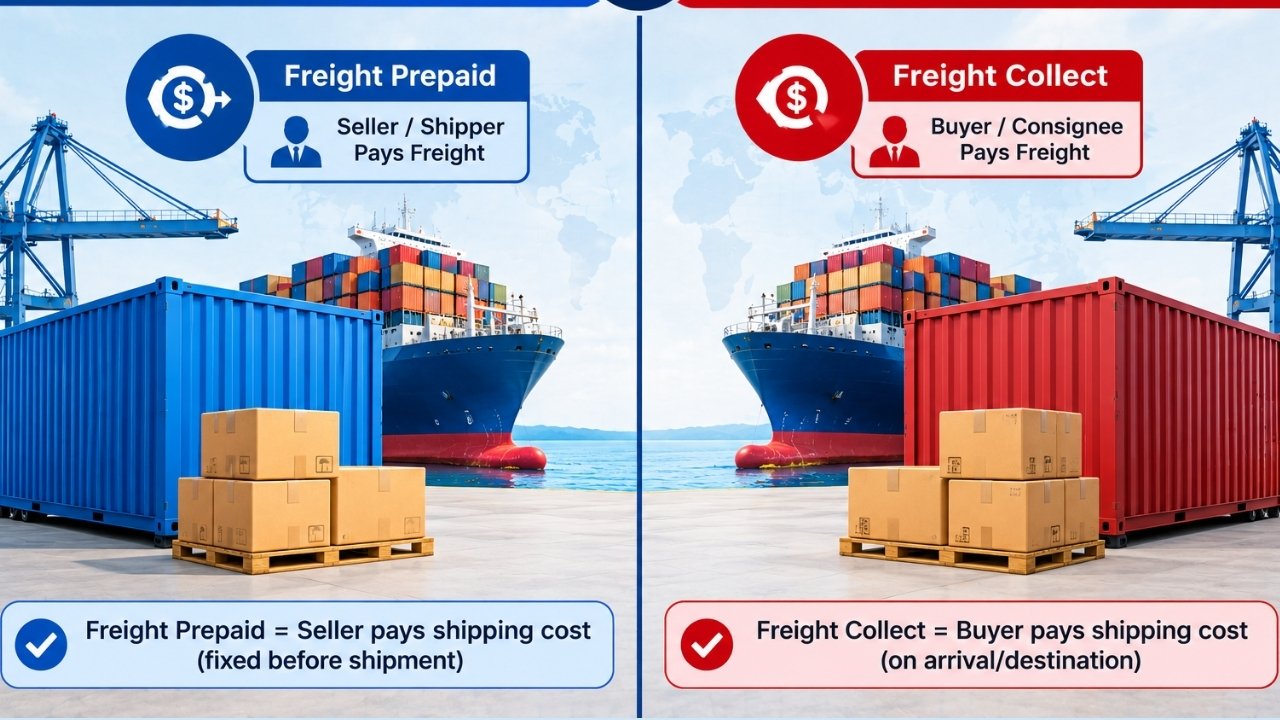
Freight Prepaid vs Freight Collect: What Exporters Need to Know Freight Prepaid and Freight Collect…

7 Types of Bill of Lading Every Exporter Should Know A Bill of Lading, commonly…
Let’s work together to simplify your logistics and ensure fast, secure, and timely delivery of your shipments.

Your Trusted Partner in End-to-End Supply Chain Management, Offering Expertise, Reliability, and On-Time Delivery Across the Globe.