
How to Read a Shipping Container…
How to Read a Shipping Container Number: A Simple Guide A shipping container number is…

END TO END Solution
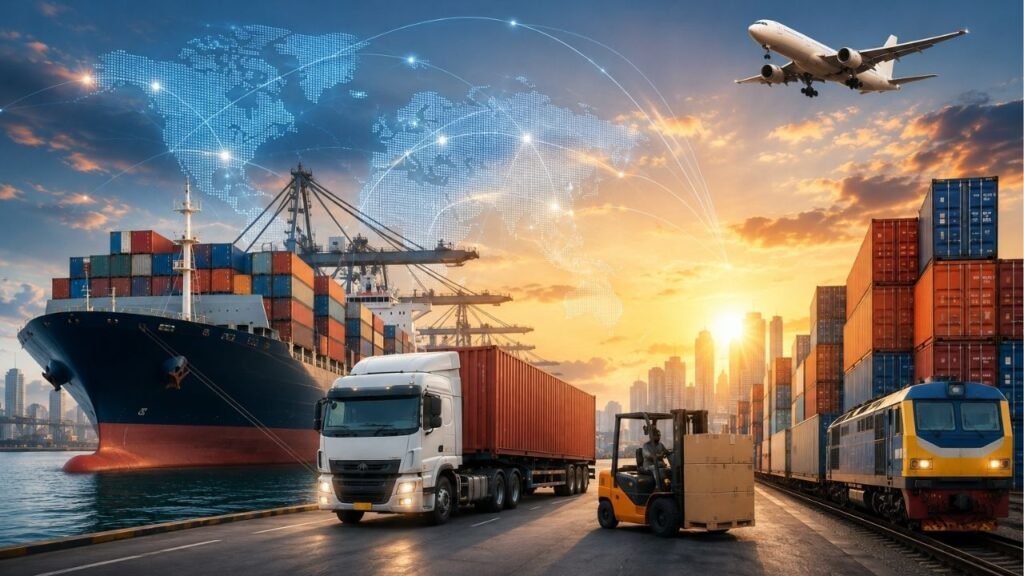
Global shipping is changing rapidly. New technologies, changing customer expectations, supply chain disruptions, environmental concerns, and the growth of international e-commerce are transforming how goods move around the world.
For freight forwarders, these changes are creating both challenges and opportunities. Businesses increasingly expect faster transportation, better visibility, accurate delivery information, competitive pricing, and more flexible logistics solutions.
Understanding the latest freight forwarding trends in 2026 can help importers, exporters, manufacturers, and logistics companies prepare for the future.
From artificial intelligence and automation to sustainable transportation and real-time tracking, technology and data are becoming increasingly important across the global shipping industry.
In this guide, we explore 10 freight forwarding trends changing global shipping in 2026 and explain what they mean for businesses.
Table of Contents
Artificial intelligence is becoming increasingly important in logistics and freight forwarding. AI-powered systems can help businesses process large amounts of shipping data, identify patterns, automate repetitive tasks, and support faster decision-making.
Freight forwarders can use automation for activities such as:
Manual processes can take significant time and may increase the risk of human error. Automation can help reduce repetitive work and allow logistics teams to focus on more complex tasks.
AI can also analyze historical information and current shipment data to identify potential delays or operational issues.
As freight forwarding becomes more technology-driven, companies that adopt useful automation tools can improve efficiency while providing faster service to customers.
Customers increasingly want to know where their shipments are and when they are expected to arrive.
Real-time shipment tracking is therefore becoming an important part of modern logistics services.

Tracking technology can provide information about:
Improved visibility allows businesses to monitor shipments instead of waiting for manual updates.
This can help companies plan inventory, communicate with customers, organize warehouse operations, and respond to delays more effectively.
Digital freight platforms are changing how shippers and logistics providers manage transportation.
Instead of relying entirely on emails, phone calls, and spreadsheets, businesses can increasingly use digital systems to manage shipment information in one place.
Digital freight platforms can support:
This digital approach can make freight management more convenient and improve communication between shippers, freight forwarders, carriers, and other logistics partners.
Customers increasingly expect logistics providers to offer fast responses and easy access to shipment information.
As a result, digital capabilities are becoming an important part of the overall freight forwarding experience.
Freight forwarding companies are increasingly using data to make better predictions about transportation operations.
Predictive analytics can help identify patterns in:
Traditional logistics management often reacts to problems after they occur. Predictive analytics can help companies identify potential problems earlier.
For example, if historical and current data indicate a higher risk of congestion on a particular route, a logistics team may evaluate alternative options before the shipment is significantly delayed.
This proactive approach can improve planning and reduce unexpected disruptions.
Sustainability is becoming an increasingly important consideration in global shipping.
Businesses are looking for ways to reduce the environmental impact of their supply chains while maintaining reliable transportation.
Green logistics initiatives may include:
Environmental considerations can influence purchasing decisions, corporate policies, supplier selection, and long-term logistics strategies.
Businesses may therefore evaluate transportation options not only by cost and speed but also by their environmental impact.
Choosing the appropriate transportation method can make a significant difference. For example, businesses comparing transportation modes can review air freight vs sea freight when evaluating speed, cost, capacity, and other shipment requirements.
Supply chain visibility has become a major priority for businesses operating internationally.

Companies need accurate information about where products are, what stage of transportation they are in, and whether potential problems could affect delivery.
Better visibility can help businesses:
Modern freight forwarding systems increasingly connect information from different parts of the logistics process.
This can provide businesses with a clearer view of their shipments from origin to destination.
Businesses are increasingly looking beyond a single transportation method when planning international shipments.
Multimodal transportation combines different modes such as:
The goal is to balance factors such as cost, speed, capacity, and destination requirements.
Not every shipment needs the fastest possible transportation from origin to destination. In some cases, businesses can combine transportation modes to achieve a better balance between cost and delivery time.
For example, ocean transportation may be used for the main international journey, followed by road transportation for inland delivery.
This approach can provide greater flexibility when managing complex international supply chains.
The growth of international e-commerce is increasing pressure on logistics providers to offer faster and more predictable delivery.
Online customers often expect clear delivery estimates and frequent shipment updates.
This is influencing freight forwarding and logistics in several ways:
E-commerce businesses may ship smaller quantities more frequently, making shipment consolidation and flexible transportation options increasingly important.
Businesses may need to evaluate FCL, LCL, air freight, sea freight, and other transportation options based on order volume and customer expectations.
Companies that are deciding between container shipping methods can review this FCL vs LCL shipping comparison to understand how the two options differ.
Freight forwarding does not operate independently from warehousing. Efficient cargo movement depends on coordination between transportation, storage, inventory, and delivery.
Internet of Things (IoT) devices and warehouse technologies can help businesses monitor and manage goods more efficiently.
Smart logistics systems can support:
When warehouse and transportation data are connected, businesses can make better decisions about inventory movement and delivery schedules.
This can become particularly valuable for businesses handling high shipment volumes or time-sensitive goods.
Global supply chains can be affected by port congestion, extreme weather, geopolitical events, transportation disruptions, labor issues, and sudden changes in demand.
As a result, businesses are placing greater emphasis on supply chain resilience.
Supply chain resilience refers to the ability of a business to prepare for disruptions, respond to problems, and recover operations as quickly as possible.
Businesses can improve resilience by:
Freight forwarders can help businesses evaluate alternative transportation options and coordinate shipments when normal logistics routes are disrupted.
Businesses looking to understand the broader role of freight forwarding can explore this freight forwarding complete beginner guide.
The trends shaping freight forwarding in 2026 are not limited to logistics companies. They can directly affect importers, exporters, manufacturers, retailers, and e-commerce businesses.
Businesses can receive more information about shipment status and potential delays.
Digital systems and data analytics can help logistics teams make transportation decisions more quickly.
Data-driven planning can help businesses compare transportation options and identify opportunities to improve logistics efficiency.
Multimodal transportation and alternative routes can provide businesses with more options when normal shipping arrangements are disrupted.
Better tracking and more predictable delivery information can help businesses provide customers with clearer shipping updates.
Technology is also changing how businesses evaluate transportation costs.
Freight rates can change based on factors such as:
Businesses should therefore avoid looking at a freight quote in isolation.
Understanding the factors behind pricing can make it easier to compare transportation options and plan shipping budgets. For more information, read what affects air freight rates.
The freight forwarding industry is moving toward a more connected, digital, data-driven, and flexible operating model.
Technology will continue to influence how logistics providers manage shipments, communicate with customers, analyze transportation data, and respond to disruptions.
However, technology alone will not replace the need for experienced logistics professionals.
Complex international shipments can involve customs requirements, documentation, transportation coordination, cargo handling, and multiple service providers.
The future of freight forwarding is therefore likely to combine technology, automation, data, and human expertise.
The global shipping industry is changing quickly, and freight forwarding companies need to adapt to new customer expectations, technology, environmental priorities, and supply chain challenges.
The 10 freight forwarding trends changing global shipping in 2026 include AI and automation, real-time tracking, digital freight platforms, predictive analytics, sustainable logistics, supply chain visibility, multimodal transportation, e-commerce growth, smart warehousing, and supply chain resilience.
For businesses involved in international trade, understanding these trends can help improve logistics planning and prepare for future changes.
The most successful logistics strategies will likely combine technology with experienced freight forwarding support to create shipping solutions that are efficient, visible, flexible, and resilient.
Major trends include AI and automation, real-time shipment tracking, digital freight platforms, predictive analytics, sustainable logistics, supply chain visibility, multimodal transportation, e-commerce growth, smart warehousing, and supply chain resilience.
AI can help automate repetitive processes, analyze shipment data, identify potential delays, support route planning, and improve operational decision-making.
Real-time tracking provides businesses with better visibility into shipment locations, delivery estimates, and potential delays. This can improve inventory planning and customer communication.
Digital freight forwarding uses online platforms and technology to manage activities such as quotations, bookings, documentation, shipment tracking, communication, and reporting.
Sustainability is becoming increasingly important because businesses are looking for ways to reduce the environmental impact of their supply chains while maintaining reliable transportation.
Multimodal transportation involves using two or more transportation modes, such as sea, air, road, or rail, as part of a shipment’s overall journey.
Businesses can improve resilience by developing alternative suppliers and routes, improving shipment visibility, maintaining appropriate inventory, using multiple transportation modes, and creating contingency plans.
Technology can automate many logistics processes, but complex international shipments still require coordination, expertise, documentation management, and problem-solving. Technology and freight forwarding expertise are likely to work together.
Speak with our team to find the best shipping solutions for your business.
+230 52583493
How to Read a Shipping Container Number: A Simple Guide A shipping container number is…
Freight Prepaid vs Freight Collect: What Exporters Need to Know Freight Prepaid and Freight Collect…
7 Types of Bill of Lading Every Exporter Should Know A Bill of Lading, commonly…
Let’s work together to simplify your logistics and ensure fast, secure, and timely delivery of your shipments.

Your Trusted Partner in End-to-End Supply Chain Management, Offering Expertise, Reliability, and On-Time Delivery Across the Globe.