

How to Read a Shipping Container…
How to Read a Shipping Container Number: A Simple Guide A shipping container number is…

END TO END Solution
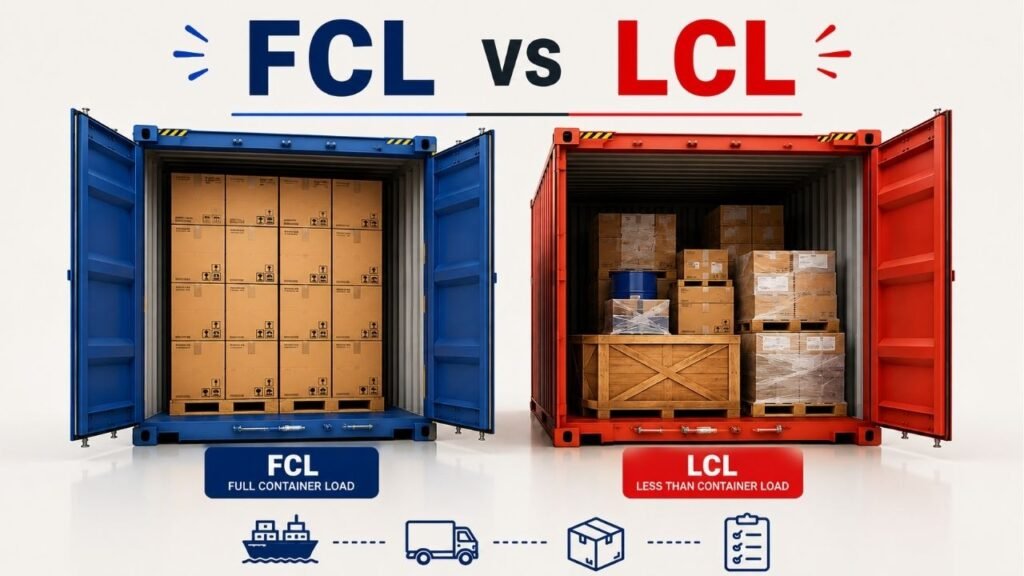
International shipping plays a critical role in global trade, especially for businesses working with a reliable logistics company in Mauritius. One of the most important decisions importers and exporters face is choosing between FCL (Full Container Load) and LCL (Less than Container Load) shipping.
Both methods are widely used in ocean freight, but they differ significantly in cost, speed, handling, and suitability. For businesses partnering with a trusted logistics provider in Mauritius, understanding these differences is essential to selecting the most efficient and cost-effective shipping strategy.
Table of Contents
FCL (Full Container Load) means a shipper books an entire container exclusively for their cargo. In sea freight shipping, the container is loaded, sealed, and transported directly from origin to destination without sharing space with other shipments.

Since no other cargo is mixed inside, FCL reduces handling, improves security, and ensures faster transit times. It is widely used in sea freight logistics for large shipments or high-value goods, where businesses need reliable and efficient sea freight solutions.
LCL (Less than Container Load) refers to sea freight shipments where multiple shippers share space in a single container.

In this process, freight forwarders consolidate goods from different customers as part of sea freight logistics operations and later separate them at the destination. This makes LCL a cost-effective option for small and medium shipments, especially for businesses looking for flexible sea freight shipping options.
However, additional handling and consolidation steps in sea freight logistics can increase transit time and the risk of delays or minor damage compared to FCL shipments.

| Factor | FCL (Full Container Load) | LCL (Less than Container Load) |
|---|---|---|
| Container Space | You get the entire container exclusively for your shipment. Ideal for large or bulk cargo. | You share container space with multiple shippers and pay only for the space used. |
| Cost Structure | Higher total cost, but lower cost per unit when shipping in bulk. | Lower total cost for small shipments, but higher cost per unit due to shared handling. |
| Transit Speed | Faster because the container moves directly without waiting for consolidation. | Slower due to cargo consolidation at origin and deconsolidation at destination. |
| Handling & Safety | Minimal handling ensures lower risk of damage or loss. Cargo remains sealed throughout transit. | Multiple handling points increase the risk of minor damage or delays. |
| Flexibility | Best for regular, high-volume, and planned shipments. | Ideal for small, irregular, or frequent shipments. |
| Customs Clearance | Simpler and faster as only one shipper’s cargo is processed. | More complex as multiple shipments in the same container must be processed. |
| Best For | Large businesses, bulk shipments, high-value or time-sensitive cargo. | SMEs, startups, and eCommerce businesses with smaller shipment volumes. |
In terms of cost, FCL (Full Container Load) is generally more economical for large shipments because you pay a fixed rate for the entire container. This makes it highly efficient when your cargo volume is high, as the per-unit cost reduces significantly.
On the other hand, LCL (Less than Container Load) is designed for smaller shipments where you only pay for the space used. It is highly flexible and ideal for startups or businesses with low shipping volumes.
FCL shipping is generally more transparent with fewer unexpected costs. Since the container is used by a single shipper, the pricing structure is simpler and easier to manage. Most charges are standard, such as freight, port handling, and customs clearance.
LCL shipping, however, can include several hidden or additional charges due to cargo consolidation. Since multiple shipments share one container, additional handling and coordination are required.
Transit time is one of the most important factors when choosing between FCL and LCL shipping. FCL (Full Container Load) is generally faster because the container moves directly from origin to destination without waiting for other shipments. There is no need for consolidation or deconsolidation, which reduces delays.
In contrast, LCL (Less than Container Load) takes longer because cargo must be grouped with other shipments before departure and separated at arrival. This extra handling process increases overall transit time.
Cargo safety is a major consideration in international logistics. FCL shipping provides higher security because the container is sealed and handled only a few times throughout the journey. This significantly reduces the risk of damage, theft, or misplacement.
On the other hand, LCL shipments involve multiple handling stages, increasing the possibility of minor damage or delays. Since cargo from different shippers is combined, it requires more movement and sorting.
Container utilization refers to how efficiently shipping space is used. In FCL shipping, the entire container is dedicated to one shipper, ensuring maximum control and no space sharing. This is highly efficient when shipping large volumes.
In LCL shipping, multiple shipments are combined into a single container. While this optimizes space usage across different customers, individual control over space is limited.
Documentation requirements differ significantly between FCL and LCL shipping. In FCL shipments, documentation is simpler because only one shipper is involved. This reduces complexity and speeds up customs processing.
In LCL shipping, documentation is more complex due to multiple shippers sharing one container. Each shipment must be individually recorded and managed through both House Bill of Lading and Master Bill of Lading.
FCL (Full Container Load) is the right choice when your shipment is large enough to fill a full container or when you need higher security and faster delivery. It is best suited for bulk cargo, high-value goods, and time-sensitive shipments.
Businesses with regular and consistent shipping volumes also benefit more from FCL due to better cost efficiency at scale.
LCL (Less than Container Load) is ideal when your shipment is small and does not require a full container. It is a cost-effective option for startups, SMEs, and businesses with irregular or low-volume shipments.
LCL is also useful when you want to ship goods without waiting to accumulate enough cargo for a full container.
FCL and LCL shipping both play a role in global logistics, but their environmental impact differs based on container utilization and handling efficiency.
FCL is generally more eco-friendly when shipments are large because it maximizes container usage and reduces the carbon footprint per unit of cargo. With fewer handling points and direct transport routes, it helps minimize fuel consumption and emissions.
LCL, while efficient for small shipments, may have a slightly higher environmental impact per shipment due to consolidation, deconsolidation, and multiple handling processes. However, it still supports sustainability by allowing shared container space instead of running partially empty containers.
For SMEs and eCommerce businesses, choosing between FCL and LCL depends on shipment volume, cash flow, and growth stage. Businesses that rely on efficient freight forwarding, reliable shipping services, and well-planned international logistics, especially when operating in markets like Mauritius, need to make this decision carefully.
LCL is often the preferred option for startups and small businesses, as it allows them to ship smaller quantities without high upfront costs. It also offers flexibility for frequent or seasonal shipments, making it a practical choice for companies managing dynamic international logistics and shipping needs.
As businesses grow and shipping volumes increase, FCL becomes more cost-effective. It reduces per-unit shipping costs, improves delivery speed, and provides better control over inventory. Many expanding eCommerce brands work with experienced freight forwarding providers and use a hybrid approach—combining both FCL and LCL—to optimize their international logistics and shipping services.
Many businesses make costly mistakes when selecting between FCL and LCL shipping.
Avoiding these mistakes helps improve cost efficiency and supply chain performance.
Modern logistics technology makes it easier to choose between FCL and LCL shipping.
Freight calculators allow businesses to compare costs instantly based on volume, weight, and destination. Shipment tracking platforms provide real-time visibility, helping improve planning and reliability. AI-powered logistics tools also assist in optimizing routes, reducing delays, and selecting the most cost-effective shipping option.
Using these tools helps businesses make smarter and data-driven logistics decisions.
Before choosing between FCL and LCL, consider the following key factors:
If most answers point toward large volume, urgency, and high value, FCL is the better option. If flexibility and cost savings are the priority, LCL is more suitable.
Choosing between FCL and LCL shipping is a strategic decision that impacts cost, efficiency, and delivery performance. FCL is ideal for bulk shipments requiring speed, security, and long-term cost savings. LCL is best suited for small shipments, offering flexibility and lower upfront costs.
A well-planned shipping strategy helps businesses optimize logistics operations and improve overall supply chain efficiency in international trade.
FCL (Full Container Load) means one shipper uses an entire container, while LCL (Less than Container Load) means multiple shippers share the same container space.
LCL is cheaper for small shipments because you only pay for the space used. FCL becomes more cost-effective when shipping large volumes.
FCL is faster because the container moves directly without waiting for cargo consolidation or separation, unlike LCL.
Yes, LCL is safe, but it involves more handling points, which slightly increases the risk of minor damage compared to FCL.
FCL is best for large shipments, high-value goods, or when you need faster and more secure delivery.
LCL is ideal for small shipments, startups, or businesses that do not have enough cargo to fill a full container.
Speak with our team to find the best shipping solutions for your business.
+230 52583493
How to Read a Shipping Container Number: A Simple Guide A shipping container number is…
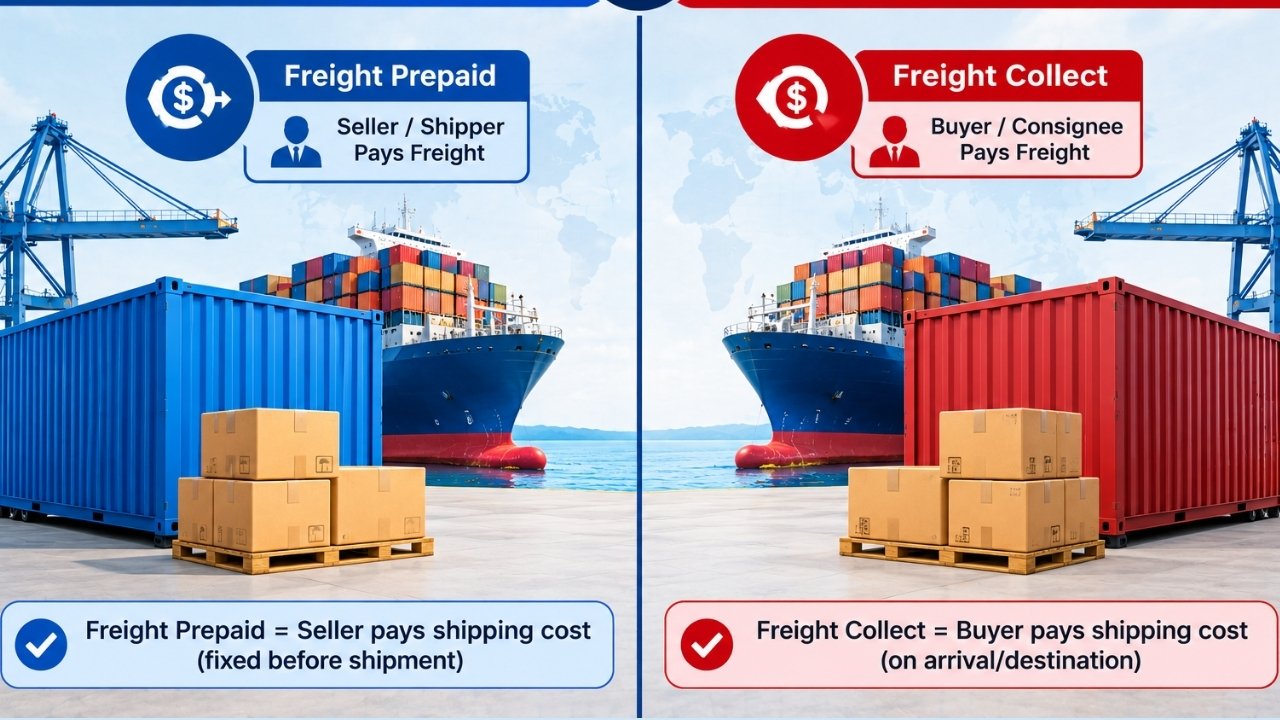
Freight Prepaid vs Freight Collect: What Exporters Need to Know Freight Prepaid and Freight Collect…

7 Types of Bill of Lading Every Exporter Should Know A Bill of Lading, commonly…
Let’s work together to simplify your logistics and ensure fast, secure, and timely delivery of your shipments.

Your Trusted Partner in End-to-End Supply Chain Management, Offering Expertise, Reliability, and On-Time Delivery Across the Globe.