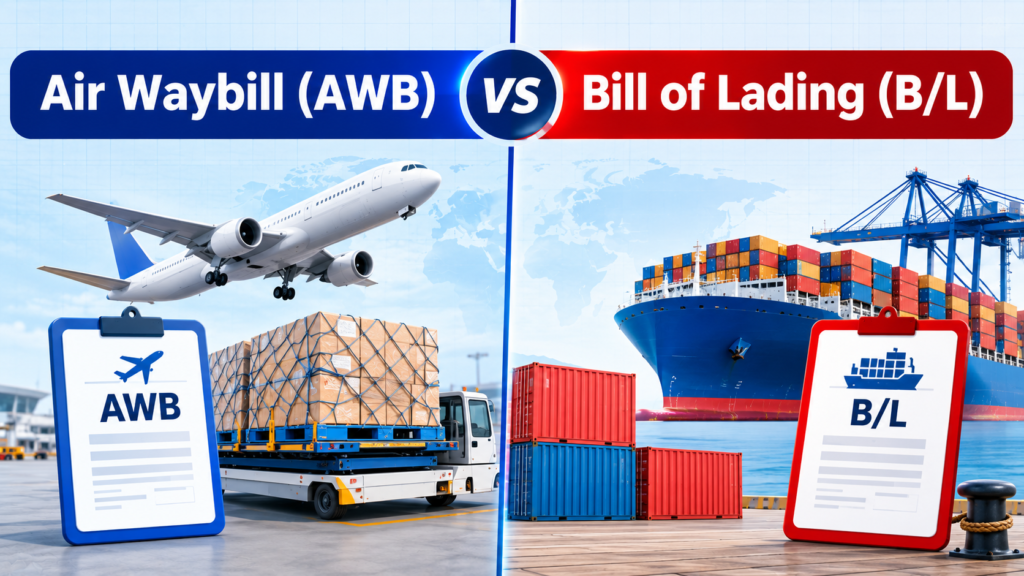
Air Waybill (AWB) vs Bill of…
Air Waybill (AWB) vs Bill of Lading (B/L): Key Differences Explained An Air Waybill (AWB)…
END TO END Solution
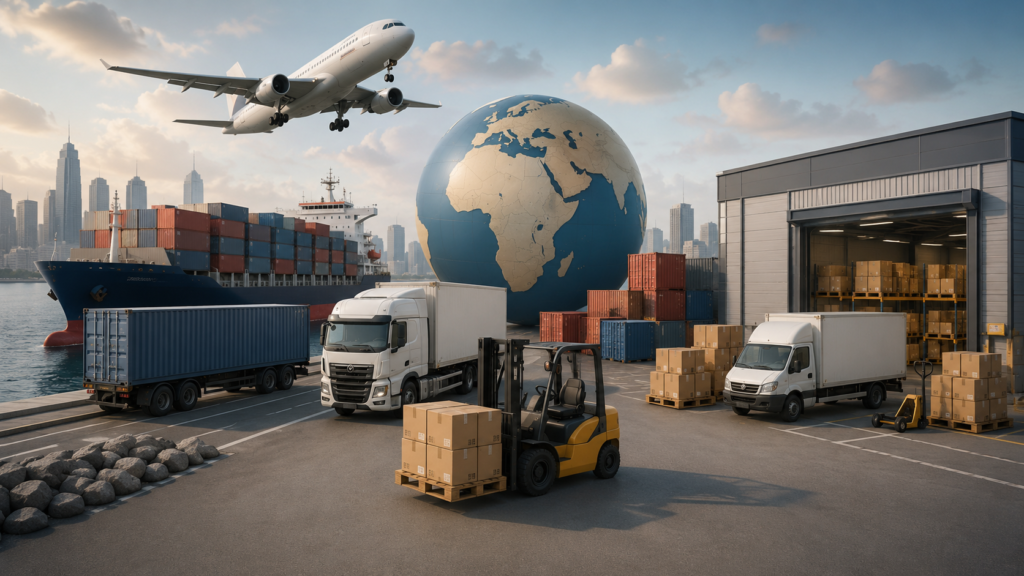
Logistics is the backbone of global trade. Whether you are a small business importing goods from China, a manufacturer shipping to South Africa, or an e-commerce brand delivering across Mauritius, understanding the types of logistics that power your supply chain is essential to staying competitive.
Yet “logistics” is one of those words that means different things to different people. It covers everything from procurement and warehousing to last-mile delivery, reverse returns, and even digital fulfilment. In this guide, Clevertactic breaks down the 10 core types of logistics that every business owner, operations manager, and supply chain professional should know.
Already know what you need? Jump straight to our Freight & Logistics Services or contact our team for a free consultation.
Table of Contents
Logistics refers to the planning, implementation, and control of the flow of goods, services, information, and resources between origin and destination. It encompasses transportation, warehousing, inventory management, packaging, and customs compliance.
Effective logistics management directly impacts a company’s cost structure, customer satisfaction, and competitive positioning. Logistics costs typically represent 8-15% of a product’s total value, making optimisation a critical business lever.
Inbound logistics covers all processes involved in receiving goods, raw materials, and supplies from suppliers into a business. It includes sourcing, procurement, transportation to the warehouse or factory, and inventory receipt.

Key aspects:
Clevertactic manages inbound freight for businesses importing from China, India, and the UAE, handling sea and air freight, customs clearance, and delivery to your facility in Mauritius or across Africa.
Outbound logistics covers the movement of finished goods from the manufacturer or warehouse to the end customer. This includes order processing, picking and packing, transportation, and last-mile delivery.

Key aspects:
We support exporters shipping finished goods from Mauritius and the wider Indian Ocean region to international markets, offering reliable outbound freight solutions via air and sea.
Reverse logistics is the process of moving goods from the customer back to the seller or manufacturer, for returns, repairs, recycling, or disposal. It is increasingly important for e-commerce businesses and sustainability-focused operations.
Key aspects:
As cross-border e-commerce grows in Africa and Mauritius, reverse logistics planning is becoming a competitive differentiator. Clevertactic helps businesses build return freight workflows into their supply chains.
Third-party logistics (3PL) involves outsourcing logistics operations, such as warehousing, transportation, or fulfilment, to a specialist provider. A 3PL acts as an extension of your supply chain, handling day-to-day logistics on your behalf.

Key aspects:
Clevertactic operates as a trusted 3PL partner for businesses across Mauritius, the UAE, and sub-Saharan Africa, managing freight, customs, and documentation so you can focus on your core business.
Fourth-party logistics (4PL) takes outsourcing a step further. A 4PL provider manages your entire supply chain, including overseeing multiple 3PL providers on your behalf. The 4PL acts as a single point of contact and strategic advisor.

Key aspects:
For larger businesses managing complex multi-leg freight across several continents, Clevertactic provides strategic logistics advisory and coordination across our freight and partner network.
Green logistics (also called sustainable logistics) focuses on reducing the environmental impact of supply chain and transportation activities. It encompasses carbon footprint reduction, fuel efficiency, eco-friendly packaging, and waste minimisation.
Key aspects:
Clevertactic helps clients make greener freight choices, including consolidating shipments (LCL) to reduce emissions per unit and choosing sea freight over air where timelines allow.
E-commerce logistics refers to the specialised logistics systems that power online retail, from the moment an order is placed on a website to the moment it lands at the customer’s door. Speed, accuracy, and returns management are paramount.

Key aspects:
As e-commerce grows across Mauritius and Africa, Clevertactic supports importers bringing inventory from Chinese and Indian suppliers to serve their online customer base efficiently.
Cold chain logistics manages the transportation and storage of temperature-sensitive products, such as perishables, pharmaceuticals, and chemicals, within a strictly controlled temperature range throughout the supply chain.
Key aspects:
Clevertactic handles cold chain freight for food and beverage importers and pharmaceutical companies shipping into Mauritius and across East Africa, with reefer container solutions via sea freight.
Military logistics is a specialised branch focused on supplying armed forces with equipment, fuel, food, and ammunition under often extreme or time-critical conditions. It is the foundation of military readiness and operational success.
Key aspects:
While Clevertactic’s core focus is commercial freight, the principles of military logistics, precision, reliability, and contingency planning, underpin our approach to every shipment we manage.
Healthcare logistics covers the supply chain management of medical equipment, pharmaceuticals, hospital consumables, and clinical trial materials. Given the life-critical nature of the goods involved, reliability, compliance, and traceability are non-negotiable.
Key aspects:
Clevertactic supports healthcare and pharmaceutical importers with compliant, time-sensitive freight solutions, including customs clearance for regulated goods entering Mauritius and African markets.
Use this quick-reference table to identify which type of logistics is most relevant to your business:
| Logistics Type | Focus Area | Key Benefit | Best For |
|---|---|---|---|
| Inbound | Procurement & receiving | Cost control | Manufacturers, retailers |
| Outbound | Delivery to end customer | Customer satisfaction | All businesses |
| Reverse | Returns & recycling | Cost recovery | E-commerce, retail |
| 3PL | Outsourced logistics | Scalability | SMEs, growing businesses |
| 4PL | Full supply chain management | Strategic oversight | Large enterprises |
| Green | Sustainability & emissions | ESG compliance | Eco-conscious businesses |
| Digital/E-Commerce | Online order fulfilment | Speed & accuracy | Online retailers |
| Cold Chain | Temperature-sensitive goods | Product integrity | Food, pharma, chemicals |
| Military | Defence supply chains | Reliability under pressure | Government / Defence |
| Healthcare | Medical supply chains | Life-critical delivery | Hospitals, pharma |
Understanding the types of logistics is the first step. The second is having the right freight and logistics partner to execute them for your business.
Clevertactic is a Mauritius-based freight forwarding and logistics company with an extensive network across China, India, the UAE, South Africa, Kenya, Nigeria, and beyond. We offer:
Explore all our services on the Clevertactic Services page or get in touch with our team for a customised logistics consultation.
For most small businesses, outbound logistics, getting products to customers efficiently, is the highest priority. As the business scales, inbound logistics optimisation and considering a 3PL partner become increasingly valuable. Clevertactic works with businesses of all sizes to streamline both.
A 3PL provider handles specific logistics functions on your behalf, such as warehousing, transportation, or customs brokerage. A 4PL provider manages your entire supply chain, including coordinating multiple 3PLs. Think of 3PL as outsourcing a function, and 4PL as outsourcing strategic supply chain oversight.
Mauritius has strict import regulations for food, pharmaceutical, and chemical goods. Cold chain logistics ensures temperature-sensitive products maintain their integrity throughout transit, from country of origin through sea or air freight to final delivery. Non-compliance can lead to rejected cargo at customs.
Green logistics practices like shipment consolidation (LCL), route optimisation, and shifting from air to sea freight can significantly reduce per-unit freight costs alongside environmental impact. Businesses that consolidate shipments often save 20-40% compared to air freight for non-urgent goods.
Yes. Clevertactic provides integrated freight and logistics solutions covering inbound, outbound, cold chain, customs clearance, and more, all under one roof. Rather than managing multiple providers, our clients benefit from a single point of contact for their entire freight operation.
Speak with our team to find the best shipping solutions for your business.
+230 52583493
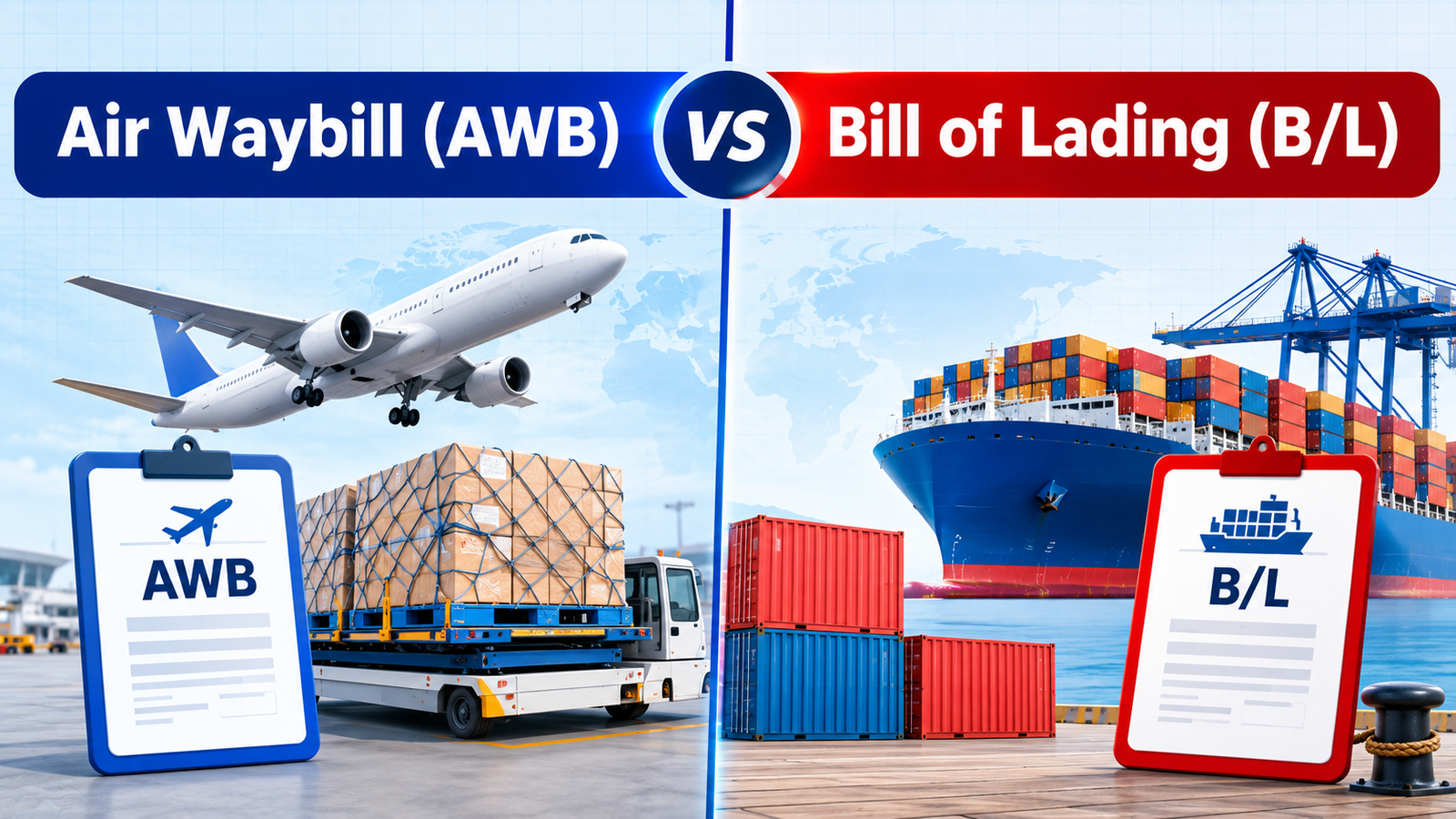
Air Waybill (AWB) vs Bill of Lading (B/L): Key Differences Explained An Air Waybill (AWB)…

Sea Freight Rates: 7 Ways to Keep Shipping Costs Down Sea freight is one of…
Let’s work together to simplify your logistics and ensure fast, secure, and timely delivery of your shipments.
Your Trusted Partner in End-to-End Supply Chain Management, Offering Expertise, Reliability, and On-Time Delivery Across the Globe.