


How to Read a Shipping Container…
How to Read a Shipping Container Number: A Simple Guide A shipping container number is…

END TO END Solution
International shipping involves several documents that help identify cargo, confirm transportation arrangements, and define the responsibilities of the parties involved. One of the most important documents is the Bill of Lading (B/L).
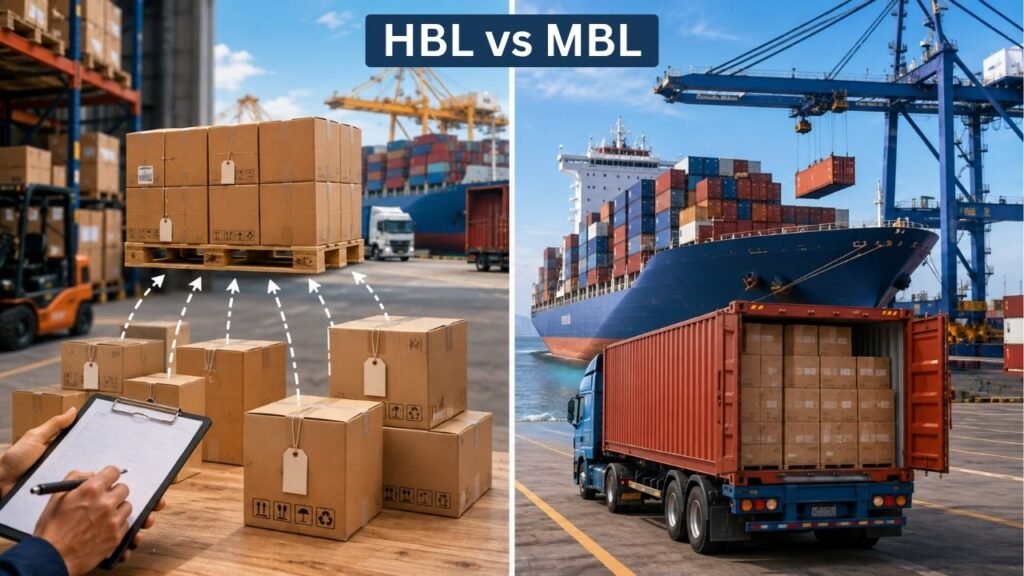
When a freight forwarder is involved in a shipment, you may come across two different types of bills of lading: the House Bill of Lading (HBL) and the Master Bill of Lading (MBL).
Understanding HBL vs MBL is important for importers and exporters because these documents are issued by different parties and serve different purposes within the shipping process.
In this guide, we explain the difference between HBL and MBL, who issues each document, how they work together, and which bill of lading may apply to your shipment.
Table of Contents
A Bill of Lading is an important transportation document used in the movement of cargo. It provides information about the shipment and the parties involved in transporting the goods.
A bill of lading can include details such as:
For businesses involved in international trade, accurate shipping documentation is essential because errors can cause delays, additional costs, or problems during cargo release.
HBL stands for House Bill of Lading.
An HBL is generally issued by a freight forwarder or non-vessel-operating intermediary to its customer. It represents the transportation agreement between the freight forwarder and the shipper or customer.
The HBL usually contains information about:
The HBL helps establish the relationship between the shipper and the freight forwarder. It can also provide shipment details that are important for documentation and cargo tracking.
Businesses working with freight forwarders should understand how the HBL fits into the overall shipping process. A freight forwarding guide can provide additional information about the role of freight forwarders in international shipments.
MBL stands for Master Bill of Lading.
The MBL is generally issued by the ocean carrier or shipping line to the freight forwarder or contracting carrier. It covers the transportation of cargo under the carrier’s booking.
The MBL may contain information about:
The MBL connects the freight forwarder or contracting party with the actual carrier transporting the cargo.
It is an important document within the carrier’s transportation process and helps identify the cargo covered by the carrier’s booking.
The main difference between HBL and MBL is who issues the document and who the transportation relationship is between.
The HBL is generally issued by the freight forwarder to the shipper or customer. It reflects the shipment arrangement between those parties.
The MBL is generally issued by the shipping line or carrier to the freight forwarder or contracting party.
For a consolidated shipment handled by a freight forwarder, an HBL and MBL can both exist for the same physical cargo. The two documents represent different contractual levels within the transportation arrangement.
| Factor | HBL | MBL |
|---|---|---|
| Full Form | House Bill of Lading | Master Bill of Lading |
| Generally Issued By | Freight forwarder or NVOCC | Shipping line or carrier |
| Issued To | Shipper or customer | Freight forwarder or contracting carrier |
| Represents | Forwarder-to-customer transportation relationship | Carrier-to-forwarder transportation relationship |
| Cargo Information | Actual shipper and consignee details | Details required by the carrier |
| Commonly Used In | Forwarder-managed shipments | Carrier transportation |
| Can Exist Together? | Yes | Yes |
Understanding who issues each document is one of the easiest ways to remember the difference between HBL and MBL.
The HBL is generally issued by the freight forwarder or NVOCC to its customer.
The forwarder acts as an intermediary between the customer and the carrier and may consolidate cargo from multiple customers.
The MBL is generally issued by the shipping line or carrier to the freight forwarder or contracting party.
The exact document flow can vary depending on the transportation arrangement, carrier, and role of the logistics provider.
HBL and MBL are often used together when a freight forwarder consolidates cargo from multiple shippers.

Consider a shipment where several customers are sending cargo from the same origin to the same destination.
The freight forwarder may consolidate the cargo into one container and book that container with the shipping line.
This structure is particularly relevant for consolidated shipments such as LCL cargo.
Imagine three companies are shipping goods from China to Mauritius. Each company has a relatively small shipment, so the freight forwarder combines their cargo into one container.
Each customer provides cargo and shipment details to the freight forwarder.
The freight forwarder issues an HBL to each customer covering that customer’s cargo.
The forwarder combines the shipments into one container and books the consolidated container with the shipping line.
The shipping line issues an MBL covering the transportation arrangement with the freight forwarder or contracting party.
In this example, several HBLs can be associated with one MBL because multiple customer shipments have been consolidated into the same carrier booking.
An HBL is commonly used when a freight forwarder manages the shipment and provides its own house-level transportation document.
You may encounter an HBL when:
The exact documentation depends on the service arrangement and parties involved in the shipment.
An MBL is generally part of the carrier-level transportation documentation when a shipping line or carrier is involved.
It may be used when:
Importers and exporters may not always receive the MBL directly because the document flow can depend on the relationship between the shipper, freight forwarder, and carrier.
Documentation errors can create unnecessary delays and additional costs. Businesses should carefully review both HBL and MBL information when applicable.
The shipper name and address should be checked carefully against the commercial and shipping documentation.
Incorrect consignee information can create problems during documentation checks and cargo release procedures.
The cargo description should accurately reflect the goods being shipped and should be consistent with other shipping documents.
Differences between the declared weight, package count, and other documents can lead to additional checks or delays.
The port of loading and port of discharge should be carefully checked before documents are finalized.
Container numbers and seal information should be accurate where applicable.
The HBL or MBL should not be reviewed in isolation. Businesses should check the bill of lading against the commercial invoice, packing list, and other relevant documentation.
The answer depends on your shipping arrangement.
In many forwarder-managed shipments, you may have both an HBL and an MBL. They are not necessarily competing documents; they can represent different levels of the same transportation arrangement.
The use of HBL and MBL can depend on how the shipment is organized.
LCL shipments are commonly consolidated with cargo from multiple shippers. This type of arrangement can involve house-level documentation from a freight forwarder and carrier-level documentation.
Businesses new to container shipping can review the differences between FCL vs LCL shipping to understand how shipment consolidation affects logistics.
FCL shipments use a dedicated container for the shipment. Depending on the contractual and logistics arrangement, documentation may still involve a freight forwarder and carrier.
Businesses can also review the FCL shipping guide for more information about full container load shipments.
The bill of lading is only one part of the documentation required for an international shipment.

Depending on the shipment, businesses may also need:
Understanding common terminology can make international shipping documentation easier to manage. A useful reference is this guide to shipping abbreviations used in global trade.
Freight forwarders can coordinate transportation between shippers and carriers. In consolidated shipments, they may receive cargo from multiple customers and arrange transportation with a carrier.
This can create two levels of documentation:
The exact document structure depends on the forwarder’s role, the carrier arrangement, and the terms of the shipment.
Understanding HBL vs MBL is important for businesses involved in international shipping. Although both are bills of lading, they generally serve different purposes and represent different relationships within the transportation process.
An HBL is generally issued by a freight forwarder to its customer, while an MBL is generally issued by the shipping line or carrier to the freight forwarder or contracting party.
In consolidated shipments, both documents can exist for the same cargo. Understanding how they work together can help importers and exporters review their shipping documents more accurately and reduce the risk of documentation-related delays.
Before shipping, always verify the shipper, consignee, cargo description, weight, ports, container information, and other details across the relevant documents.
HBL stands for House Bill of Lading. It is generally issued by a freight forwarder or NVOCC to its customer and represents the transportation arrangement between the forwarder and the customer.
MBL stands for Master Bill of Lading. It is generally issued by the shipping line or carrier to the freight forwarder or contracting party and represents the carrier-level transportation arrangement.
The main difference is who issues the document and the contractual relationship it represents. HBL generally represents the forwarder-to-customer relationship, while MBL generally represents the carrier-to-forwarder relationship.
Yes. In many consolidated shipments, an HBL and MBL can both exist for the same physical cargo. They represent different levels of the transportation arrangement.
A House Bill of Lading is generally issued by a freight forwarder or NVOCC to its customer.
A Master Bill of Lading is generally issued by the shipping line or carrier to the freight forwarder or contracting party.
HBL can commonly be used for LCL shipments when a freight forwarder consolidates cargo from multiple customers. The exact documentation depends on the logistics arrangement.
Yes. An MBL can be used in FCL shipments when a shipping line or carrier issues a master-level bill of lading as part of the transportation arrangement.
Neither is universally more important. Each serves a different purpose. The relevance of the HBL and MBL depends on the parties involved and how the shipment is arranged.
Speak with our team to find the best shipping solutions for your business.
+230 52583493
How to Read a Shipping Container Number: A Simple Guide A shipping container number is…
Freight Prepaid vs Freight Collect: What Exporters Need to Know Freight Prepaid and Freight Collect…

7 Types of Bill of Lading Every Exporter Should Know A Bill of Lading, commonly…
Let’s work together to simplify your logistics and ensure fast, secure, and timely delivery of your shipments.

Your Trusted Partner in End-to-End Supply Chain Management, Offering Expertise, Reliability, and On-Time Delivery Across the Globe.