


HS Codes: Why the Wrong Code…
HS Codes: Why the Wrong Code Costs You Money When you import or export goods…

END TO END Solution
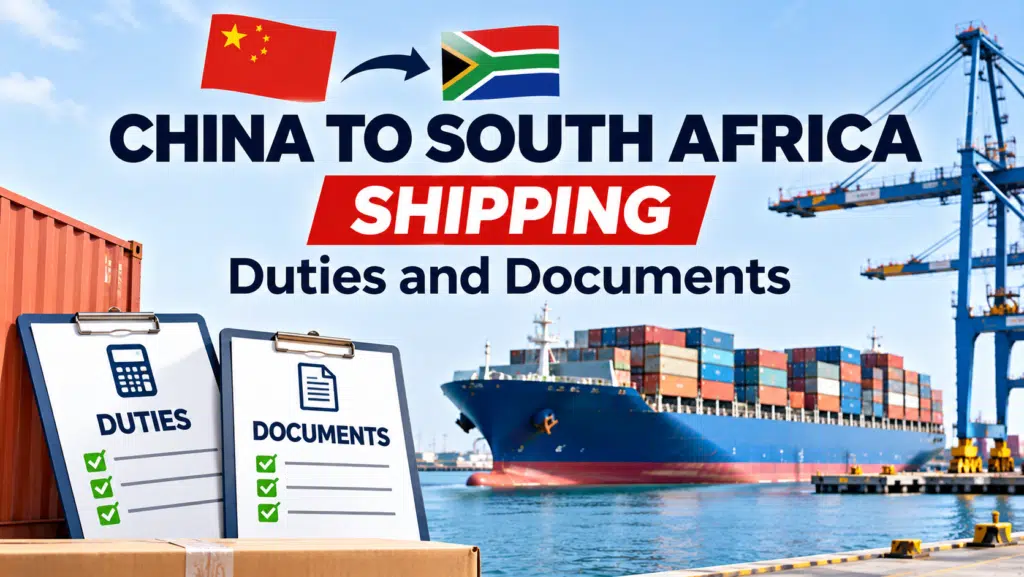
China is one of South Africa’s major international trading partners. Businesses across South Africa import machinery, electronics, textiles, furniture, construction materials, automotive components, household products and industrial equipment from Chinese manufacturers.
However, importing goods from China involves more than arranging transportation. Importers must understand South African customs duties, VAT, tariff classification, import permits and documentation requirements before their cargo is dispatched.
Missing paperwork, incorrect HS codes or unexpected import charges can delay shipments and increase the total landed cost. Whether you are importing a full container or a small consignment, proper planning helps make the process more predictable.
In this guide, we explain China to South Africa shipping methods, estimated transit times, import duties, VAT calculations, required documents and the customs clearance process.
Table of Contents
South African businesses source products from several Chinese manufacturing centres, including Shanghai, Shenzhen, Guangzhou, Ningbo and Qingdao.
The best shipping option depends on the supplier’s location, cargo volume, weight, delivery deadline and final destination within South Africa.
Importers generally choose between three main transportation options:
In addition to transportation, importers must budget for customs duties, VAT, port charges, customs clearance and final delivery. Understanding these expenses before placing an order helps avoid unexpected costs.
Choosing the correct shipping method can make a significant difference to your transportation cost and delivery schedule.
Sea freight is a popular option for businesses importing large quantities of products from China. It is suitable for machinery, furniture, construction materials, electronics, textiles and industrial supplies.
There are two common container shipping options:
FCL can provide better control over loading and container handling, while LCL allows smaller businesses to pay for the space they use rather than booking a complete container.
Explore FCL shipping services and LCL shipping services.
Air freight is suitable for urgent shipments, high-value products, electronics, samples, spare parts and goods with strict delivery deadlines.
It generally offers shorter transit times than sea freight but has a higher transportation cost per kilogram.
Air freight charges are usually based on chargeable weight, which considers both the actual weight and volumetric weight of the cargo.
Explore air freight services for time-sensitive shipments.
International express courier services can be suitable for documents, samples, small packages and urgent shipments. The service may include pickup, international transportation, customs handling and final delivery, depending on the provider and service level.
| Shipping Method | Best For | Cost Level | Transit Time |
|---|---|---|---|
| FCL Sea Freight | Large commercial shipments | Generally economical for larger volumes | Several weeks |
| LCL Sea Freight | Small and medium shipments | Based on cargo volume and applicable charges | Several weeks, including consolidation |
| Air Freight | Urgent and high-value cargo | Generally higher | Usually a few days |
| Express Courier | Small packages and samples | Generally higher per kilogram | Depends on service level |
Transit time depends on the Chinese departure port or airport, the South African destination, carrier schedules and whether the shipment moves directly or through a transshipment hub.
Sea freight from major Chinese ports to South Africa can take approximately 22–40 days port to port, depending on the route and shipping service.
| Origin in China | Destination in South Africa | Indicative Transit Time |
|---|---|---|
| Shanghai | Durban | Approximately 22–35 days |
| Ningbo | Durban | Approximately 22–35 days |
| Shenzhen / Yantian | Durban | Approximately 22–35 days |
| Shanghai | Cape Town | Approximately 25–40 days |
| Qingdao | Durban | Approximately 25–40 days |
These are indicative planning ranges, not guaranteed schedules. Actual transit time depends on the shipping line, vessel routing, transshipment, port congestion and operational conditions.
Air freight from China to South Africa may take approximately 2–5 days on suitable services, although routing and flight availability can affect the schedule.
Airport-to-airport transit time does not include every stage of the shipment. Collection, export handling, customs clearance and final delivery may add additional time.
For better planning, confirm the estimated departure and arrival dates with your freight forwarder before making delivery commitments to customers.
Shipping costs from China to South Africa depend on several factors. There is no single fixed freight rate that applies to every shipment.
The quotation will vary according to cargo size, weight, shipping method, origin location, destination port, carrier availability and the services included.
Air freight rates are influenced by:
Do not compare shipping quotations using the international freight charge alone. The complete landed cost may include:
Read our guide to ocean freight charges to understand the different costs involved in sea transportation.
Import duties and taxes are important parts of the total cost of importing goods from China into South Africa.
The amount payable depends on the product’s tariff classification, customs value, country of origin and any additional duties or applicable customs measures.
South African Revenue Service (SARS) administers customs duties and import VAT. Importers should check the applicable tariff rate for their specific goods before placing an order.
Customs duty is a tax imposed on imported products. The applicable rate depends on the tariff classification of the goods.
Different products can have different duty rates. Some goods may attract zero customs duty, while others may have rates calculated as a percentage of their customs value or according to a specific quantity-based measure.
For example, machinery, textiles, clothing, footwear, electronics and automotive products may have different tariff classifications and duty requirements.
Therefore, importers should never assume that all products imported from China have the same customs duty rate.
Some imported goods may be subject to additional duties.
These duties depend on the product, applicable investigations and relevant customs measures.
Certain luxury or non-essential products may attract additional ad valorem duties. These charges are separate from ordinary customs duties and depend on the applicable tariff provisions.
South Africa’s standard VAT rate is 15%. Import VAT is calculated using the customs value, the applicable 10% uplift for imports from outside the Customs Union and any non-rebated customs duties.
The calculation is explained in the next section.
South Africa introduced a temporary China zero-tariff preference scheme in 2026. However, this scheme provides qualifying South African-origin goods with preferential duty-free access when exported to China, subject to the relevant tariff schedule and rules of origin.
It does not automatically remove customs duties on Chinese-origin goods imported into South Africa.
When importing from China, South African businesses must continue to check the normal applicable tariff classification, customs duty, VAT and any additional trade measures.
Always verify the latest requirements with SARS before calculating your landed cost.
Import VAT is calculated using a specific formula provided by SARS for goods imported from outside the Customs Union.
The calculation uses the Added Tax Value (ATV).
Added Tax Value (ATV):
ATV = (Customs Value + 10% of Customs Value) + Non-Rebated Customs Duties
Import VAT:
Import VAT = ATV × 15%
Assume the following illustrative shipment values:
| Description | Amount |
|---|---|
| Customs Value | R100,000 |
| 10% Uplift | R10,000 |
| Non-Rebated Customs Duty (illustrative) | R10,000 |
| Added Tax Value | R120,000 |
| Import VAT at 15% | R18,000 |
In this example, the importer would pay R18,000 in import VAT, in addition to the assumed R10,000 customs duty.
Important: These figures are only an illustration of the calculation. The actual customs value, applicable duty and VAT must be determined for the specific shipment.
A business registered for VAT may generally be able to claim qualifying import VAT as input tax, provided the legal requirements are met and the required customs documentation is retained.
Importers should consult their accountant or tax professional to confirm the applicable VAT treatment for their business.
For current information, refer to the SARS guidance on duties and taxes for importers.
Accurate documentation is essential for customs clearance in South Africa. The documents required depend on the product, shipping method and applicable import regulations.
The commercial invoice is issued by the supplier and provides details of the transaction.
It generally includes:
The packing list explains how the goods are packed and provides important information for transport and customs verification.
It normally includes:
A Bill of Lading (B/L) is the main transport document used for sea freight, while an Air Waybill (AWB) is used for air freight.
These documents contain shipment details, transport information and the relevant parties involved in the shipment.
A Certificate of Origin identifies the country in which the goods originate.
It may be required for customs purposes, origin verification or to support a preferential tariff claim where an applicable trade arrangement allows it.
For ordinary imports from China into South Africa, a Certificate of Origin does not automatically provide a customs duty exemption. The importer must verify whether a specific preferential arrangement applies to the shipment.
Certain products may require an import permit or licence before they can enter South Africa.
These requirements may apply to controlled goods, used products, second-hand vehicles, chemicals, waste, scrap and other regulated categories.
If cargo insurance is arranged, the insurance certificate or policy provides evidence of the coverage. Importers should review the insured value, exclusions and applicable conditions.
South African import declarations are submitted to SARS using the applicable customs declaration process. A registered clearing agent or customs broker can assist with the submission and supporting documentation.
| Document | Purpose |
|---|---|
| Commercial Invoice | Shows transaction value and product details |
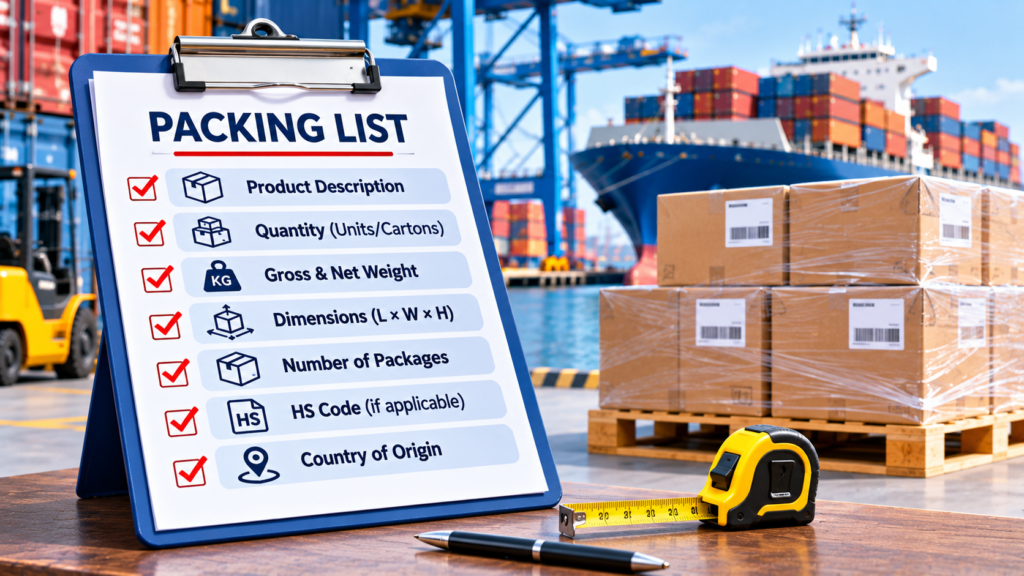
| Packing List | Shows package quantities, weights and dimensions |
| Bill of Lading | Sea freight transport document |
| Air Waybill | Air freight transport document |
| Certificate of Origin | Identifies the declared country of origin |
| Import Permit | Required for certain controlled or regulated goods |
| Insurance Certificate | Evidence of arranged cargo insurance |
| Customs Declaration | Declares the imported goods to SARS |
Always confirm the exact document requirements for your product before dispatch. Incorrect or incomplete paperwork can lead to customs queries and shipment delays.
An HS code, or Harmonized System code, is an internationally recognised classification used to identify traded products.
South African customs uses tariff classification to determine the applicable customs duty and identify other regulatory requirements.
An incorrect tariff classification can lead to customs queries, reassessment, additional duty payments or delays in cargo release.
For example, different types of electrical equipment, machinery and automotive parts may fall under different tariff headings even when they appear similar.
Provide a detailed product description, material, intended use, model and technical specifications. A customs professional can use this information to determine the correct tariff classification.
Do not simply copy an HS code from a supplier’s previous shipment without verifying that it applies to your actual product.
Read our guide: What Is an HS Code?
You can also consult the SARS customs tariff information.
Not all products imported from China require an import permit. However, certain goods are subject to South African import control measures, product standards or other regulatory requirements.
Depending on the product category, import controls may apply to:
The International Trade Administration Commission (ITAC) administers certain import control measures in South Africa.
Importers should check whether their products are controlled and whether an import permit is required before the goods are shipped.
Where applicable, the importer may need to register with SARS and apply for the relevant ITAC permit.
Some imported products may need to meet specific South African technical, safety or quality requirements.
For example, certain electrical products and regulated equipment may require approval or documentation from the relevant authority before they can be imported or sold.
Do not wait until the cargo arrives at Durban or Cape Town to investigate product compliance.
Share the product description, HS code and technical specifications with your customs broker or freight forwarder before shipment. This helps identify potential permit and certification requirements early.
For official guidance, consult the South African Government’s import permit information and the relevant ITAC requirements.
Customs clearance is an important stage of the import process. The importer or authorised clearing agent must submit the required customs declaration and supporting documents to SARS.
Collect the commercial invoice, packing list, Bill of Lading or Air Waybill, Certificate of Origin where required and any applicable permits or product certificates.
Verify the HS code and product description. This information is used to determine the applicable customs duties, taxes and import requirements.
The customs declaration must be submitted with the relevant shipment details and supporting documents. A registered clearing agent can assist with this process.
SARS reviews the customs declaration and supporting documents. Customs may request additional information, examine the cargo or refer the shipment to another government department for compliance checks.
Once the applicable duties and taxes have been assessed, the importer must arrange payment according to the relevant customs procedures.
After the applicable requirements are completed, the goods can be released by customs and the relevant port or terminal.
Once cargo release and collection arrangements are completed, the goods can be transported to the importer’s warehouse, factory or business address.
Explore customs clearance services to understand how professional customs coordination can support international shipments.
The departure and arrival ports can influence freight costs, transit time and inland transportation expenses.
The best destination port depends on the final delivery location, shipping service and cargo type. A shipment arriving at Durban may be suitable for delivery to Johannesburg, while cargo for the Western Cape may be better routed through Cape Town.
Importers can face unnecessary costs and delays when important details are overlooked. Avoid these common mistakes when shipping from China to South Africa.
Use this checklist before confirming your next shipment from China.
Shipping goods from China to South Africa involves several stages, including supplier coordination, cargo collection, export documentation, international transportation, customs clearance and final delivery.
Working with an experienced freight forwarding partner can help coordinate these activities and provide better visibility throughout the shipment process.
Clevertactic Ltd provides international logistics and freight forwarding solutions for businesses managing global shipments. Our services include sea freight, air freight, FCL, LCL and transportation coordination.
Explore our freight forwarding services, sea freight services and logistics solutions.
Shipping from China to South Africa requires careful planning around transportation, customs duties, VAT, documentation and product compliance.
Sea freight is generally suitable for large commercial shipments, while air freight is a practical option for urgent or high-value cargo. Importers should also verify the correct HS code, applicable tariff rate, permits and supporting documents before dispatch.
Remember that the 2026 China zero-tariff preference scheme concerns qualifying South African exports to China. It does not automatically provide duty-free treatment for goods imported from China into South Africa.
By preparing documents early, understanding the customs process and working with an experienced freight forwarding partner, businesses can reduce avoidable delays and manage their total import costs more effectively.
Planning your next shipment from China to South Africa? Contact Clevertactic Ltd to discuss your cargo requirements and request a freight quotation.
Sea freight generally takes approximately 22–40 days port to port, depending on the route and shipping line. Air freight may take approximately 2–5 days on suitable services. Customs clearance and final delivery add additional time.
Import duties depend on the product’s HS code and applicable South African tariff classification. Certain products may also attract anti-dumping, countervailing or additional ad valorem duties.
The standard South African VAT rate is 15%. Import VAT is calculated using the customs value, a 10% uplift for imports from outside the Customs Union and applicable non-rebated customs duties.
Common documents include a commercial invoice, packing list and Bill of Lading or Air Waybill. A Certificate of Origin, import permit, product certificates and customs declaration may also be required, depending on the goods.
Not all products require an import permit. However, certain controlled, used or regulated goods may require approval from the relevant authority, including ITAC where applicable.
An HS code classifies products for customs purposes. It helps determine applicable duties, taxes and regulatory requirements. Incorrect classification can lead to customs delays or reassessment.
Common Chinese departure ports include Shanghai, Ningbo, Shenzhen/Yantian, Guangzhou and Qingdao. South African destinations include Durban, Cape Town, Ngqura, Gqeberha and Richards Bay.
Sea freight is generally more economical for large and heavy cargo. Air freight is faster but usually costs more per kilogram. The best option depends on cargo volume, urgency and total landed cost.
No. The 2026 China zero-tariff preference scheme provides qualifying South African-origin goods with preferential access when exported to China. It does not automatically remove import duties on Chinese-origin products entering South Africa.
Share the supplier’s location, destination address, product description, HS code if available, package quantity, dimensions, gross weight and preferred shipping method with your freight forwarder. This information helps calculate the appropriate shipping option and costs.
Speak with our team to find the best shipping solutions for your business.
+230 52583493
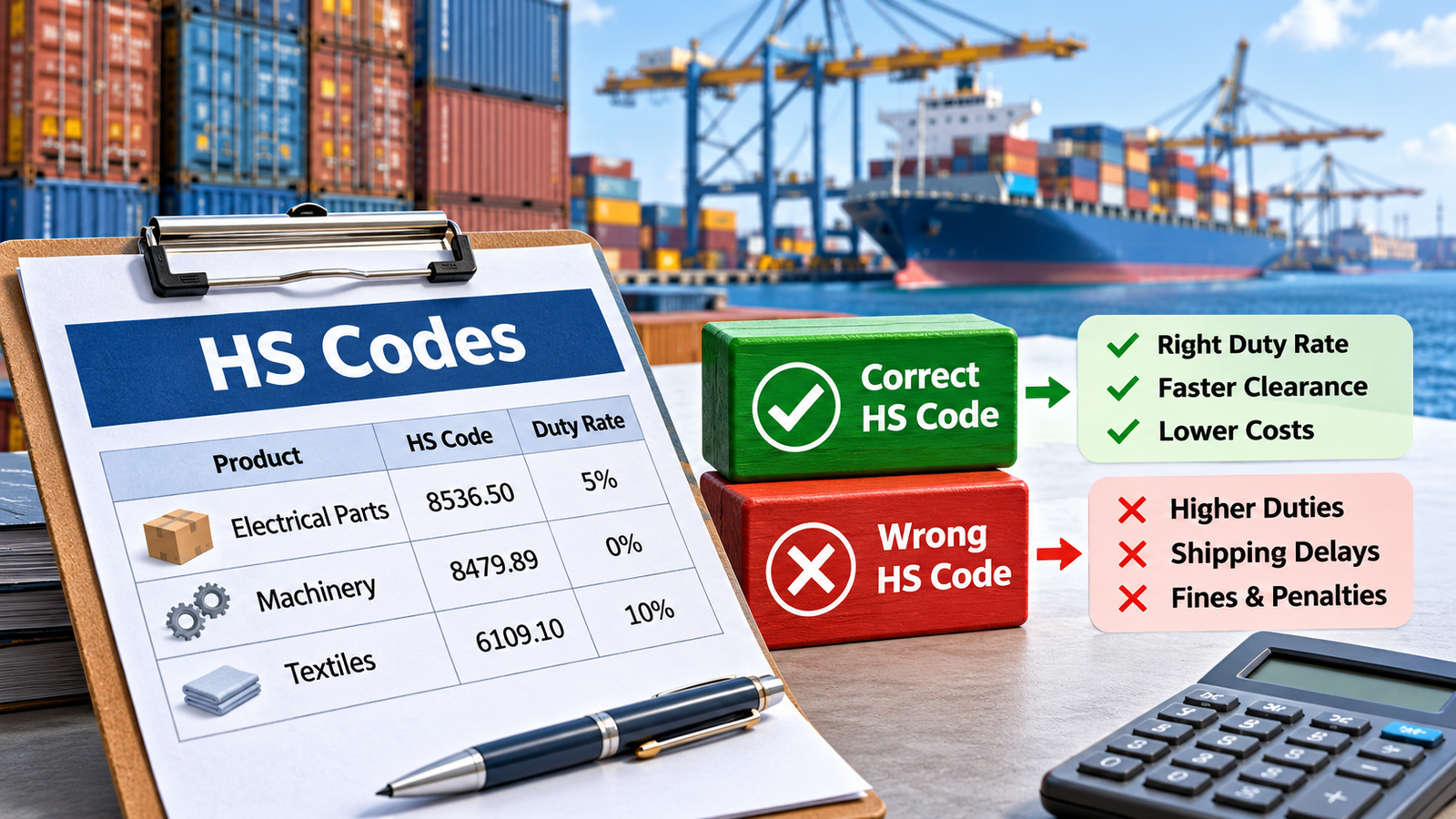
HS Codes: Why the Wrong Code Costs You Money When you import or export goods…

7 Hidden Shipping Charges Your Quote May Not Show International shipping involves more than choosing…
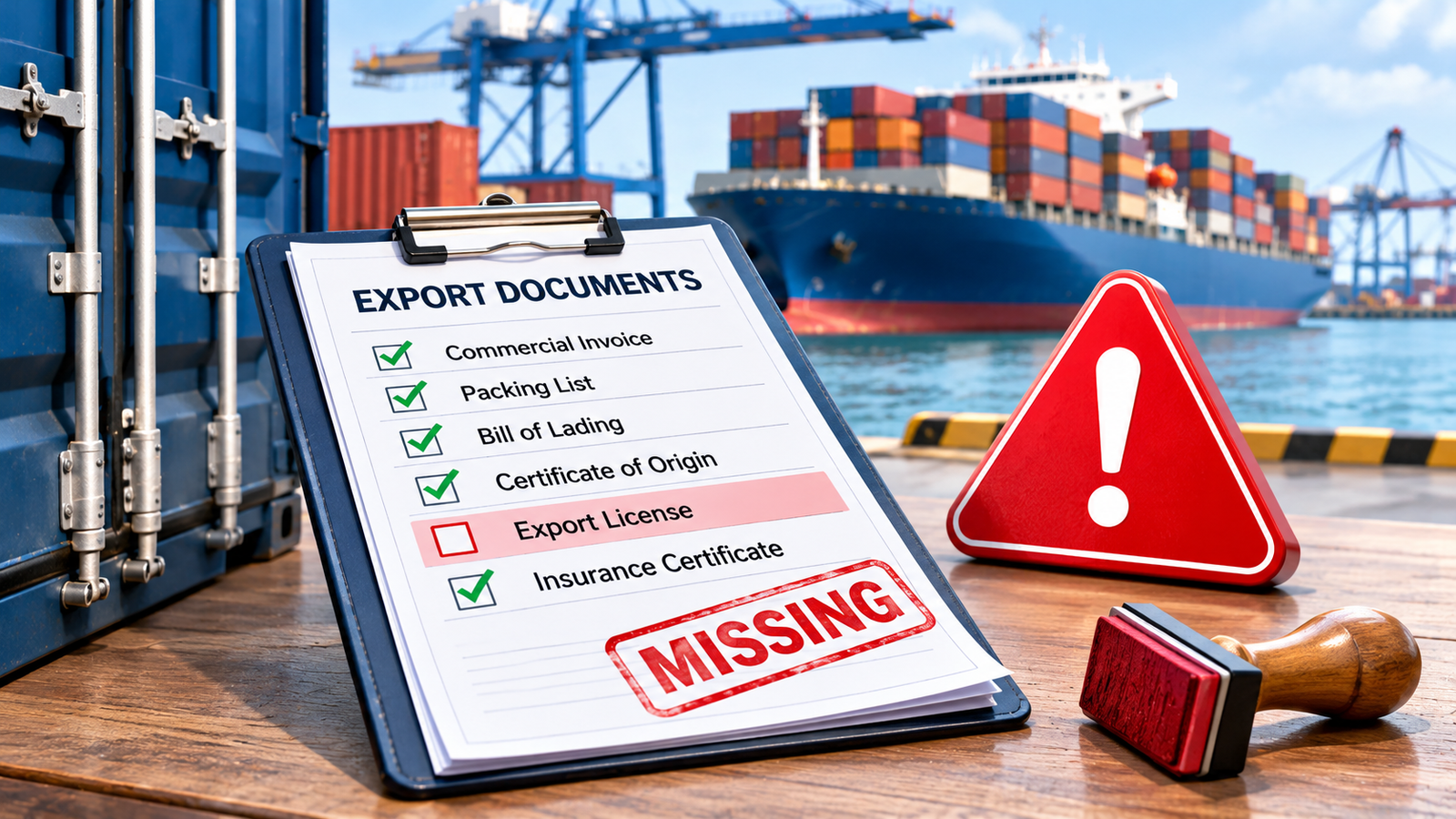
Export Packing List: 7 Details You Must Get Right International shipping involves more than booking…
Let’s work together to simplify your logistics and ensure fast, secure, and timely delivery of your shipments.

Your Trusted Partner in End-to-End Supply Chain Management, Offering Expertise, Reliability, and On-Time Delivery Across the Globe.