
Ocean Freight Charges Explained: A Complete…
Ocean Freight Charges Explained: A Complete Guide to Shipping Costs Ocean freight charges are one…

END TO END Solution
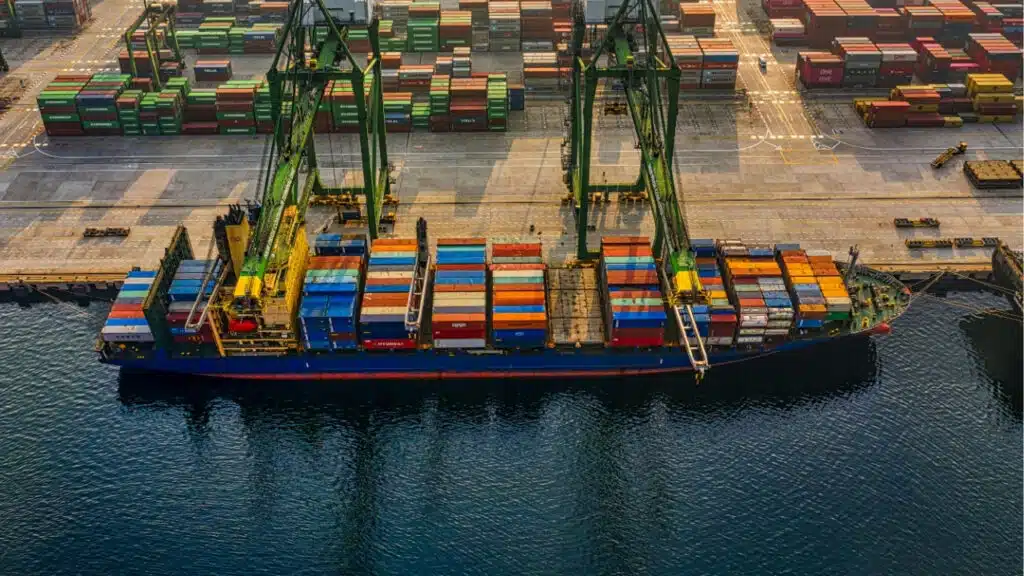
Ocean freight charges are one of the most important costs to understand when importing or exporting goods by sea. The price shown on a freight quotation is not always the complete cost of moving cargo from the supplier to the final destination.
The total shipping cost can include the base ocean freight rate, origin charges, destination charges, terminal handling, documentation, carrier surcharges, customs clearance, inland transportation, and other applicable costs. Comparing only the base freight rate can therefore give an incomplete picture of the actual shipping expense. :contentReference[oaicite:0]{index=0}
This guide explains ocean freight charges in simple terms, what each major charge means, how ocean freight costs are calculated, what affects shipping prices, and how importers and exporters can compare freight quotations more accurately.
Table of Contents
When a business receives an ocean freight quotation, it may see one main price for transporting a container from one port to another. However, the final logistics cost can include several additional charges.
For example, an international shipment may involve factory pickup, export documentation, terminal handling, ocean transportation, destination handling, customs clearance, and final delivery.
Each part of the shipment can have its own cost depending on the shipping route, container type, Incoterm, carrier, port, cargo characteristics, and service scope. :contentReference[oaicite:1]{index=1}
This is why businesses should understand the complete structure of ocean freight charges before comparing quotations.
Ocean freight charges are the costs associated with transporting cargo by sea from an origin point to a destination. The exact charges depend on whether the shipment is FCL or LCL and on the services included in the quotation.
For FCL shipments, the main ocean freight is generally quoted per container. For LCL shipments, freight is commonly calculated based on the chargeable volume or weight according to the applicable pricing rules. :contentReference[oaicite:2]{index=2}
Not every quotation includes all of these costs. The most important step is to check what is included and excluded before accepting a freight quote.
Suppose a freight forwarder quotes USD 2,000 for one container.
That USD 2,000 may represent only the port-to-port ocean freight. Origin handling, destination charges, customs clearance, trucking, duties, taxes, or other services may be charged separately.
Therefore, a business should not automatically treat the quoted ocean freight rate as the complete landed shipping cost.
A useful way to understand ocean freight charges is to divide them into several cost groups.
| Cost Component | What It Generally Covers | Typical Basis |
|---|---|---|
| Ocean Freight | Main sea transportation between ports | Per container for FCL; volume or weight for LCL |
| Origin Charges | Handling and services before cargo is loaded | Per shipment, container, or service |
| Destination Charges | Handling and services after arrival | Per container, shipment, or service |
| Surcharges | Additional carrier or market-related costs | Varies by carrier and route |
| Customs Clearance | Customs declaration and related services | Per shipment or declaration |
| Inland Transportation | Movement between factory, warehouse, port, or final destination | Per trip, shipment, or container |
| Insurance | Cargo protection where purchased | Based on cargo value and policy terms |
The exact names and inclusions are not standardized across every carrier, port, and freight forwarder, so businesses should always review the quotation carefully. :contentReference[oaicite:3]{index=3}
The base ocean freight charge is the primary cost of transporting cargo by sea over a specified route.
For an FCL shipment, the base rate is generally quoted for a specific container size and type. For an LCL shipment, the ocean freight may be based on the shipment’s chargeable volume or weight.
A carrier may provide a base ocean freight rate for a 20-foot dry container from one port to another.
Another carrier may provide a different rate for the same route because of differences in vessel capacity, routing, service schedule, or commercial pricing.
The lower base rate is not automatically the cheaper option if the quotation excludes important charges that are included in another offer.
Ocean freight rates can change because of supply and demand, vessel capacity, fuel costs, seasonality, port congestion, equipment availability, trade imbalances, and changes in routing or operating conditions. :contentReference[oaicite:4]{index=4}
Origin charges are costs incurred at the export side of the shipment before or around the time cargo is loaded for ocean transportation.
The actual list depends on the shipment arrangement and the services included in the quotation.
An exporter may have a container collected from its factory and transported to the port.
The total origin-side cost may include trucking, container handling, export documentation, terminal handling, and other applicable services in addition to the main ocean freight.
This is why exporters should ask whether the quotation is port-to-port or includes origin services.
Destination charges are costs associated with handling the shipment after it reaches the destination port or terminal.
Destination charges can be significant, particularly when the quotation focuses only on the ocean freight portion.
An importer receives an ocean freight quote of USD 1,500 for a container.
After arrival, the importer may still need to pay destination handling, customs clearance, local delivery, taxes, and other applicable costs.
The actual amount payable therefore depends on the complete service scope.
In addition to the base ocean freight rate, carriers may apply different surcharges depending on market conditions, fuel costs, route conditions, cargo characteristics, and service requirements. :contentReference[oaicite:5]{index=5}
Fuel-related charges can be used to account for changes in marine fuel costs.
The exact name and calculation method can vary between carriers.
A peak season surcharge may be introduced when demand for shipping capacity increases or capacity becomes constrained during a particular period.
Exceptional congestion, operational disruption, security conditions, or route-related risks can result in additional charges depending on the carrier and trade lane.
Equipment availability can affect pricing, especially when containers need to be repositioned to locations where demand is high.
Certain cargo may require additional handling or specialized equipment.
Examples can include:
The applicable surcharge depends on the carrier, route, equipment, and cargo requirements.
The choice between FCL and LCL can have a major effect on ocean freight charges.
FCL stands for Full Container Load. The shipment uses a dedicated container, whether or not the cargo completely fills the available space.
FCL freight is generally quoted per container.
Common container options include:
LCL stands for Less than Container Load. Cargo from multiple shippers shares container space.
LCL charges are commonly based on chargeable volume or weight, depending on the applicable tariff and shipment characteristics. In many cases, the chargeable quantity is determined using a weight-or-measure basis. :contentReference[oaicite:6]{index=6}
| Factor | FCL | LCL |
|---|---|---|
| Container | Dedicated container | Shared container |
| Typical pricing | Per container | Based on chargeable volume or weight |
| Best suited for | Larger shipments | Smaller shipments |
| Consolidation | Generally not required | Required |
| Handling | Generally fewer consolidation stages | Additional CFS and consolidation/deconsolidation handling may apply |
Choosing between FCL and LCL should depend on cargo volume, cost, transit requirements, handling needs, and shipment schedule.
Ocean freight charges can change significantly depending on the details of the shipment and current market conditions.
The origin and destination ports are major factors in freight pricing.
Different trade lanes have different levels of demand, vessel capacity, competition, transit requirements, and operating costs.
A 20-foot container and a 40-foot container do not necessarily have a simple price relationship.
The rate depends on the carrier, route, equipment availability, and market conditions.
Standard dry containers are generally priced differently from specialized equipment.
For example, refrigerated or special equipment may involve additional costs.
For FCL, the container selected needs to accommodate the cargo.
For LCL, the shipment’s chargeable volume or weight can affect the freight cost.
Changes in fuel costs can affect carrier pricing and fuel-related surcharges.
Shipping demand can rise during periods when businesses increase inventory or prepare for seasonal sales.
Higher demand can affect available vessel and container capacity and may influence freight rates.
Congestion can create operational challenges and may affect routing, vessel schedules, equipment availability, and applicable charges.
Container availability can differ between locations.
When equipment is difficult to source in a particular market, pricing and operational conditions can change.
The selected Incoterm determines how certain costs, responsibilities, and risks are allocated between the buyer and seller.
However, an Incoterm does not automatically mean that every cost is included in a freight quotation. The actual quotation should still be reviewed line by line.
A practical way to estimate the total shipping cost is to add the major cost components instead of looking only at the base ocean freight rate.
Total Shipping Cost = Ocean Freight + Origin Charges + Destination Charges + Surcharges + Customs Clearance + Inland Transportation + Other Applicable Costs
Depending on the shipment, insurance, duties, taxes, storage, demurrage, detention, and special handling may also need to be considered. :contentReference[oaicite:7]{index=7}
Suppose an importer receives the following illustrative quotation:
| Cost | Amount |
|---|---|
| Ocean freight | USD 1,500 |
| Origin charges | USD 300 |
| Destination charges | USD 400 |
| Documentation and other applicable charges | USD 100 |
| Illustrative total | USD 2,300 |
This example shows why the base ocean freight rate should not automatically be treated as the complete shipping cost.
For LCL cargo, the calculation may use chargeable volume or weight.
For example, if the applicable rate is based on 2.5 chargeable CBM, the freight calculation may use:
Chargeable CBM × LCL Rate per CBM
The final quotation can then add origin handling, destination handling, documentation, customs, and other applicable charges.
Minimum charges, rounding rules, density requirements, and carrier-specific tariffs can affect the final LCL calculation. :contentReference[oaicite:8]{index=8}
Comparing freight quotations only by the headline ocean freight rate can lead to the wrong decision.
Make sure every quotation uses the same:
Mark every cost as included, excluded, estimated, or payable at actual.
Freight quotations usually have a validity period.
Confirm whether the rate depends on the booking date, sailing date, cargo gate-in date, or another condition.
Two quotations may have different transit times or routing structures.
Check whether the service is direct or involves transshipment and compare the expected transit time.
Review the applicable free time at destination because insufficient free time can increase the risk of demurrage, detention, or storage charges.
The cheapest base freight rate is not always the cheapest overall option.
Compare the complete expected cost and service scope before making a booking.
Businesses can take several practical steps to control ocean freight charges.
Compare the total cost of FCL and LCL based on cargo volume rather than automatically choosing one option.
Efficient packaging can help reduce wasted container space and may improve the overall efficiency of the shipment.
Advance planning can give businesses more options for sailing schedules, equipment, routing, and freight quotations.
Compare quotations on an equivalent basis rather than choosing the lowest headline rate.
Accurate documentation can help reduce avoidable delays and additional handling or correction charges.
Keep track of free time, pickup deadlines, unloading schedules, and empty-container return requirements.
This can help reduce exposure to demurrage and detention.
An experienced logistics provider can help coordinate different shipment stages and identify charges that may otherwise be overlooked.
Businesses can also review freight forwarding services when planning international cargo movements.
Before accepting an ocean freight quotation, review the following checklist.
| Check | What to Confirm |
|---|---|
| Route | Confirm origin and destination ports. |
| Container | Confirm size and type. |
| Base freight | Check the main ocean transportation rate. |
| Origin charges | Check terminal handling, documentation, trucking, and other origin costs. |
| Destination charges | Confirm local handling, release, clearance, and delivery costs. |
| Surcharges | Check fuel, peak season, congestion, equipment, and other applicable surcharges. |
| Customs | Confirm whether customs clearance is included. |
| Validity | Check the quotation’s validity period. |
| Free time | Confirm applicable demurrage and detention free time. |
| Currency | Confirm the currency and exchange-rate basis where applicable. |
| Delivery | Confirm whether final inland transportation is included. |
Understanding ocean freight charges is essential for importers and exporters who want to control shipping costs and avoid unexpected expenses.
The base ocean freight rate is only one part of the overall cost. Depending on the shipment, businesses may also need to consider origin charges, destination charges, terminal handling, documentation, carrier surcharges, customs clearance, inland transportation, insurance, duties, taxes, storage, and container-related charges.
The best way to compare quotations is to look at the complete cost and service scope rather than choosing the lowest base freight rate.
Businesses should also confirm the route, container type, rate validity, free time, inclusions, exclusions, currency, and delivery requirements before booking.
For ocean shipments, businesses can learn more about sea freight services and the different factors involved in international cargo movement.
Ocean freight charges are the costs associated with transporting cargo by sea. They can include the base ocean freight rate, origin and destination charges, surcharges, handling, documentation, and other applicable services.
It depends on the carrier or freight forwarder quotation. The base rate generally covers the main ocean transportation between specified ports, while other costs such as terminal handling, documentation, customs clearance, trucking, and destination charges may be separate.
FCL is generally priced per container, while LCL is commonly priced based on chargeable volume or weight. LCL may also involve additional consolidation and deconsolidation handling.
Ocean freight charges can change because of factors such as demand, vessel capacity, fuel costs, seasonality, port congestion, equipment availability, routing, and market conditions. :contentReference[oaicite:9]{index=9}
Businesses can control ocean freight costs by choosing the appropriate FCL or LCL option, optimizing cargo packaging, planning shipments early, comparing complete quotations, checking all surcharges, preparing documentation correctly, and monitoring container deadlines.
Speak with our team to find the best shipping solutions for your business.
+230 52583493


Ocean Freight Charges Explained: A Complete Guide to Shipping Costs Ocean freight charges are one…
How to Read a Shipping Container Number: A Simple Guide A shipping container number is…
Liner, Feeder and NVOCC Explained: Who Really Moves Your Cargo? When a container moves through…
Let’s work together to simplify your logistics and ensure fast, secure, and timely delivery of your shipments.

Your Trusted Partner in End-to-End Supply Chain Management, Offering Expertise, Reliability, and On-Time Delivery Across the Globe.