

How to Read a Shipping Container…
How to Read a Shipping Container Number: A Simple Guide A shipping container number is…

END TO END Solution
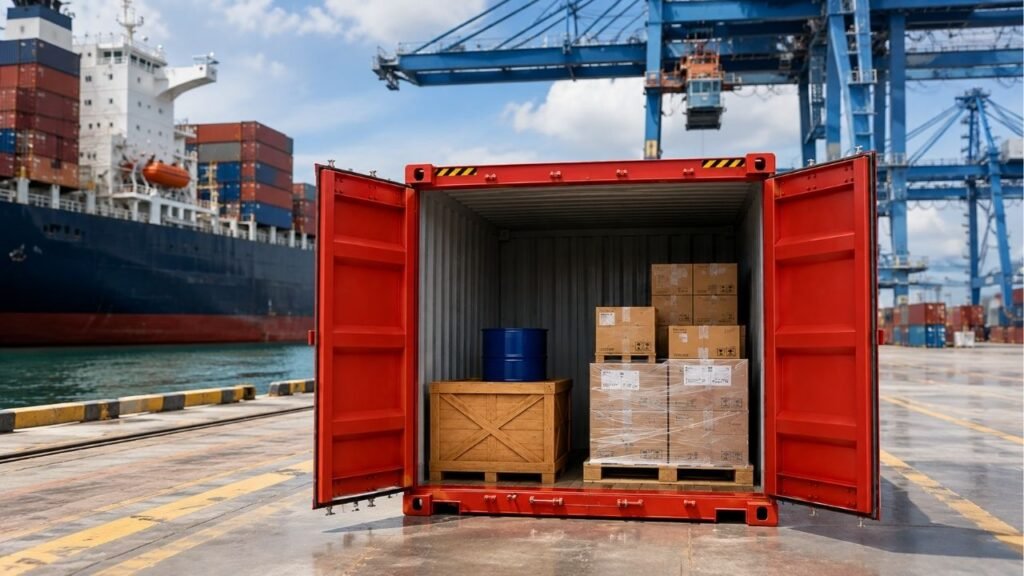
LCL (Less than Container Load) shipping is a widely used method in international freight where multiple shippers share space inside a single container. It is designed for businesses that do not have enough cargo to fill a full container but still need reliable and cost-effective global shipping solutions.
In LCL shipping, goods from different shippers are consolidated at a warehouse or Container Freight Station (CFS), shipped together, and then separated at the destination for final delivery. This method helps reduce shipping costs while offering flexibility for small and medium-sized shipments.
LCL is especially popular among SMEs, startups, and eCommerce businesses that require regular but smaller volume shipments. It provides access to global trade routes without the need to wait for a full container load, making it a practical and efficient logistics solution.
Table of Content
LCL (Less Than Container Load) shipping is a method of
ocean freight where multiple shippers share space inside a single container. Instead of paying
for the entire container, each shipper pays based on the volume or weight of
their cargo. Shipments from different businesses are collected and consolidated
at a warehouse or Container Freight Station (CFS) before being loaded and
transported together.

At the destination, the consolidated cargo is separated and delivered to the
respective consignees. LCL shipping is ideal for small, irregular, or
low-volume shipments that do not require a full container. It allows businesses
to avoid paying for unused container space while providing a practical option
for international shipping.
LCL shipping works by combining multiple smaller shipments into one full container. First, goods from different shippers are collected and transported to a consolidation warehouse. At this facility, cargo is grouped, labeled, and packed together based on destination. The container is then sealed and shipped to the destination port. Once it arrives, it goes through a deconsolidation process where each shipment is separated and delivered to its respective owner. This shared system helps reduce costs but adds extra handling steps.
LCL (Less than Container Load) shipping follows a structured process to ensure smooth movement of goods across international borders.

This step-by-step process ensures cost efficiency while enabling global shipment flexibility.
Cargo consolidation in LCL shipping refers to the process of combining multiple small shipments from different shippers into one full container. This is done at a consolidation warehouse or Container Freight Station (CFS) before export. It helps reduce shipping costs by sharing container space efficiently.
Deconsolidation is the reverse process that takes place at the destination port. The shared container is unpacked, and each shipment is separated based on consignee details. After customs clearance, goods are delivered individually to their final destinations.
Transit time in LCL shipping is generally longer compared to FCL due to additional handling processes. Cargo must wait for consolidation before departure and deconsolidation upon arrival, which adds extra time to the overall shipping schedule.
LCL shipping offers several benefits, especially for small and medium-sized businesses that do not require full container loads.
LCL (Less than Container Load) shipping is widely used across various industries that deal with smaller, frequent, or irregular shipments. It provides flexibility and cost efficiency for businesses that do not require full container capacity.
LCL shipping costs are calculated based on the volume (CBM – cubic meters) or weight of the cargo, whichever is higher. Since multiple shippers share one container, costs are divided proportionally.
LCL pricing may look cheaper initially, but additional handling fees can increase the final cost.
Here is a simple example of an LCL shipment cost structure for better understanding:
| Cost Item | Amount |
|---|---|
| Ocean Freight (per CBM) | USD 120 |
| Cargo Volume | 3 CBM |
| Total Ocean Freight | USD 360 |
| Origin Handling / Consolidation | USD 80 |
| Destination Handling / Deconsolidation | USD 100 |
| Documentation Charges | USD 50 |
| Customs Clearance | USD 70 |
| Inland Transport | USD 90 |
| Estimated Total Cost | USD 750 |
This breakdown helps businesses understand how multiple small charges contribute to the final LCL shipping cost.
LCL shipping often includes additional charges that may not be clearly visible in initial quotations.
These costs can significantly increase the total shipment expense if not planned properly.
Proper documentation is essential to ensure smooth customs clearance and avoid delays in LCL shipments.
Accurate documentation helps prevent delays during consolidation and deconsolidation processes.
Modern logistics technology has made LCL shipping more transparent and efficient through digital tracking and automation tools.
These tools improve efficiency and reduce uncertainty in LCL shipments.
While LCL shipping is cost-effective, it comes with certain challenges that businesses must consider.
Despite these challenges, LCL remains a practical solution for small-volume international shipping.
Many businesses face delays, extra costs, or damaged goods due to avoidable mistakes in LCL shipping. Understanding these errors can help improve efficiency and reduce overall logistics costs.
Getting the best LCL rates requires smart planning, negotiation, and proper shipment optimization.
When choosing between FCL and LCL shipping, businesses need to consider shipment volume, cost, transit time, cargo handling, and security. LCL shipping is generally suitable for smaller shipments that do not require a full container, while FCL provides exclusive use of a container.
| Factor | LCL (Less than Container Load) | FCL (Full Container Load) |
|---|---|---|
| Space | Shared with other shipments | Entire container is exclusively yours |
| Cost | Lower total cost, higher per-unit cost | Higher total cost, lower per-unit cost when fully utilized |
| Transit Time | Slower due to consolidation and deconsolidation | Faster and more direct shipping |
| Handling | More handling, slightly higher risk of damage | Minimal handling, safer for cargo |
| Best For | Small, frequent, or low-volume shipments | Large, bulk, or high-value shipments |
LCL shipping is a flexible and cost-effective solution for businesses that do not require full container capacity. It enables small and medium shipments to move globally without high upfront costs, making it ideal for startups, eCommerce, and growing businesses.
However, understanding its costs, processes, and limitations is essential to avoid delays and hidden charges. By choosing the right shipping method and working with reliable logistics partners, businesses can optimize their supply chain and improve international trade efficiency.
LCL (Less than Container Load) shipping is a method where multiple shippers share space in one container and pay only for the space they use.
LCL shipping works by consolidating cargo from different shippers into one container at a warehouse, then shipping it together and separating it at the destination.
You should choose LCL when your shipment is small, irregular, or not enough to fill a full container.
LCL is cheaper for small shipments, but the per-unit cost is usually higher compared to FCL when shipping large volumes.
LCL may have longer transit times, more handling, and additional consolidation charges compared to FCL shipping.
LCL cost is calculated based on cargo volume (CBM) or weight, along with handling, documentation, and destination charges.
Common documents include the Bill of Lading, Commercial Invoice, Packing List, Customs Declaration, and Certificate of Origin (if required).
Speak with our team to find the best shipping solutions for your business.
+230 52583493
How to Read a Shipping Container Number: A Simple Guide A shipping container number is…
Freight Prepaid vs Freight Collect: What Exporters Need to Know Freight Prepaid and Freight Collect…

7 Types of Bill of Lading Every Exporter Should Know A Bill of Lading, commonly…
Let’s work together to simplify your logistics and ensure fast, secure, and timely delivery of your shipments.

Your Trusted Partner in End-to-End Supply Chain Management, Offering Expertise, Reliability, and On-Time Delivery Across the Globe.