


7 Hidden Shipping Charges Your Quote…
7 Hidden Shipping Charges Your Quote May Not Show International shipping involves more than choosing…

END TO END Solution
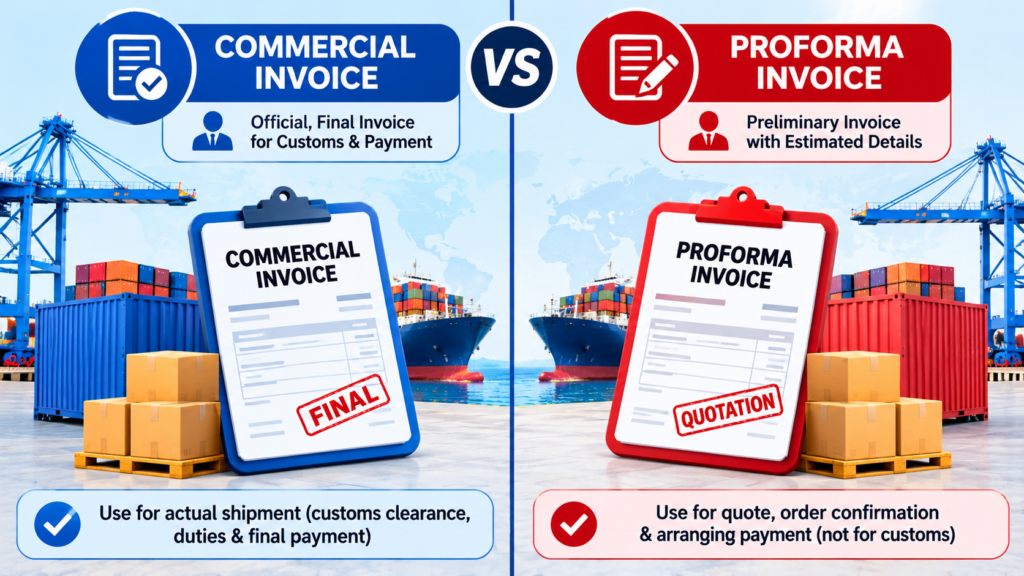
Table of Contents
When importing or exporting goods internationally, accurate documentation is essential for a smooth shipping process. Among the most commonly used documents are the proforma invoice and the commercial invoice. Although both contain information about a transaction, they serve different purposes and are used at different stages of an international trade deal.
Understanding Commercial vs Proforma Invoice is important for exporters, importers, manufacturers and freight forwarding companies. Using the wrong invoice or providing inconsistent information can create confusion between buyers and sellers, delay customs clearance, affect payment arrangements and lead to additional administrative costs.
A proforma invoice is generally issued before a sale is finalised. It outlines the proposed transaction, including product details, quantities, estimated prices and agreed terms. A commercial invoice is issued for the actual sale and provides the transaction information required by the buyer and relevant customs authorities.
In this guide, we explain the difference between commercial and proforma invoices, the information each document should contain, when to use them and how they fit into the international shipping process.
A proforma invoice is a preliminary document sent by a seller to a potential buyer before the final commercial transaction takes place. It outlines the proposed sale and provides an estimate of the costs, products and terms involved.
Think of it as a formal quotation presented in an invoice-style format. It allows the buyer to review the transaction details before confirming the order or proceeding with payment and shipping arrangements.
For example, imagine a business in Mauritius wants to import 500 electronic products from a supplier in China. Before confirming the order, the supplier may issue a proforma invoice showing:
The buyer can review the quotation, request changes or approve the proposed transaction. Once the order is confirmed and the goods are sold, the seller generally prepares a commercial invoice reflecting the actual transaction.
A proforma invoice helps both parties understand the proposed transaction before making a final commitment. It can be useful for:
A proforma invoice is not normally proof that the goods have been sold or that payment has been received. Its legal and customs treatment can vary depending on the country, transaction and purpose for which it is presented.
A commercial invoice is an important international trade document issued by the seller to the buyer for an actual sale of goods. It records the transaction details, including the products sold, quantities, prices, total value and agreed trade terms.
Unlike a proforma invoice, a commercial invoice is generally prepared once the sale has been confirmed. It is commonly used by customs authorities to assess the declared value of imported goods and determine applicable duties and taxes.
For example, if the Mauritius importer confirms an order for 500 electronic products from China, the supplier issues a commercial invoice showing the actual goods being shipped and the agreed transaction value.
The commercial invoice plays an important role in international shipping and customs procedures. Its main purposes include:
The commercial invoice should accurately describe the goods and reflect the actual transaction. Customs authorities may request additional documents or explanations if the invoice contains unclear descriptions, inconsistent values or incomplete information.
The main difference between these documents is their purpose and timing. A proforma invoice describes a proposed transaction, while a commercial invoice records the actual sale.
Here is a comparison of the two documents:
| Comparison | Proforma Invoice | Commercial Invoice |
|---|---|---|
| Purpose | Provides details of a proposed sale. | Records an actual sale of goods. |
| Issuing stage | Before the order is finalised. | After the sale is confirmed, generally before or at shipment. |
| Transaction status | Preliminary or estimated. | Final transaction details. |
| Payment | Can support payment requests or advance payment arrangements. | Shows the actual amount payable under the agreed terms. |
| Customs use | May support preliminary procedures when accepted by the relevant authority. | Commonly used for customs valuation and clearance. |
| Pricing | Shows proposed prices or estimates. | Shows the agreed transaction prices. |
| Changes | Can be revised during negotiations. | Should accurately reflect the completed sale and any agreed adjustments. |
| Proof of sale | Not normally proof of a completed sale. | Provides a record of the actual sale. |
| Financial records | Generally used for preliminary planning. | Used for accounting and transaction records. |
| Typical recipient | Potential buyer or importer. | Buyer, customs authorities and other relevant parties. |
Suppose a company in Mauritius plans to import 1,000 cartons of packaged food products from China.
Step 1: Proforma invoice
The Chinese supplier sends a proforma invoice with the following proposed details:
The importer reviews the details and confirms the order.
Step 2: Commercial invoice
After the order is confirmed, the supplier prepares the commercial invoice showing the actual transaction details. If the agreed quantities, prices or shipping arrangements have changed, the commercial invoice must reflect the correct information.
This example demonstrates why the two documents should not be treated as interchangeable. The proforma invoice supports the proposed transaction, while the commercial invoice records the actual sale.
Both invoices contain similar information because they describe the goods and the proposed or completed transaction. However, the accuracy and status of the information differ.
A well-prepared proforma invoice should generally include:
A commercial invoice should provide accurate details of the actual transaction. Common information includes:
Requirements vary by country, product category and customs procedure. Exporters should confirm the specific documentation requirements before dispatching goods.
A proforma invoice is useful when a transaction is still being discussed or arranged. It allows the buyer to understand the proposed costs and conditions before committing to the purchase.
When a buyer requests a quotation for products from an overseas supplier, the seller can issue a proforma invoice showing the expected quantities, prices and delivery terms. This gives both parties a written reference before the order is confirmed.
Some suppliers request an advance payment before manufacturing or preparing goods for shipment. A proforma invoice can show the proposed order value and payment schedule. The buyer should confirm the payment requirements with their bank or payment provider.
Importers can use a proforma invoice to estimate product costs, freight charges and other expected expenses. This helps businesses assess the potential landed cost before placing an order.
In certain transactions, banks may request a proforma invoice as supporting documentation for preliminary trade finance or payment arrangements. The exact requirements depend on the bank, country and transaction type.
Some authorities may request a proforma invoice when an importer applies for a permit or approval before importing specific products. Importers should check the requirements of the relevant authority because a proforma invoice is not accepted as a substitute for every required customs document.
A commercial invoice is generally required when goods are sold and prepared for international shipment. It records the actual transaction and supports the customs clearance process.
Once the buyer and seller confirm the sale, the seller prepares the commercial invoice with the agreed product descriptions, quantities and prices.
Exporters use commercial invoices as part of their shipment documentation. The document provides important information about the goods and transaction to the parties involved in the export process.
Customs authorities commonly use the commercial invoice to review the declared value and details of imported goods. It supports customs valuation and the assessment of applicable import duties and taxes.
The commercial invoice provides the buyer with a record of the actual transaction amount. It can also support accounts payable, bookkeeping and other financial records.
Freight forwarders may request the commercial invoice to review shipment details and support documentation coordination. They can help identify missing information before the shipment reaches its destination.
Understanding when each invoice is used makes international shipping documentation easier to manage. Although the exact process varies by business and country, the following example illustrates a typical transaction.
The importer contacts an overseas supplier and requests product prices, quantities, delivery terms and estimated shipping costs.
The supplier prepares a proforma invoice containing the proposed transaction details. The buyer reviews the document and requests any necessary corrections.
After agreeing on the products, prices, payment terms and delivery conditions, the buyer confirms the order. Payment may be arranged according to the agreed terms.
The supplier manufactures, packs or prepares the goods for shipment. The exporter coordinates the shipping arrangements and prepares the necessary documents.
The seller issues the commercial invoice reflecting the actual sale. The invoice should match the goods being shipped and the agreed transaction details.
Other documents may include:
The importer or their appointed customs representative submits the required documentation to the relevant customs authority. Customs reviews the declaration, assesses applicable duties and taxes, and completes the clearance process according to local requirements.
For more information about shipping documentation, read our guides on types of Bill of Lading and Air Waybill vs Bill of Lading.
Incorrect or incomplete invoice information can create problems during international shipping. Exporters and importers should review the documents carefully before submitting them to freight forwarders, banks or customs authorities.
A proforma invoice is generally a preliminary document. Submitting it instead of the required commercial invoice can cause documentation problems. Always confirm which invoice the customs authority or other receiving organisation requires.
Vague descriptions such as “general goods”, “parts” or “accessories” may not provide enough information for customs classification. Use clear descriptions that identify the actual products being shipped.
Incorrect HS code classification can affect duty calculations, import restrictions and customs processing. Exporters and importers should verify the correct classification for their products and destination country.
Learn more in our guide: What Is an HS Code?
Product descriptions, quantities and package information should be consistent across the commercial invoice and packing list. Differences may lead to customs queries or requests for clarification.
Declaring an inaccurate transaction value can create customs valuation issues. The commercial invoice should reflect the actual transaction and relevant adjustments or charges in accordance with applicable valuation rules.
Country of origin is important for customs procedures, trade measures and eligibility for certain tariff preferences. Provide accurate origin information and supporting evidence when required.
Incoterms clarify the responsibilities of buyers and sellers for delivery, costs and risks. Using an incorrect or incomplete delivery term can create confusion about freight, insurance and other charges.
Read our guide to 11 Incoterms Rules That Can Save You Time and Money.
Missing invoice numbers, dates, buyer details or purchase order references can make it harder to identify and process a shipment. Review all required fields before issuing the document.
Before sending an invoice to a buyer, freight forwarder or customs representative, use this checklist to review the important details.
Remember that this is a general checklist. Additional documents and information may be required depending on the destination country, product type and customs regulations.
Managing international shipping documentation can be challenging, especially when businesses import or export goods across multiple countries. A freight forwarder helps coordinate the movement of cargo and supports the documentation process.
An experienced freight forwarding partner can help businesses with:
At Clevertactic Ltd, we support businesses with international freight and logistics solutions, including sea freight, air freight, road freight and customs clearance services.
Whether you are importing goods for the first time or managing regular international shipments, having the right logistics partner can help you coordinate the process more efficiently.
Need support with your international shipment? Contact Clevertactic Ltd to discuss your freight and logistics requirements.
Understanding Commercial vs Proforma Invoice is essential for businesses involved in international trade. Although both documents contain similar transaction information, they serve different purposes.
A proforma invoice is generally issued before a sale is finalised and helps buyers review proposed prices, quantities and delivery terms. A commercial invoice records the actual sale and is commonly used for customs valuation, import duties, taxes and shipment documentation.
Using the correct invoice at the right stage helps reduce documentation errors, improve communication between buyers and sellers and support a smoother international shipping process.
Before shipping goods, always check that your commercial invoice, packing list and other relevant documents contain accurate and consistent information. When in doubt, consult your freight forwarder or customs representative about the requirements for your specific shipment.
A proforma invoice is a preliminary document that outlines a proposed transaction before the sale is finalised. A commercial invoice records the actual sale and is commonly used for customs valuation and international shipping documentation.
A proforma invoice may be accepted for certain preliminary procedures or specific customs situations, depending on the destination country’s rules. However, a commercial invoice is generally required for the customs clearance of goods sold internationally. Always confirm the requirements with the relevant customs authority or customs representative.
A proforma invoice is generally not the final sales invoice, but its legal effect depends on the wording, agreements between the parties and applicable law. Businesses should clearly state whether it is a quotation or a document forming part of a contractual offer.
A commercial invoice is generally issued after the sale has been confirmed and before or at the time goods are shipped. The timing and specific requirements depend on the transaction and applicable export and import procedures.
No. A proforma invoice does not normally confirm that payment has been received. It may show proposed payment terms or request an advance payment, but payment confirmation requires separate evidence.
Yes. The final amount may differ if the agreed quantity, product price, shipping charges or other transaction details change. The commercial invoice must accurately reflect the actual sale and applicable valuation requirements.
Commercial invoices are commonly required for international shipments involving the sale of goods. However, documentation requirements can vary for samples, gifts, temporary exports, returns and other non-standard shipments. Check the destination country’s requirements before shipping.
The seller or exporter generally prepares the commercial invoice because they are responsible for recording the sale and providing the transaction details. The buyer should review the information and request corrections when necessary.
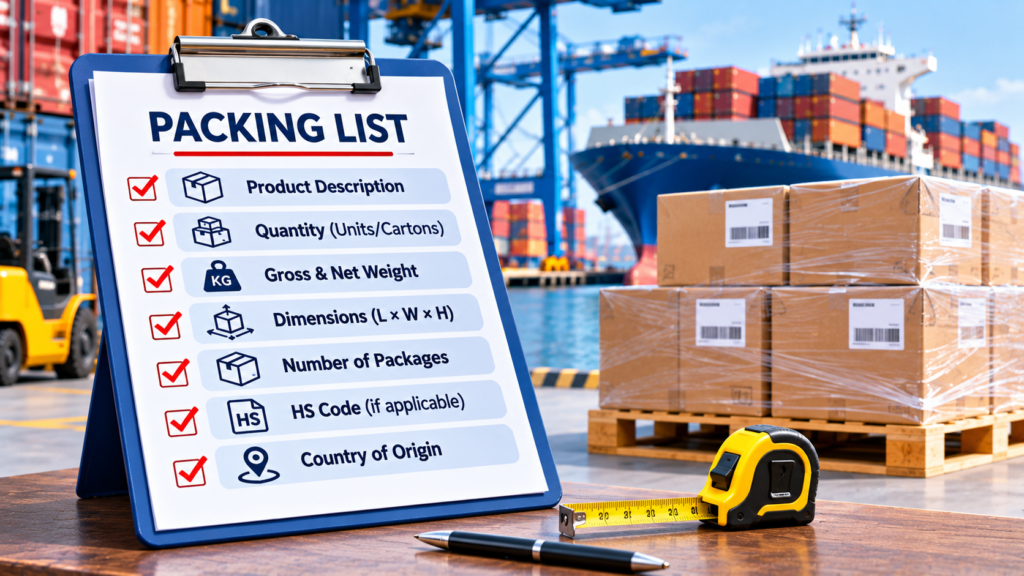
A commercial invoice records the sale, including product descriptions, quantities, prices and transaction value. A packing list provides physical shipment details, such as package count, dimensions, gross weight and net weight. Both documents are commonly used in international shipping.
Freight forwarders commonly request a commercial invoice to understand the shipment contents and transaction details. It helps them coordinate shipping documentation and support customs-related procedures, depending on the services they provide.
Speak with our team to find the best shipping solutions for your business.
+230 52583493

7 Hidden Shipping Charges Your Quote May Not Show International shipping involves more than choosing…
Export Packing List: 7 Details You Must Get Right International shipping involves more than booking…

Letter of Credit: How It Protects Your Payments International trade creates payment risks for both…
Let’s work together to simplify your logistics and ensure fast, secure, and timely delivery of your shipments.

Your Trusted Partner in End-to-End Supply Chain Management, Offering Expertise, Reliability, and On-Time Delivery Across the Globe.