


Export Packing List: 7 Details You Must Get Right
International shipping involves more than booking cargo space and arranging transportation. Every export shipment requires accurate documentation to support customs procedures, cargo handling and delivery at the destination.
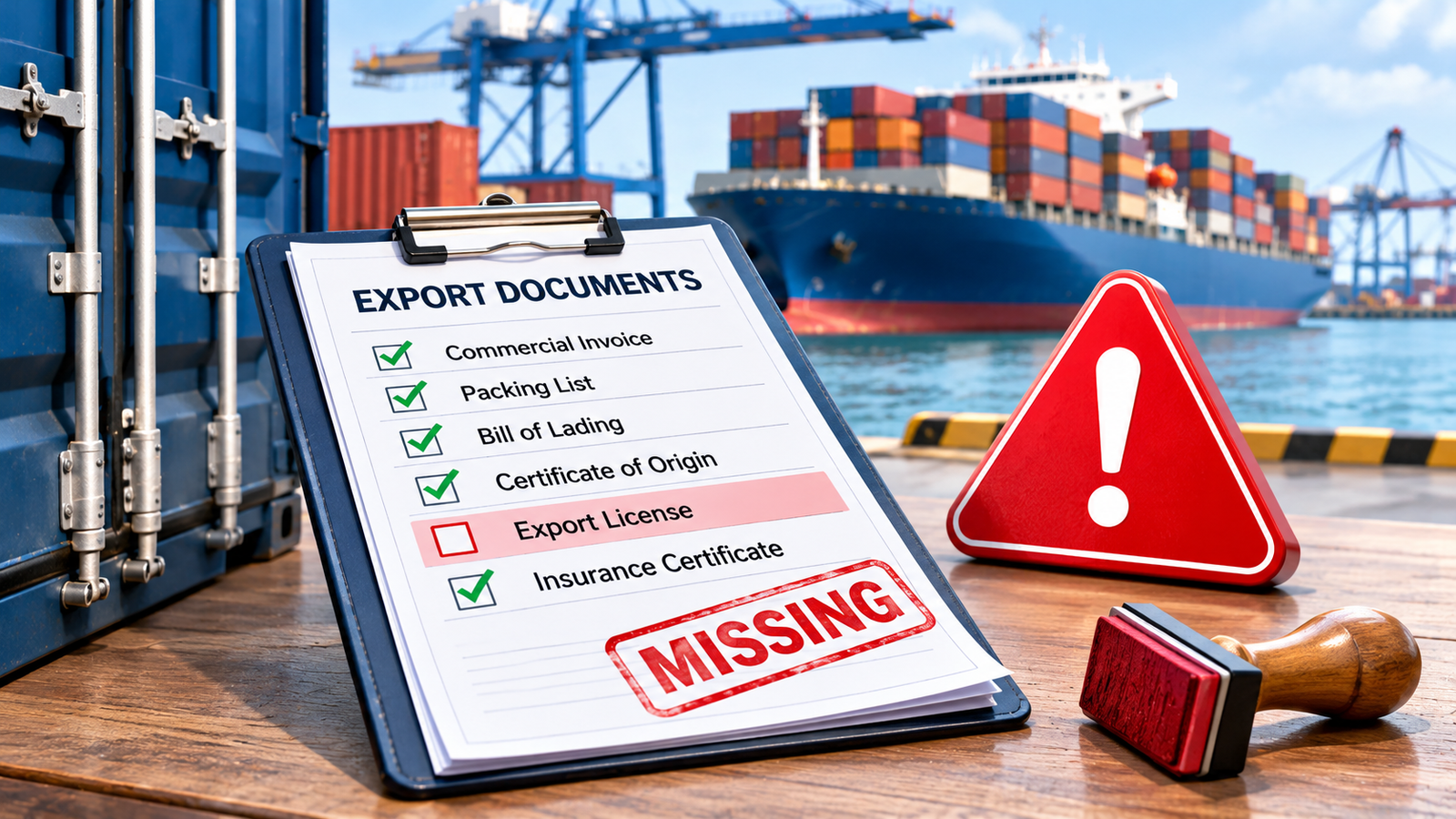
Documents such as commercial invoices, packing lists, bills of lading, certificates of origin and export permits provide important information about the goods being shipped. If even one required document is missing, incorrect or submitted late, the shipment may face additional checks and processing delays.
Missing export documents can affect customs clearance, shipping schedules, cargo release and overall logistics costs. Depending on the document involved and the destination country’s regulations, the shipment may be placed on hold until the required information is provided.
So, what happens when export documents are missing? Can customs stop a shipment? Who is responsible for correcting the issue? And how can exporters avoid unnecessary delays?
This guide explains the consequences of incomplete export documentation, the most commonly missing documents and the practical steps businesses should take when documentation problems occur.
Table of Contents
- Introduction
- 1. What Are Export Documents?
- 2. 8 Important Export Documents You May Need
- 3. Missing Export Documents: What Happens Next?
- 4. What Happens During Customs Clearance?
- 5. Additional Costs Caused by Missing Documents
- 6. Who Is Responsible for Missing Export Documents?
- 7. How to Resolve Missing Export Documents
- 8. Common Export Documentation Mistakes to Avoid
- 9. How to Prevent Export Documentation Problems
- 10. Export Documentation Checklist Before Shipment
- 11. How a Freight Forwarder Can Help
- 12. What Should You Do Next?
- Frequently Asked Questions
Introduction: Why Can Missing Documents Delay an Export Shipment?
When goods move across international borders, customs authorities and logistics providers need accurate information about the cargo, its value, origin, packaging and destination.
Export documents provide this information and help the relevant parties complete the required procedures.
For example, a manufacturer in China exporting machinery to Mauritius may need a commercial invoice, packing list, transport document and additional certificates depending on the machinery and applicable regulations.
If the commercial invoice is incomplete, customs may request clarification about the declared value. If a required import permit is missing, the destination authority may prevent the goods from being cleared until the permit is provided.
Not every missing document creates the same problem. The consequences depend on the document, cargo type, transport stage and requirements of the exporting and importing countries.
Understanding these differences helps exporters respond quickly and reduce the risk of avoidable shipping delays.
1. What Are Export Documents?
Export documents are records and certificates used to support the international sale, transportation and movement of goods from one country to another.
They provide information about the exporter, importer, products, shipment value, packaging, origin and transportation arrangements.
What Is the Purpose of Export Documentation?
- Customs clearance: Provides the information required by customs authorities to process export and import declarations.
- Shipment identification: Helps identify the goods and parties involved in an international shipment.
- Regulatory compliance: Demonstrates compliance with applicable export controls, import restrictions and product requirements.
- Transportation: Supports cargo booking, handling and movement by sea, air or road.
- Payment processing: Provides supporting records for international payment arrangements and trade finance where required.
- Origin verification: Helps establish the origin of goods when a certificate or origin declaration is required.
Why Must Export Documents Be Accurate?
Different documents contain overlapping shipment information. For example, the commercial invoice and packing list may both show product descriptions and quantities, while the transport document identifies the cargo being carried.
If these details do not match, customs authorities, carriers or other parties may request corrections or supporting evidence.
Accurate documentation helps businesses avoid unnecessary clarification requests and supports a more organised shipping process.
2. 8 Important Export Documents You May Need
The documents required for an export shipment depend on the product, destination country, transport method and applicable regulations. Here are eight commonly used documents.
2.1 Commercial Invoice
A commercial invoice records the actual sale between the exporter and importer. It generally includes product descriptions, quantities, unit prices, total transaction value, currency and agreed trade terms.
Customs authorities commonly use the commercial invoice as part of the customs valuation and clearance process.
Missing or incorrect invoice information may lead to questions about the declared goods or transaction value.
Read our guide: Commercial vs Proforma Invoice: Which One Do You Need?
2.2 Packing List
A packing list explains how the goods are physically packed for transportation. It generally includes package quantities, product descriptions, packaging types, net weight, gross weight and dimensions.
Customs officers and logistics providers may use it to verify the physical shipment and coordinate cargo handling.
Read: Export Packing List: 7 Details You Must Get Right.
2.3 Bill of Lading
A Bill of Lading (B/L) is an important document used in sea freight transportation. It serves as evidence of the contract of carriage and, depending on its type, may also function as a document of title.
Missing or incorrectly issued Bill of Lading documents can create problems with cargo release, document presentation and delivery arrangements.
Read: 7 Types of Bill of Lading Every Exporter Should Know.
2.4 Air Waybill
An Air Waybill (AWB) is a transport document used for air cargo shipments. It contains information about the shipper, consignee, cargo and transportation arrangements.
Missing or incorrect air waybill information may require the airline or relevant cargo agent to verify and correct shipment details.
Read: Air Waybill vs Bill of Lading.
2.5 Certificate of Origin
A Certificate of Origin identifies the country where the goods originate under the applicable rules of origin.
It may be required for customs clearance, trade policy purposes or to support a claim for preferential tariff treatment under an applicable trade agreement.
If a required certificate is unavailable, the importer may be unable to claim the relevant tariff preference until acceptable origin evidence is provided.
2.6 Export Declaration
An export declaration provides information about goods being exported and is submitted to the relevant customs authority where required.
Depending on the country and shipment, the declaration may include commodity codes, quantities, values, destination details and other export information.
Missing declarations or incorrect filing details can prevent the export process from progressing as expected.
2.7 Export Licences and Permits
Some products are subject to export controls or require specific licences and permits before they can be shipped.
Examples may include:
- Controlled industrial equipment.
- Military or dual-use goods.
- Certain chemicals and regulated materials.
- Products subject to agricultural or environmental controls.
- Goods requiring specific government approval.
If a required licence or permit is missing, the exporter may not be authorised to proceed with the shipment until the relevant approval is obtained.
2.8 Insurance Certificate
An insurance certificate provides evidence of cargo insurance where cover has been arranged and documentation is required.
It may be relevant to the agreed sales terms, financing arrangements or buyer requirements.
If the shipment is insured under a policy that requires specific evidence, missing insurance documentation may create problems when the buyer or bank needs to verify the cover.
Important: Not every export shipment requires all eight documents. Always check the actual requirements for the product, origin, destination and chosen transport method.
3. Missing Export Documents: What Happens Next?
When export documents are missing, the shipment may not move through the normal logistics process. The next step depends on which document is missing and when the problem is discovered.
3.1 Shipment Processing May Be Delayed
If a required document is unavailable, the exporter, freight forwarder, customs representative or carrier may need to request the missing information before proceeding.
For example, if the commercial invoice is incomplete, the exporter may need to provide corrected product descriptions, transaction values or buyer details.
Until the issue is resolved, the shipment may remain pending at the relevant stage.
3.2 Customs May Request Additional Information
Customs authorities may request clarification, supporting documents or corrected declarations if the submitted information is incomplete or inconsistent.
The exporter or importer may need to provide additional evidence before customs can complete its assessment.
3.3 Cargo May Be Placed on Hold
If a required document is missing, the cargo may be held at the origin facility, port, airport or destination customs area, depending on when the problem is identified.
The shipment may not be released or allowed to proceed until the outstanding requirements are satisfied.
3.4 The Shipment May Miss Its Planned Departure
For sea and air freight, documentation must often be completed within specific operational and carrier deadlines.
If an export declaration, permit or other required document is not ready before the relevant cutoff, the shipment may miss its planned sailing or flight.
The cargo may need to be moved to a later departure, depending on carrier availability and operational arrangements.
3.5 Import Clearance May Be Delayed
Missing documents discovered at the destination can delay import customs clearance.
For example, if an importer needs a specific product certificate or permit but cannot provide it, the destination authority may require the document before allowing the goods to be released.
3.6 Additional Costs May Occur
When cargo remains at a port, airport or warehouse longer than planned, additional charges may apply. These may include storage, handling, demurrage or detention charges, depending on the circumstances and applicable terms.
Not every missing document results in every type of charge. The costs depend on where the cargo is held, the carrier’s conditions and how quickly the documentation issue is resolved.
4. What Happens During Customs Clearance?
Customs clearance is the process through which authorities review declarations and supporting information before allowing goods to be exported or imported under the applicable rules.
When documentation is incomplete, the shipment may require additional review.
4.1 Document Review
Customs authorities review the submitted declaration and supporting documents, which may include the commercial invoice, packing list, transport document, origin certificate and required permits.
4.2 Request for Clarification
If information is missing or inconsistent, customs may request further details or supporting evidence.
For example, if the declared product description is unclear, the importer may need to provide a more detailed description, technical specifications or other supporting information.
4.3 Customs Examination
Depending on the shipment and customs risk assessment, authorities may select the goods for physical examination or additional verification.
If the physical cargo does not match the declared information, further clarification or corrective action may be required.
4.4 Corrected Documentation
The exporter, importer or authorised customs representative may need to submit corrected documents or amend the relevant declaration through the permitted process.
Corrections should be supported by accurate transaction and shipment records. Businesses should not change declared information simply to avoid customs duties or other requirements.
4.5 Customs Release
Once the applicable documentation, inspections and payment requirements are completed, customs may release the shipment according to its procedures.
The release timeline depends on the nature of the issue, the authorities involved and how quickly the required information is provided.
5. Additional Costs Caused by Missing Documents
Missing export documents can create costs beyond the original freight charges. The financial impact depends on the shipment stage, cargo location, carrier terms and time required to resolve the problem.
5.1 Storage Charges
If cargo remains at a port, airport or warehouse beyond the applicable free period, storage charges may apply.
These charges can increase when the documentation issue takes several days to resolve.
5.2 Demurrage Charges
Demurrage may apply when a shipping container remains within the port or terminal beyond the permitted free time, subject to the carrier’s tariff and contract conditions.
For example, if a container cannot proceed because required import documentation is missing, the available free time may expire while the issue is being resolved.
Read: Demurrage vs Detention: How to Avoid Extra Charges.
5.3 Detention Charges
Detention charges may apply when a shipping container is kept outside the terminal beyond the allowed time before being returned to the carrier.
Documentation problems can contribute to delays in cargo release and container return, potentially increasing costs.
5.4 Additional Handling Charges
If cargo needs to be moved, stored or inspected again because of documentation issues, additional handling costs may arise.
5.5 Rebooking Costs
If a shipment misses its planned vessel or flight because the required documentation was not completed before the operational cutoff, the exporter may need to arrange a new booking.
Additional charges may apply depending on the carrier’s booking conditions and availability.
5.6 Administrative and Correction Costs
Correcting documents, amending declarations or obtaining replacement certificates may involve additional administrative work and fees.
The actual cost depends on the document, issuing authority and correction process.
Example: How Documentation Delays Can Increase Shipping Costs
Imagine an exporter sends a container from China to Mauritius. The shipment reaches the destination port, but the importer discovers that a required supporting certificate is missing.
The following problems may occur:
- Customs requests the missing certificate.
- The importer contacts the supplier to obtain the document.
- The cargo remains uncleared while the issue is resolved.
- Free storage or container time may expire.
- Additional charges may apply before the cargo is released.
This example shows why exporters should confirm documentation requirements before cargo departure rather than waiting until the shipment reaches its destination.
6. Who Is Responsible for Missing Export Documents?
Responsibility for export documentation depends on the agreed sales contract, Incoterms, local regulations and the specific document involved.
Different parties may be responsible for preparing, providing, checking or submitting different documents.
6.1 Exporter or Seller
The exporter generally prepares or arranges commercial documents such as the commercial invoice and packing list. The seller may also need to provide certificates or permits depending on the product and agreed transaction requirements.
6.2 Importer or Buyer
The importer is generally responsible for providing information and obtaining import licences, permits or approvals that are required from the buyer’s side under the applicable rules and agreed responsibilities.
6.3 Freight Forwarder
A freight forwarder coordinates transportation and may assist with documentation review, booking requirements and communication with relevant parties.
However, a freight forwarder does not automatically become responsible for obtaining every commercial certificate, permit or approval. Responsibilities depend on the services agreed with the customer.
6.4 Customs Broker or Customs Representative
An appointed customs broker or representative may prepare or submit customs declarations and coordinate document-related queries with the relevant authority.
The importer or exporter remains responsible for providing accurate information and meeting their legal obligations.
6.5 Carrier or Shipping Line
Carriers and shipping lines handle transportation documentation and operational requirements related to the movement of cargo.
They may request particular information before accepting cargo, issuing transport documents or releasing shipments, depending on the transport arrangement.
Why Incoterms Matter
Incoterms help define the responsibilities of buyers and sellers for delivery, costs and risks. The selected rule can affect which party arranges export clearance, import clearance and certain supporting documents.
Businesses should understand their agreed responsibilities before the shipment is booked.
Read our guide: 11 Incoterms Rules That Can Save You Time and Money.
7. How to Resolve Missing Export Documents
If an export document is missing, acting quickly can help reduce delays and avoid additional costs. Follow these steps to identify the problem and coordinate the correction.
7.1 Identify the Missing Document
First, confirm exactly which document is missing or incorrect.
For example:
- Commercial invoice.
- Packing list.
- Bill of Lading or Air Waybill.
- Certificate of Origin.
- Export declaration.
- Export licence or import permit.
- Product inspection or compliance certificate.
Do not assume that every missing document can be replaced by another document. Each has a specific purpose and may have different issuing requirements.
7.2 Confirm Who Must Provide It
Contact the exporter, importer, issuing authority, customs broker or freight forwarder to identify who is responsible for obtaining the document.
This helps prevent delays caused by multiple parties assuming someone else is handling the issue.
7.3 Contact the Document Issuer
If the missing document was issued by a chamber of commerce, government department, inspection agency or other authorised organisation, contact the relevant issuer to request a copy or replacement where permitted.
Some documents can be reissued electronically, while others may require a formal application or verification process.
7.4 Check Whether a Correction Is Required
If the document exists but contains incorrect information, determine whether it needs to be amended or reissued.
For example, incorrect consignee details on a transport document may require a formal amendment through the carrier’s process.
7.5 Inform Your Freight Forwarder Immediately
Share the missing-document details with your freight forwarder so they can assess the impact on the booking, transport schedule and customs process.
They can help coordinate communication with the carrier, customs representative and other parties involved in the shipment.
7.6 Confirm Submission and Acceptance
Sending a missing document does not automatically mean the shipment is cleared. Confirm that the relevant customs authority, carrier or receiving party has accepted the document and that any remaining requirements have been completed.
7.7 Keep Records of All Corrections
Maintain copies of corrected documents, replacement certificates, submission confirmations and relevant communications.
These records can help resolve future queries and support internal compliance procedures.
8. Common Export Documentation Mistakes to Avoid
Missing documents are not always caused by a document being forgotten. Sometimes the document exists but contains incorrect information or does not meet the destination country’s requirements.
8.1 Preparing Documents at the Last Minute
Waiting until the cargo is ready for dispatch to prepare documents can leave little time for corrections, approvals or certificate applications.
8.2 Using Incorrect Product Descriptions
Vague descriptions can create questions about the actual goods being exported. Use clear descriptions that accurately identify the products.
8.3 Incorrect HS Codes
Incorrect tariff classification can affect customs declarations, duty calculations and regulatory requirements.
Read: What Is an HS Code?
8.4 Mismatched Invoice and Packing List Details
Differences in product quantities, descriptions or package details can lead to additional verification. Review both documents together before submission.
8.5 Missing Certificates or Permits
Some products require special certificates, licences or approvals. Confirm these requirements before booking the shipment.
8.6 Incorrect Consignee Information
Incorrect buyer or consignee details can create issues with transport documents, customs declarations and cargo release.
8.7 Ignoring Carrier Documentation Cutoffs
Shipping lines and airlines may have document submission deadlines. Missing these deadlines can affect cargo acceptance, document processing or departure schedules.
8.8 Not Checking Destination Requirements
Exporters should not assume that the same documents are required for every country. Import requirements can differ significantly depending on the destination and product category.
9. How to Prevent Export Documentation Problems
The best way to avoid missing export documents is to establish a consistent documentation process before every shipment.
9.1 Create a Document Checklist for Each Destination
Prepare a checklist based on the destination country, cargo type and shipping method. Update it when requirements change.
9.2 Start Document Preparation Early
Do not wait until the cargo is ready for dispatch. Arrange certificates, permits and supporting documents as early as possible.
9.3 Verify Product and Shipment Information
Check product descriptions, quantities, HS codes, origin, weights and dimensions before documents are issued.
9.4 Coordinate with Your Importer
Ask the buyer to confirm destination-specific import requirements, including permits and product certificates that may need to be obtained before shipment.
9.5 Follow Carrier Deadlines
Confirm document submission deadlines with the shipping line, airline or freight forwarder. Allow enough time for corrections and approval.
9.6 Use a Centralised Document Management System
Keep current versions of invoices, packing lists, certificates, declarations and transport documents in an organised location. This helps prevent outdated or incorrect documents from being submitted.
9.7 Conduct a Final Pre-Shipment Review
Before cargo dispatch, review the full document set and confirm that the required information is complete, accurate and consistent.
10. Export Documentation Checklist Before Shipment
Use this checklist to verify your export documents before cargo leaves the warehouse.
10.1 Commercial Documents
- Commercial invoice prepared and checked.
- Proforma invoice available where needed for preliminary arrangements.
- Packing list prepared with accurate quantities.
- Purchase order details verified.
10.2 Transportation Documents
- Shipping booking details confirmed.
- Bill of Lading or Air Waybill requirements checked.
- Shipper and consignee information verified.
- Carrier documentation deadlines confirmed.
10.3 Customs and Regulatory Documents
- Export declaration submitted where required.
- Import permits and licences confirmed.
- Certificate of Origin arranged where required.
- Product-specific certificates obtained where applicable.
- HS code and product classification checked.
10.4 Cargo and Insurance Information
- Gross weight and net weight verified.
- Package quantities and dimensions checked.
- Total CBM calculated correctly.
- Cargo insurance arranged where required or agreed.
- Shipping marks and package identification confirmed.
10.5 Final Document Review
- Exporter and importer details are correct.
- Product descriptions are consistent.
- Invoice values and quantities are accurate.
- All required documents are available.
- Documents have been submitted to the relevant parties.
- Outstanding queries have been resolved or assigned to a responsible party.
Completing this checklist before dispatch can help reduce avoidable documentation issues during international shipping.
11. How a Freight Forwarder Can Help
International shipping involves multiple parties, documents and deadlines. A freight forwarder helps coordinate the transportation process and can assist businesses with documentation requirements related to their shipments.
How Freight Forwarders Support Export Documentation
- Document coordination: Helps coordinate commercial invoices, packing lists and transport documents.
- Booking requirements: Communicates relevant shipping line and airline documentation deadlines.
- Shipment information review: Helps identify missing or inconsistent information in the details provided by the customer.
- Customs coordination: Works with customs brokers or authorised representatives to coordinate required information.
- Transportation planning: Helps organise suitable sea freight, air freight or road freight services.
- Issue communication: Keeps relevant parties informed when documentation problems affect shipment progress.
- Shipment tracking: Helps monitor cargo movement and coordinate updates.
A freight forwarder cannot replace the government authority responsible for issuing a permit or certificate, nor can it guarantee customs approval. However, effective coordination can help identify documentation gaps and organise the next steps.
Clevertactic Ltd provides international freight forwarding and logistics solutions for businesses managing global shipments.
Explore our freight forwarding services, sea freight services, air freight services and customs clearance services.
Whether you are exporting a small consignment or managing regular container shipments, proper documentation and logistics coordination help keep your supply chain organised.
Need help coordinating an international shipment? Contact Clevertactic Ltd to discuss your freight forwarding and logistics requirements.
12. What Should You Do Next?
Missing export documents can interrupt the normal shipping process, delay customs clearance and create additional costs. The impact depends on the document involved, the shipment stage and the regulations of the countries concerned.
If a document is missing, identify the exact requirement, contact the responsible party and arrange the correct document or amendment as quickly as possible. Keep your freight forwarder and other relevant parties informed so they can coordinate the next steps.
For future shipments, prepare a destination-specific document checklist, verify the cargo information and complete the required paperwork before the carrier’s deadlines.
Accurate export documentation is not just an administrative task. It is an important part of managing international logistics efficiently.
Need support with international freight and shipping documentation? Contact Clevertactic Ltd to discuss your logistics requirements.
Frequently Asked Questions
1. What happens if export documents are missing?
If required export documents are missing, the shipment may face additional checks, customs queries, processing delays or a hold until the necessary information is provided. The consequences depend on the document and applicable country requirements.
2. Can customs stop a shipment because of missing documents?
Yes. Customs authorities may hold or prevent the release of goods if required declarations, permits, certificates or supporting documents are missing. The shipment can generally proceed only after the applicable requirements are satisfied.
3. What are the most important documents required for export?
Common export documents include a commercial invoice, packing list, Bill of Lading or Air Waybill, export declaration and Certificate of Origin where required. Certain products may also require export licences, permits or inspection certificates.
4. Can an export shipment leave without a commercial invoice?
Requirements depend on the country, cargo and shipment arrangement. A commercial invoice is commonly required for international sales and customs procedures. Exporters should confirm the documentation requirements before dispatch rather than assuming the shipment can proceed without it.
5. Who is responsible for providing missing export documents?
Responsibility depends on the document, contract and applicable regulations. The exporter generally prepares commercial documents, while the importer may be responsible for certain destination-side permits and approvals. Freight forwarders and customs representatives can assist with coordination according to their agreed services.
6. How long does it take to resolve missing export documents?
There is no fixed timeframe. Some documents may be available electronically or can be corrected quickly, while certificates, permits and government approvals may take longer. The issuing authority and nature of the correction determine the timeline.
7. Can missing export documents cause demurrage charges?
Yes, missing documents can delay customs clearance or cargo release. If a container remains at the terminal beyond the applicable free time, demurrage charges may apply under the carrier’s terms. Storage and other charges may also arise.
8. What should I do if my Bill of Lading is missing?
Contact your shipping line or freight forwarder immediately. Confirm whether the document has been issued, whether an electronic version is available and what procedures apply to obtaining a replacement or completing the required cargo release formalities. Do not assume a missing original document can always be replaced by a simple copy.
9. Are export documents the same for every country?
No. Documentation requirements vary by destination country, product type, transport method and applicable regulations. Some goods require additional permits, certificates or inspection documents. Always check the requirements for the specific shipment.
10. How can I avoid export documentation delays?
Prepare documents early, use a destination-specific checklist, verify product descriptions and HS codes, check quantities and weights, confirm permits and certificates, and meet carrier submission deadlines. Coordinate with your importer and freight forwarder before dispatch.
Get in touch
Speak with our team to find the best shipping solutions for your business.
contact us
+230 52583493
- Services
- Logistic Services
- Routes

Related Blogs

7 Hidden Shipping Charges Your Quote…
7 Hidden Shipping Charges Your Quote May Not Show International shipping involves more than choosing…
Missing Export Documents? What Happens Next
Export Packing List: 7 Details You Must Get Right International shipping involves more than booking…
Letter of Credit: How It Protects…
Letter of Credit: How It Protects Your Payments International trade creates payment risks for both…